This Saint’s Story
Margherita Lotti, called Rita, was born around 1381 at Roccaporena, a hamlet near Cascia in Umbria, the only child of older parents who were known locally as peacemakers. Rita wanted to enter religious life, but at about twelve her parents arranged a marriage to Paolo Mancini. The early lives describe Paolo as quick-tempered and violent. Rita answered with patience, prayer and steady kindness, and over the years Paolo is said to have softened. They had two sons.
Around 1401 Paolo was murdered, apparently as part of a feud between local families. Rita forgave the killers and, according to tradition, hid the bloodstained shirt so that her sons would not be stirred to revenge. The boys still meant to avenge their father. Rita prayed that they would rather die than commit murder, and both died of illness within about a year. Rita then asked to join the Augustinian (religious who follow the Rule of St. Augustine) nuns of St. Mary Magdalene in Cascia. They turned her down, partly because of the vendetta, and she worked to reconcile the families. Once peace was made, she was admitted, probably around 1407.
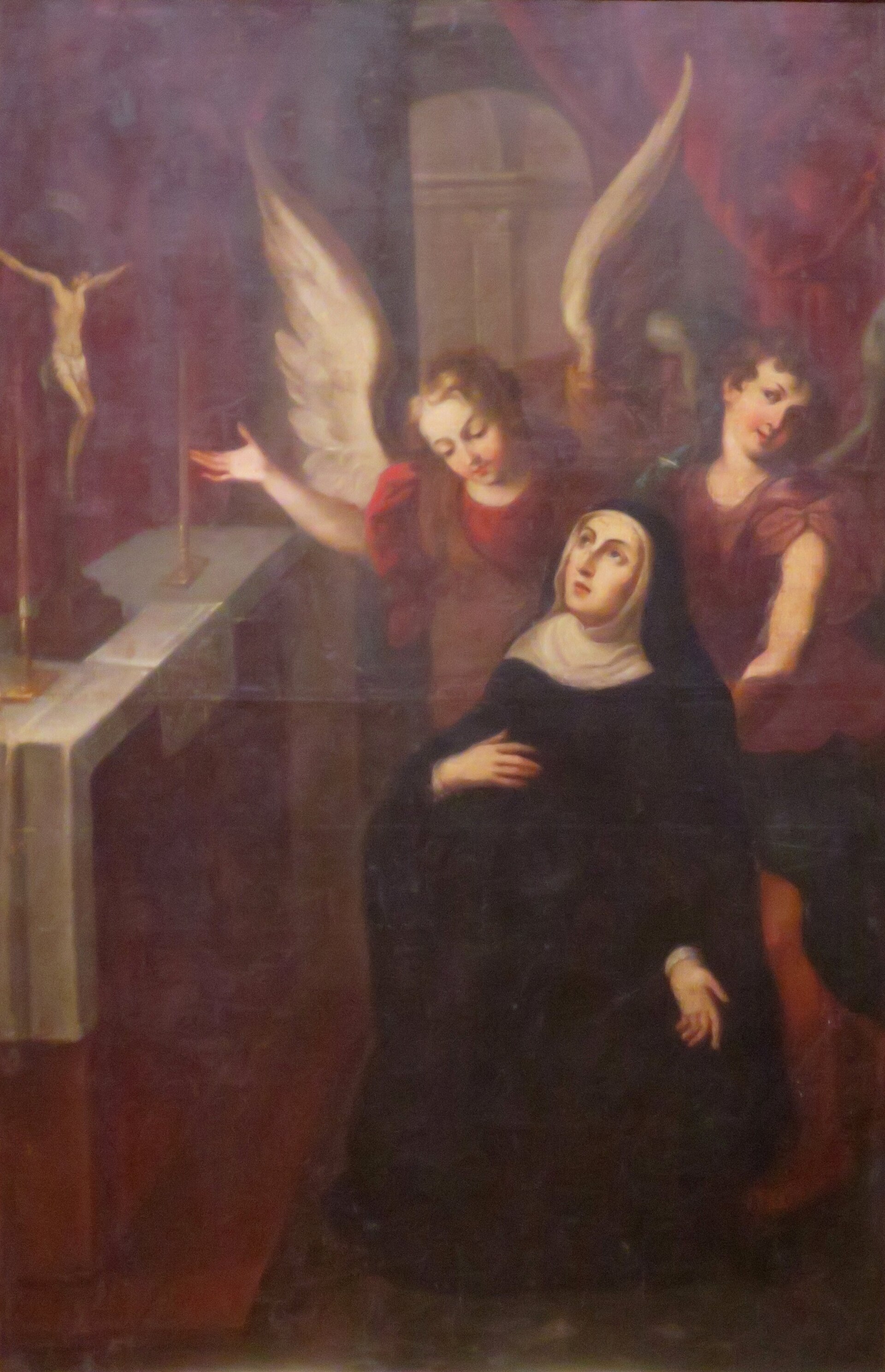
Rita spent some forty years in the convent, known for prayer, penance and care for the sick and troubled who came to the door. Around 1442, after meditating on Christ's Passion, she received a wound on her forehead that she understood as sharing one thorn of His crown; it stayed until her death. Rita died on May 22, 1457. Her life was written down long afterward, so many details come from local tradition. Urban VIII beatified (declared 'Blessed', the step before sainthood) her in 1627, and Leo XIII canonized (officially declared a saint by the pope) her (officially declared a saint by the pope) on May 24, 1900.