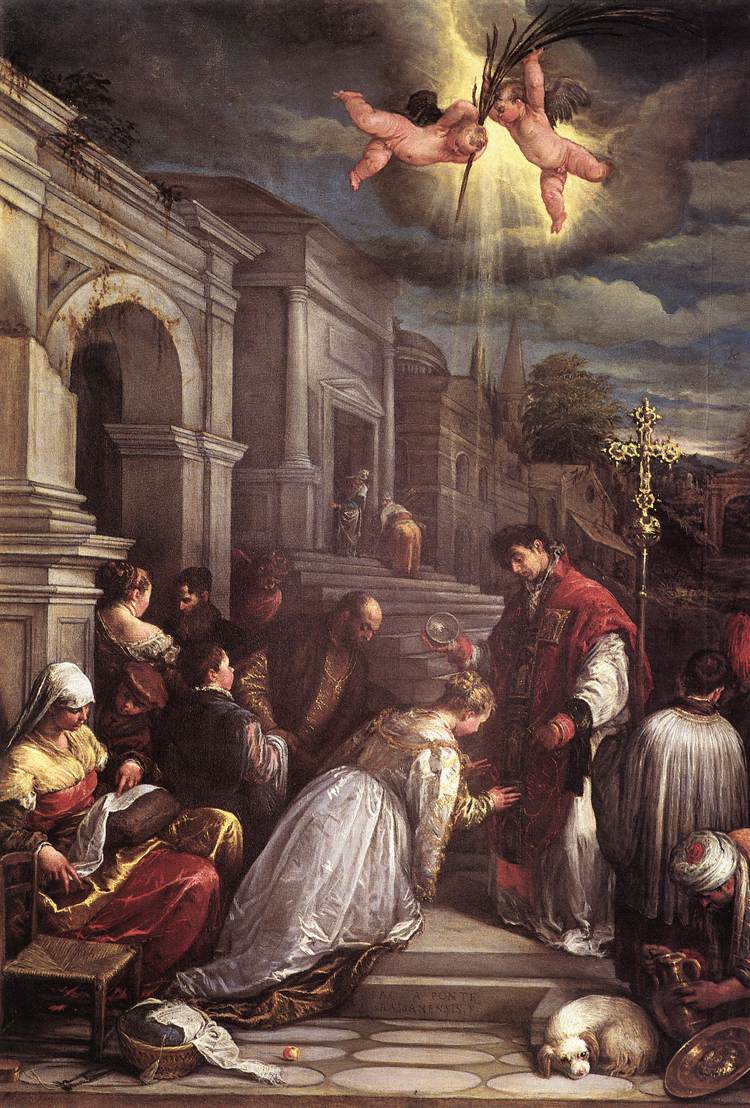
St. Valentine

A real martyr, a thin file, and a later custom of the date

Pray the novena →

St. Valentine

The Valentine of February 14 is a real martyr with a thin file. We know there was a grave on the Via Flaminia and a feast by the eighth century. We do not know, for certain, whether the priest of Rome and the bishop of Terni were one man or two. The cards and the lovers’ poems came much later.

Feast day

February 14
a Roman martyr; the cards came later

Patron of

Lovers (popular devotion)

This Saint’s Story

In our own words, from the sources listed below.

The early record says that a Christian named Valentine was buried on the Via Flaminia, north of Rome, and that by the eighth century the West was keeping his feast on that day. Accounts differ on whether he was a priest in Rome or a bishop of Terni, some sixty miles up the same road, or whether two men have been folded into one name. The honest answer is that we do not know. Terni and Rome have both claimed him. Relics from the cemetery of San Valentino in Rome were later moved to the church of Santa Prassede.

Later "acts" give him a trial before a judge, a healing, and a conversion. Those acts are late, and they should be read as legend around a real feast and a real grave. A still later story, popular in modern times, says he secretly married Christian couples when a Roman emperor had forbidden soldiers to marry. That story is not in the early notices. It should not be told as if it were.

From the later Middle Ages, February 14 gathered poems about love. Chaucer is often cited at the beginning of that custom. The modern valentine card is a nineteenth-century growth from the same date. It is a custom of the day. It is not a story the early church told about the martyr on the Via Flaminia. You can keep both facts at once: a man was killed for the faith, and, many centuries later, people began to send letters of love on his feast. The Eastern churches commemorate a Valentine on July 6.

For today: You can send a note of love on February 14 and still tell the truth about the saint. The early fact is a martyr buried on the Via Flaminia. The cards came later. If you write to someone, you can write plainly, and you can remember that the day first belonged to a man who paid with his life.
The short version

A Christian named Valentine was buried on the Via Flaminia and honoured on February 14 from at least the eighth century. Whether he was a priest of Rome or a bishop of Terni, or whether two men share the name, is not settled. Later acts and the story of secret marriages are late, and should not be told as early fact. The modern valentine is a custom of the date, not a story the early church told about him.

Did you know?

The feast is attested by the eighth century.

Priest of Rome and bishop of Terni may be one man or two.

The courtly-love customs are medieval and modern, not part of the third-century record.

Patron saint of

  • Lovers and engaged couples
    A medieval and modern association with the date, not a patronage recorded in the early acts. It is popular devotion, and it should be named as such.

The novena

Nine days · one intention

A novena is nine days of prayer for one intention, modeled on the nine days the apostles and Mary prayed between the Ascension and Pentecost (Acts 1–2). Pray this each day:

Nine days · Free

Pray the novena
with us.

One short email a day for nine days. The day's prayer, a line from St. Valentine's story, and a nudge to keep going.

Your Confirmation saint?

Choose St. Valentine if…

  • you want to send a note of love and still tell the truth about the saint
  • you are drawn to a martyr whose file is thin, and you can live with that
  • you dislike having a feast swallowed by a shop

Take the saint finder →  Need a sponsor?

Related saints
Sources & notes

Story sources

Sources

Credits

Image: Jacopo Bassano, Wikimedia Commons (Public domain)

We only print prayer texts we can trace to a public-domain printed source, and we have not verified one for St. Valentine yet. Until we do: for nine days, pray an Our Father, a Hail Mary and a Glory Be, then add your intention and “St. Valentine, pray for us.”

Help us add to this saint's story

Everything is read by a person before anything appears. Facts are checked against trusted sources first.

Facts are welcome; a source link helps (optional).With your permission we may share it on this page.