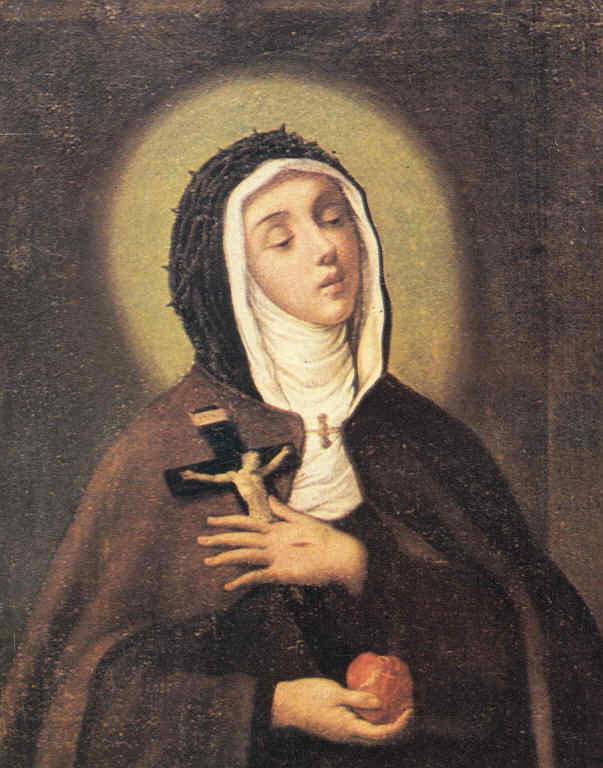
This Saint’s Story
She was the youngest of seven sisters, with a family background that encouraged a strong sense of compassion. From a young age, she demonstrated a remarkable concern for the poor, often sharing her food and clothing with those in need. Tragically, her mother passed away when she was just seven, which intensified her desire to dedicate her life to God. Despite her father's wishes for her to marry, Veronica felt a profound calling to religious life.
At the age of 17, she entered the Capuchin (a strict branch of the Franciscan (the order of friars founded by St. Francis of Assisi) friars, founded 1525) Poor Clares monastery in Città di Castello, taking on the name Veronica, which signifies 'true image.' Her early years in the convent were marked by significant spiritual struggles, including temptations to abandon her vocation. Despite these challenges, she remained obedient to her spiritual directors and embraced her role within the community, working in various capacities including the kitchen and infirmary.
Veronica's spiritual journey deepened over the years, culminating in her receiving the stigmata, which began with the marks of the crown of thorns in 1694 and the five wounds of Christ in 1697. These experiences led to her being placed under strict observation by her bishop, who eventually recognized the authenticity of her mystical experiences. Despite the trials she faced, she continued to serve her community with humility and practicality, eventually becoming novice mistress and later abbess.
Throughout her life, Veronica was known for her dedication to the spiritual formation of her sisters, emphasizing the importance of foundational Christian teachings over mystical texts. She led the convent for over fifty years, during which she improved the living conditions for her fellow nuns. Veronica died on July 9, 1727, after a long illness.
The Church recognized her sanctity by beatifying her on June 17, 1804, under Pope Pius VII, and later canonizing her on May 26, 1839, through Pope Gregory XVI. Veronica is often depicted in art with a crown of thorns and a cross, symbolizing her profound connection to the Passion of Christ.
