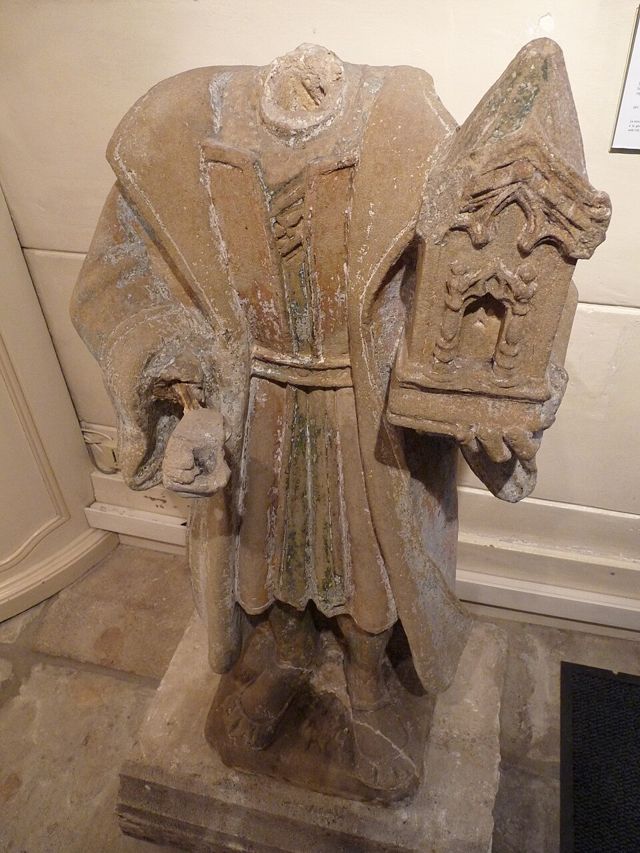
St. Romaric

Romaric was a noble at the court of Clotaire II.

Read the essentials →
Traditional feast December 8 · Abbot

St. Romaric

Feast

Traditional feast: December 8 (Baring-Gould, Lives of the Saints (this entry))
Traditional date · cited source, no current calendar entry found

Traditional feast

December 8
1914 / pre-1969 calendar, per Baring-Gould (1897)

Represents

Abbot

Feast days

Feast: December 8

This Saint’s Story

Adapted in modern English from Alban Butler's Lives of the Saints · Baring-Gould original below · little is known

He left the court and sold his estates for the poor.

At the foot of Mount Vosge he founded two monasteries, one for men and one for women, called Remiremont, with St Amatus of Luxeu as its first abbot. On Amatus's death Romaric succeeded him, and he governed as abbot for twenty-six years. He died in 653.

What he represents

How he teaches us to live

Drawn from themes in the original account

Build up the community you belong to. Community life is part of this story.

Give to people in need. The account records care for the poor.

The full story

Baring-Gould’s account retold in modern English

Read the full story · 1,161 words · about 5 min

…was now safe; but he seems to have been disillusioned with the world. After the death of Theoderic or Thierry, Romaric held a prominent position at the court of Clothair II., who was the sole ruler of the three Frank kingdoms. One day, Saint Amatus of Luxeuil visited the Vosges mountains and was welcomed by Romaric at his table. During the meal, Amatus picked up a silver dish and said, “You see this dish; how many masters, or rather slaves, has it already had, and how many more will it still have? And you, whether you like it or not, you are its servant; for you possess it only to keep it safe. But you will have to give an account of it; for it is written, ‘Your silver and gold shall rust, and that rust shall bear witness against you.’ I am amazed that a man of great heart, very wealthy, and intelligent, like you, does not remember the words of the Savior, ‘If you want to be perfect, go, sell all that you have, and give to the poor, and follow Me, and you will have treasure in heaven.’”

Romaric immediately decided to abandon the world. He distributed his lands to the poor, except for his castle of Habend, freed many serfs of both genders, and went to Luxeuil, taking with him all that remained of his wealth to become a monk. When he presented himself to the abbot to have his hair cut, as part of the admission rite into the order, several of the serfs he had freed came to the monastery for the same purpose. He gladly recognized his former servants, not only as brothers but as superiors; for he sought the lowest tasks in the monastery and excelled all the brothers in caring for the gardens, where he memorized the psalter while he worked. After several years there, during which his friendship with Amatus grew close and affectionate, the two friends left Luxeuil, having somehow fallen out of favor with the abbot, Eustace. With his permission, they went to Habend and established a monastery for women there, which has since been called Remiremont. Amatus was initially in charge of the nuns but soon handed that responsibility over to Romaric. In this renowned abbey, which was immediately placed under the rule of Saint Columbanus by its two founders, everything was set up on a grand scale, thanks to the influx of nuns and the generosity of the Austrasian kings. Remiremont quickly became for women what Luxeuil already was for men. The number of nuns allowed for the Laus perennis (a continuous prayer service) to be organized with seven choirs, who alternately sang praises to God in seven different churches or chapels. The fervor and discipline of these virgins earned the site occupied by their community the name of the “Holy Mount,” which it kept for several centuries.

Romaric led the monastery for thirty years. Before he entered Luxeuil, he had been married and had three daughters. The two younger daughters took the veil in the monastery of their father. The eldest daughter, who had married without Romaric's consent and without a dowry, tried to reclaim a part of her inheritance from him. She sent her first child, a girl, to her father, hoping that Romaric's heart would soften and that he would give his grandchild what he had denied his daughter. However, his religious beliefs had hardened into a singular focus on monastic life, which had suppressed all natural feelings of love and principles of fairness. He kept the child, placed her among the nuns, and she eventually became the abbess of Remiremont. Later, the mother had a son and sent him to his grandfather before he was even baptized, still hoping that the infant would touch Romaric's heart and secure a good inheritance from him. But Romaric treated him the same way he had treated his sister; he kept the child away from his mother and the comforts of home.

to be raised in the strict discipline of the monastery, and the child eventually became an abbot and a saint. There were two monasteries at Remiremont, one for women and the other for men, located side by side, but each had its own superior. Monks and nuns were presumably to each other only as brothers and sisters; however, since this affection sometimes seemed to go beyond those relations, the council of Agde, in 506, insisted on their separation. This directive, however, was widely ignored. The monastery for men, also governed by the rule of Columbanus due to its two founders, felt the unbearable weight of their rule and was open to Agrestin when he tried to organize a revolt against the tradition of Irish monasticism. After he was defeated by Eustace at the council of Mâcon and repelled by Saint Burgundofara at Faremoutier, he was welcomed by Amatus and Romaric, who were already inclined against the abbot of Luxeuil. The death of Agrestin and the failure of his plan led Amatus and Romaric to return to communion with Eustace. Amatus died on September 13, 627. At the end of his life, Romaric regained his former courage and began to take a political role in the affairs of his country once again. He had known, in the palace of the kings of Austrasia, the great and devout Pepin of Landen, whose son, Grimoald, had become very powerful as a minister under King Sigibert and threatened the rights and even the life of Dagobert, the young heir of this prince. Grimoald had the long hair of the prince—symbols of his royal status—cut off and sent the youth to Ireland under the care of Dido, bishop of Poitiers, likely with instructions that he should not be allowed to return. Romaric, hearing of Grimoald's ambitions and plans, despite his old age and a sense of impending death, came down from his mountain and made his way to the palace, which he had not seen for thirty years, to inform the nobles and Grimoald of the danger the country would face if such a course were taken. He arrived in the middle of the night: Grimoald, upon learning of his approach, went out to meet him with blazing pine torches. At the sight of his father’s friend, this old man of God, with his tall and impressive stature and serious demeanor, Grimoald trembled. Then he embraced him with great respect and listened patiently to his warnings, but did not act on them. Romaric left, burdened with gifts. Three days later, Romaric, who had returned to the monastery, visiting on his way the cultivated lands that belonged to it, died and was buried beside Amatus, his friend and mentor.

A woman, kneeling by the single tomb that held the two bodies, thought she heard Amatus and Romaric talking to each other in their narrow resting place. The biographer of that time has chosen to note this woman's delusion, or poetic imagination.

Footnotes

  1. Laus perennis: a continuous prayer service.
  2. Amatus died on September 13, 627.
  3. Grimoald had the long hair of the prince—symbols of his royal status—cut off.
  4. Romaric had not seen the palace for thirty years.

Baring-Gould’s own footnotes, in modern English.

Read the original 1870s text

Baring-Gould’s sources: Roman, Galilean, and Benedictine Martyrologies. At Toul on Dec. 9. Authority:— A Life by an anonymous monk, according to Mabillon, nearly a contemporary, in Mabillon, Acta SS. O. S. B. t ii.; also the Lives of S. Eustace of Luxeuil, and of S. Amatus.] Romaric was the son of Romulf, a noble in the Vosges. In the struggle between Theodebert and Theoderic, Brunehild had Romulf put to death, and confiscated his lands. Romaric went to Metz, where Queen Brunehild held her court for Theodebert her grandson. She had by her Aridius, bishop of Lyons, a great favourite, the counsellor, if we may trust Fredegar, of the barbarous murder of S. Desiderius of Cahors. Romaric cast himself at the feet of the bishop, and implored his intercession to obtain the restoration of his estates. Aridius kicked him in the face, and drove him away with blows. Romaric took refuge in the church of S. Martin. Next day came news of the death of Theoderic. Romaric S. Romaric.

…was now safe; but he seems to have been disgusted with the world. On the death of Theoderic or Thierry, Romaric occupied a high position at the court of Clothair II., then sole master of the three Frank kingdoms. One day S. Amatus of Luxeuil came into the Vosges, and was received by Romaric at his table. During the repast Amatus took up a silver dish, and said: “ Thou seest this dish; how many masters, or rather slaves, has it already had, and how many more will it still have ? And thou, whether thou wilt or not, thou art its serf: for thou possessest it only to preserve it But an account will be demanded of thee; for it is written, 1 Your silver and gold shall rust, and that rust shall bear witness against you/ I am astonished that a man of great heart, very rich, and intelligent, like yourself, should not remember the words of the Saviour, ‘ If thou wilt be perfect, go, sell all that thou hast, and give to the poor, and follow Me, and thou shalt have treasure in heaven/ ”

Romaric at once resolved on abandoning the world. He distributed his lands to the poor, with the exception of his castle of Habend, freed a number of serfs of both sexes, and went to Luxeuil, taking with him all that remained of his wealth, to become a monk. When he presented himself to the abbot to have his hair cut, according to the rite of admission into the order, several of the serfs whom he had liberated appeared at the monastery for the same purpose. He gladly recognized his old servants, not only as brethren, but as superiors; for he sought the lowest occupations in the monastery, and surpassed all the brethren in care for the cultivation of the gardens, where he learned the psalter by heart as he laboured. After some years' residence there, during which time his friendship with Amatus became intimate and affectionate, the two friends left Luxeuil, where, for some unknown reason, they had incurred the displeasure of the abbot, Eustace. With his permission they went to Habend, and founded there a monastery for women, which has since borne the name of Remiremont Amatus was charged with the government of the nuns, but soon devolved it on Romaric. In this celebrated abbey, which was immediately put under the rule of S. Columbanus [Irish monk (d. 615) who founded monasteries in France and Italy] by its two founders, everything was established on a magnificent scale, owing to the influx of nuns, and the liberality of the Austrasian kings. Remiremont soon became for women what Luxeuil already was for men. The number of nuns permitted the Laus perennis to be organized by means of seven choirs, who alternately sang the praises of God in seven different churches or chapels. The fervour and regularity of these virgins procured for the site occupied by their community the name of the “ Holy Mount,” which it retained for some centuries.

Romaric directed it for thirty years. Before entering Luxeuil he had been married, and had three daughters; the two younger took the veil in the monastery of their lather. The eldest, who had married without the consent of Romaric, and without a fortune, attempted to reclaim a portion of her paternal inheritance. She sent to her father her first child, a girl, hoping that the heart of Romaric would soften, and that he would bestow on his grandchild what he had refused to his daughter. But his religious prejudices had stiffened into the one prevailing idea of monastic life, and had frozen out all the natural instincts of affection and principles of justice. He kept the child, placed her among the nuns, and she became eventually abbess of Remiremont Then the mother, having a son, sent him, before he was even baptized, to his grandfather, still in the hope that the little babe would touch his heart, and obtain from the old man a good inheritance. But Romaric acted with him as with his sister; he kept the child from the arms of its mother and the influence of home, S. Romaric.

to be nursed in the hard discipline of the monastery, and the child became eventually an abbot and a saint. There were two monasteries at Remiremont, one for women, the other for men, side by side, but with a special superior for each of the communities. Monks and nuns were presumably to one another only as brothers and sisters; but as this affection sometimes warmed beyond such relations, or was thought to do so, the council of Agde, in 506, insisted on their separation. This injunction was, however, everywhere disregarded. The monastery of men, also placed under the rule of Columbanus by its two founders, felt the intolerable burden of their rule, and was ready to listen to Agrestin when he attempted to organize an insurrection against the tradition of Irish monachism. After he had been overcome by Eustace at the council of M&con, and repulsed by S. Burgundofara at Faremoutier, he was received by Amatus and Romaric, who were already biassed against the abbot of Luxeuil. The death of Agrestin, and the failure of his scheme, induced Amatus and Romaric to return into communion with Eustace. Amatus died on Sept. 13, 627. At the end of his life Romaric regained his olden courage, and began once more to play a political part in the affairs of his country. He had known, in the palace of the kings of Austrasia, the great and pious Pepin of Landen, whose son, Grimoald, had become all powerful as minister under King Sigibert, and threatened the rights and even the life of Dagobert, the young heir of this prince. Grimoald had the long locks of the prince — tokens of his royal rank — shorn off, and sent the youth to Ireland under the care of Dido, bishop of Poitiers, no doubt with instructions that he should not be suffered to return. Romaric, hearing of the ambition and designs of Grimoald, despite his age and presentiment of approaching death, descended from his mountain, and took his way to the palace, which he had not seen for thirty VOL. xv. 8 years, to intimate to the nobles and to Grimoald the peril the country would run should such a course be pursued. He arrived in the middle of the night: Grimoald, on being informed of his approach, went to meet him with blazing pine torches. At the sight of his father’s friend, of this old man of God, with his elevated and imposing stature and solemn aspect, he trembled. Then he embraced him with great respect, listened to his warnings with patience, but did not act upon them. Romaric retired laden with presents. Three days after, Romaric, who had returned to the monastery, visiting on his way the cultivated lands which belonged to it, was dead and buried beside Amatus, his friend and master.

A woman, kneeling by the one tomb which enclosed the two bodies, thought that she heard Amatus and Romaric conversing together in their narrow bed, and the contemporary biographer has condescended to record the delusion, or poetic fancy, of the woman.
Help us add to this saint's story

Everything is read by a person before anything appears. Facts are checked against trusted sources first.

Facts are welcome; a source link helps (optional).With your permission we may share it on this page.

Nine days · Free

Pray the novena
with us.

One short email a day for nine days. The day's prayer, a line from St. Romaric's story, and a nudge to keep going.

Also on December 8
St. Eutychianus, Pope

St. Eutychianus

December 8 · Feast
St. Narcisa de Jesús

St. Narcisa de Jesús

December 8 · Virgin, Religious
The Immaculate Conception

The Immaculate Conception

December 8 · Feast
← All 1970 saints in the library
Sources & notes

Feast-day sources

Story sources

Sources

Credits

Image: Saint Romaric-Statue du 17e siècle.jpg · Ji-Elle · CC BY-SA 3.0, via Wikimedia Commons

Image: Ji-Elle, Wikimedia Commons (CC BY-SA 3.0)

Retold in plain modern English from Baring-Gould’s public-domain text, sentence by sentence, keeping the same facts and order. Short explanations in parentheses are ours.

From Sabine Baring-Gould, The Lives of the Saints, new edition in 16 vols. (London: John C. Nimmo, 1897–98); text from the Internet Archive scan (OCR, lightly cleaned; errors possible). Public domain in the United States. Reproduced unedited, except for short bracketed notes in grey that we added to explain names and terms (“S.” is the old abbreviation for Saint). Some history and judgments reflect 19th-century scholarship.