This Saint’s Story
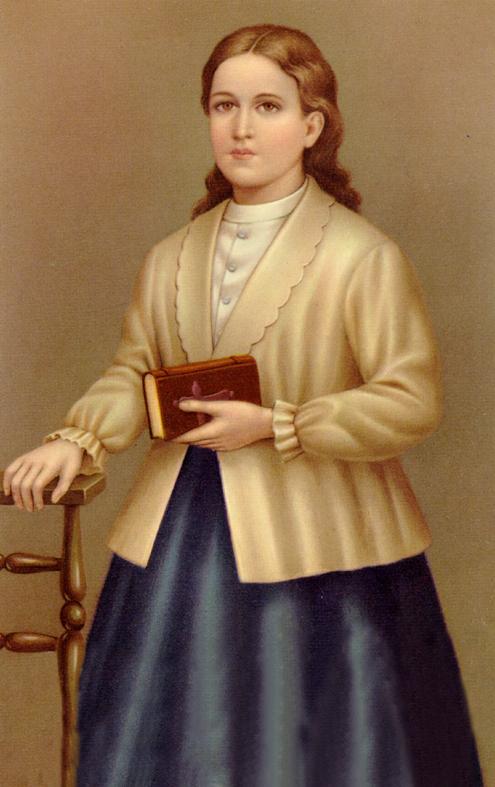
Narcisa de Jesús Martillo Morán entered the world on October 29, 1832, in the small village of Nobol, Ecuador. Following the death of her mother when Narcisa was just six years old, she took on many household responsibilities. With the help of her older sister and a teacher, she learned to read, write, and develop various skills, including music and sewing. Her spiritual life blossomed as she often sought solitude in a nearby forest for contemplation, even creating a small chapel in her home.
After her father passed away in January 1852, Narcisa moved to Guayaquil to live with a noble family. There, she dedicated herself to serving the poor and sick, often caring for abandoned children. To support her charitable efforts and her siblings, she worked as a seamstress. Seeking a more profound spiritual experience, she spent some time in Cuenca, living with different families while continuing her mission of service and prayer. During this period, she faced significant spiritual challenges, including the loss of her spiritual director.
In June 1868, she followed the guidance of a new spiritual advisor and relocated to Lima, Peru, where she joined the Dominican (the Order of Preachers founded by St. Dominic) convent of Patrocinio as a lay member. In this environment, she committed herself to a rigorous routine of prayer and penance, often dedicating eight hours a day to contemplation. Her life was characterized by strict fasting, and she frequently experienced deep spiritual ecstasy during her prayers, which drew admiration from those around her.
Narcisa's health began to deteriorate in late September 1869, and despite medical interventions, she succumbed to high fevers on December 8, 1869. This date coincided with a significant event in the Church, as it marked the beginning of the First Vatican Council. After her passing, witnesses reported a sweet fragrance in her room, and her body was later found to be incorrupt (not decayed after death). Her remains were eventually returned to Ecuador in 1972, where they now rest in Nobol, her birthplace. The local community began to venerate her as a saint shortly after her death, leading to the formal process for her beatification.
The cause for Narcisa's beatification commenced in 1961, and she was declared venerable in 1987 by Pope John Paul II, who recognized her heroic virtue. A miracle attributed to her intercession was validated in 1992, leading to her beatification on October 25 of that year. A second miracle was confirmed in 2007, resulting in her canonization by Pope Benedict XVI on October 12, 2008.