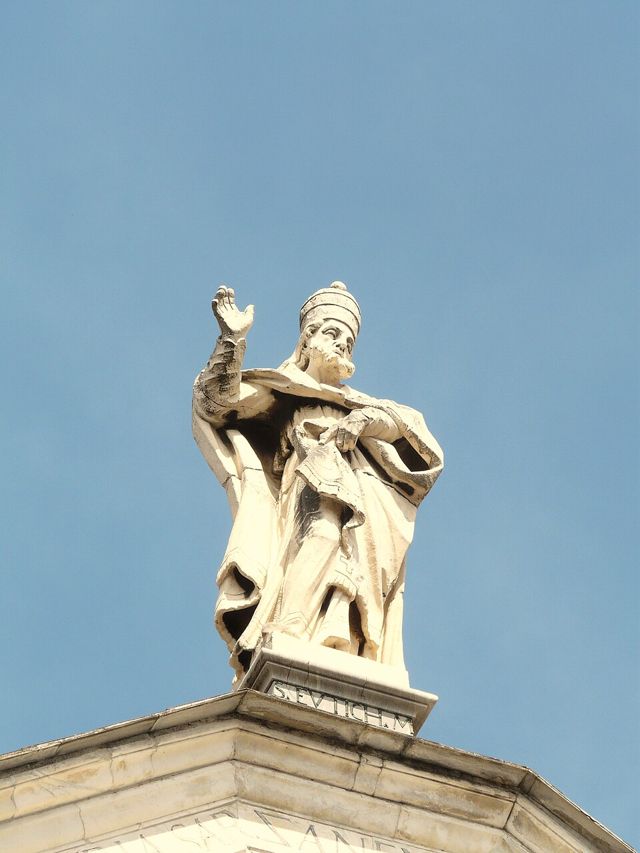
St. Eutychianus, Pope

Eutychianus succeeded Pope Felix I a few days after Felix's death and governed the Church from January 275 until 7 December 283, a reign of nearly nine years. He was a Tuscan by birth.

Read the essentials →
Feast December 8 · —

St. Eutychianus, Pope

Current feast

December 8
Secondary source · Wikipedia infobox

Traditional feast

December 8
1914 / pre-1969 calendar, per Baring-Gould (1897)

Represents

Feast

Feast days

Feast: December 8

This Saint’s Story

Baring-Gould says he was a Tuscan by birth. Of the details of his pontificate the Catholic Encyclopedia states that nothing is known.

The Liber Pontificalis (the early medieval 'Book of the Popes', not always reliable for the earliest ones) credits him with a rite for blessing the produce of the fields, but that rite, the Encyclopedia notes, clearly belongs to a later period. It also says he made rules for burying martyrs and buried many with his own hands. That claim has but slight claim to acceptance: after the death of the Emperor Aurelian in 275 the Church enjoyed a long rest from persecution, so there was no stream of new martyrs to bury. Baring-Gould adds that the statement in Usuardus and the Roman Martyrology (the Church's official list of saints for each day) that he buried three hundred and forty-two martyrs with his own hands is a manifest exaggeration.

It is highly probable, says the Catholic Encyclopedia, that Eutychianus did not die a martyr. The fourth-century Roman Calendar lists him on 8 December in the Depositio Episcoporum, among the bishops, not among the martyrs. Baring-Gould records the contrary later tradition that he is thought to have suffered martyrdom himself; the earlier Roman evidence points the other way.

His remains were laid in the papal chapel in the Catacomb of Callistus. When that famous crypt was rediscovered in the nineteenth century, fragments of his epitaph were found there - his name in Greek letters with the word for bishop: EUTYCHIANOS EPIS(KOPOS). De Rossi published the find from the papal crypt. The Roman Martyrology and the Church keep his feast on 8 December, the day after the Liber Pontificalis date of his death.
What he represents

How he teaches us to live

Drawn from themes in the original account

Celebrate this saint’s feast day. Remember him on December 8 with a short prayer, and ask for his help.

From the Catholic Encyclopedia

1913 · 185 words

Eutychianus [followers of Eutyches, who said Christ had only a divine nature; condemned at Chalcedon in 451], Saint, Pope. He succeeded Pope Felix I a few days after the latter's death, and governed the Church from January, 275, until December 7, 283. We know no details of his pontificate. The rite for blessing the produce of the fields, ascribed to him by the "Liber Pontificalis", undoubtedly belongs to a later period. The statement also that he promulgated rules for the burial of martyrs and buried many of them with his own hands, has but slight claim to acceptance, since after the death of Aurelian [Roman emperor 270–275] (275) the Church enjoyed a long respite from persecution. It is highly probable that Eutychianus did not die a martyr. The fourth-century Roman Calendar mentions him (December 8) in the "Depositio Episcoporum", but not in its list of martyrs. His remains were placed in the papal chapel in the Catacomb of Callistus. When this famous crypt was discovered the fragments of the epitaph of Eutychianus were found, i.e. his name (in Greek letters): EUTYCHIANOS EPIS (KOPOS). His feast is celebrated on December 8.

Duchesne (ed.), Liber Pontificalis, I, 159; De Rossi, Roma sotterranea, II (Rome, 1867), 70-72.

Read more

The full original · 62 words

Read Baring-Gould’s full account

Baring-Gould’s sources: Roman Martyrology. Usuardus, &c.

Of Eutychianus [followers of Eutyches, who said Christ had only a divine nature; condemned at Chalcedon in 451], pope of Rome, who succeeded Felix, next to nothing is known. The statement made by Usuardus [a 9th-century monk of Paris who compiled a list of saints for each day] and the Roman martyrology, that “ he with his own hands buried three hundred and forty-two martyrs,” is a manifest exaggeration. He is thought to have suffered martyrdom himself, and was laid in the cemetery of S. Calixtus. He was a Tuscan by birth.

Help us add to this saint's story

Everything is read by a person before anything appears. Facts are checked against trusted sources first.

Facts are welcome; a source link helps (optional).With your permission we may share it on this page.

Nine days · Free

Pray the novena
with us.

One short email a day for nine days. The day's prayer, a line from St. Eutychianus's story, and a nudge to keep going.

Also on December 8
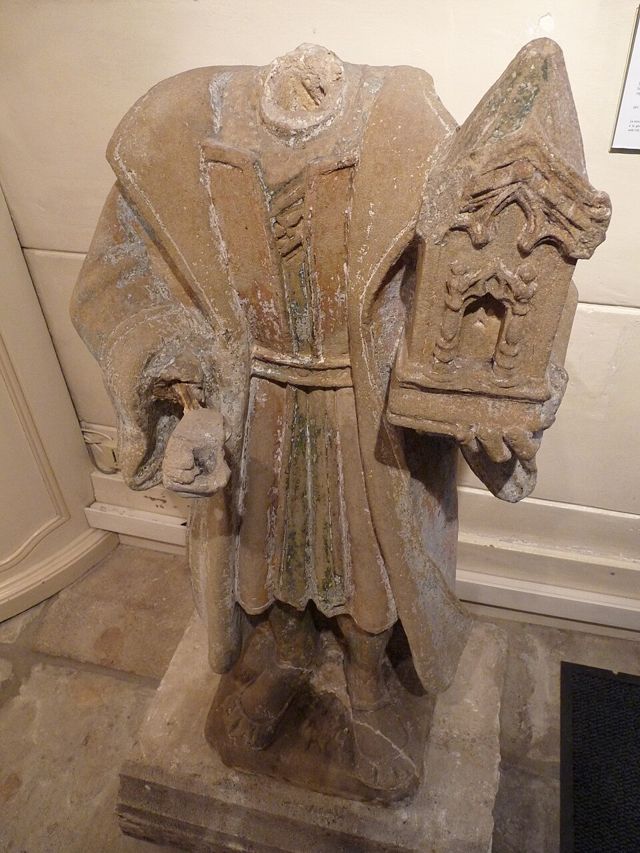
St. Romaric

St. Romaric

December 8 · Abbot
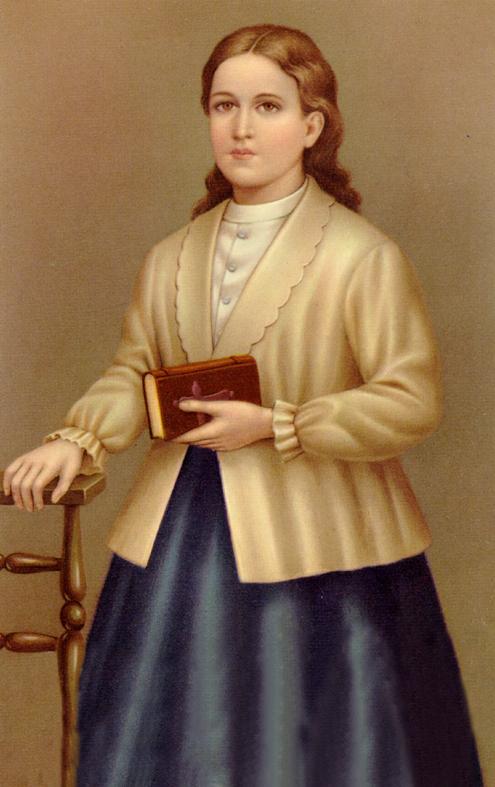
St. Narcisa de Jesús

St. Narcisa de Jesús

December 8 · Virgin, Religious
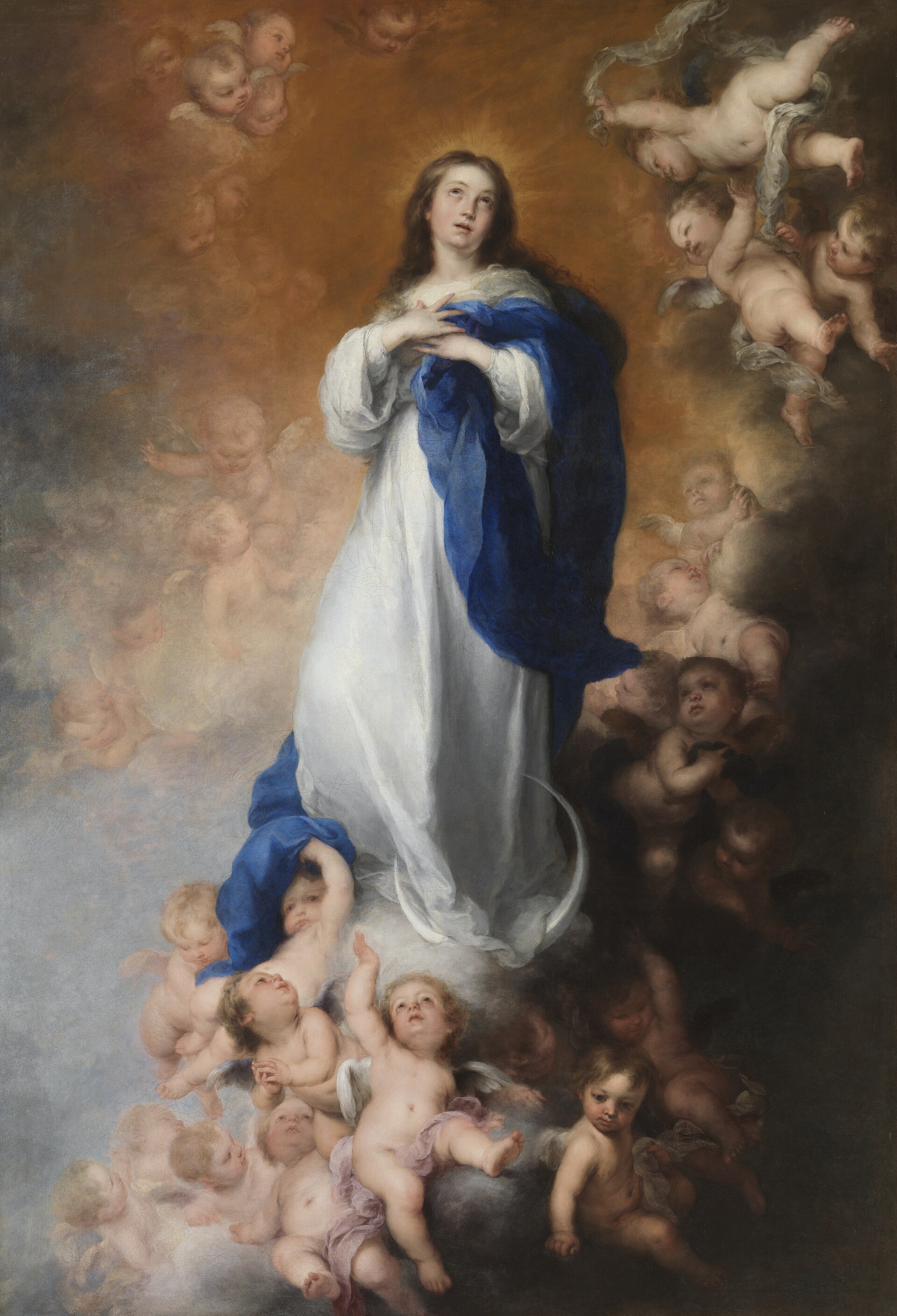
The Immaculate Conception

The Immaculate Conception

December 8 · Feast
← All 1970 saints in the library
Sources & notes

Feast-day sources

Story sources

Sources

Credits

Image: Sarzana-cattedrale-facciata3.jpg · Davide Papalini · CC BY-SA 3.0, via Wikimedia Commons

Image: Davide Papalini, Wikimedia Commons (CC BY-SA 3.0)

From “Catholic Encyclopedia (1913)/Pope St. Eutychianus,” The Catholic Encyclopedia (New York: Robert Appleton Company, 1907–1914), via Wikisource. Public domain. Matched by name and feast date; text unedited except for our bracketed notes in grey.

From Sabine Baring-Gould, The Lives of the Saints, new edition in 16 vols. (London: John C. Nimmo, 1897–98); text from the Internet Archive scan (OCR, lightly cleaned; errors possible). Public domain in the United States. Reproduced unedited, except for short bracketed notes in grey that we added to explain names and terms (“S.” is the old abbreviation for Saint). Some history and judgments reflect 19th-century scholarship.

Notes

Story retold in our own words from the cited sources.