This Saint’s Story
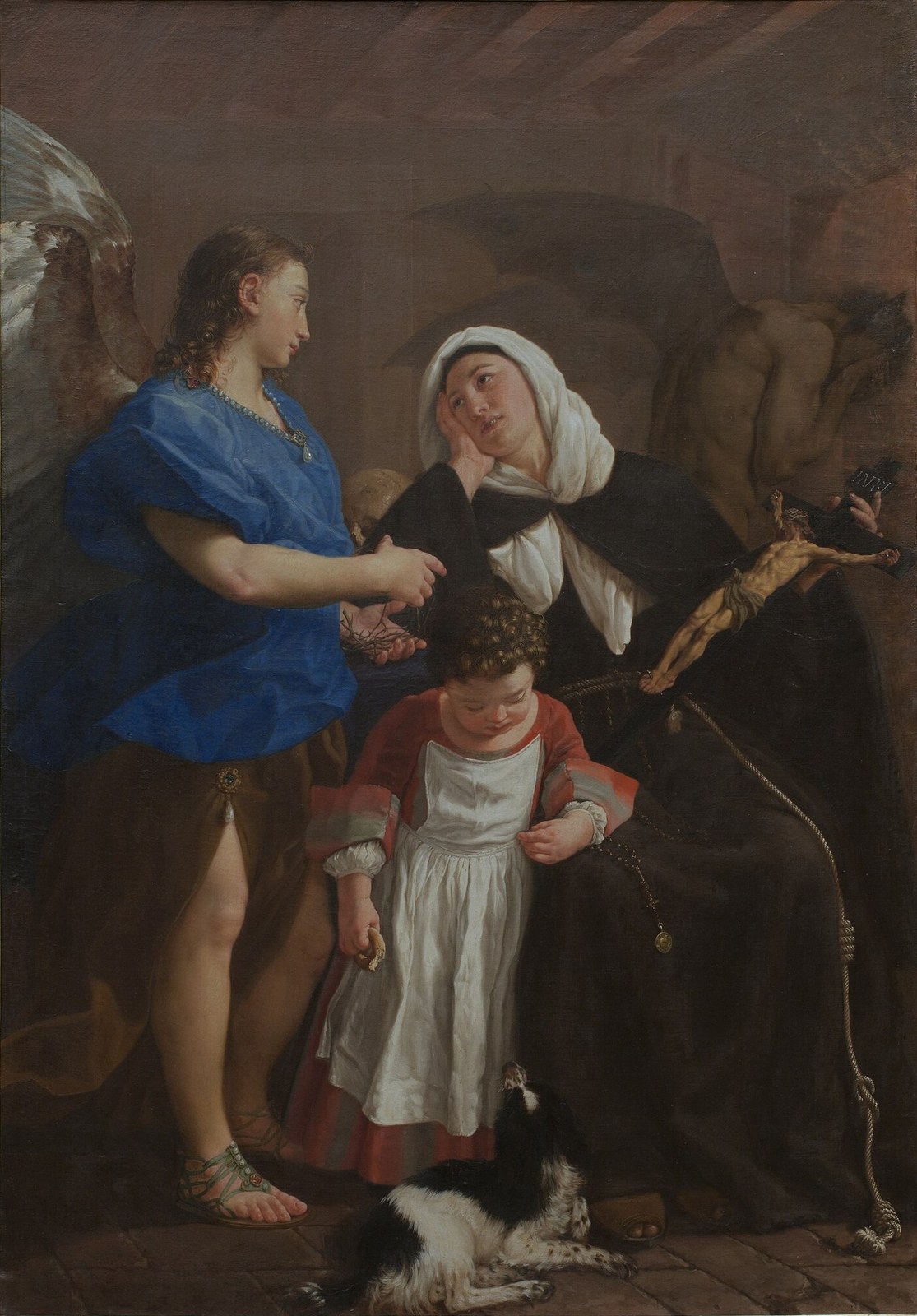
After her mother passed away when she was seven, her father remarried, leading to a strained relationship with her stepmother. As a teenager, she became involved with a young knight, living with him for nine years and bearing a son. However, their relationship ended tragically when the knight was murdered, an event that deeply affected Margaret and prompted her to seek a new path.
Following the death of her lover, Margaret turned to prayer and penance, renouncing her previous life. She returned to her father's house with her son, but was rejected by her stepmother. Seeking guidance, she approached the Franciscan (the order of friars founded by St. Francis of Assisi) friars in Cortona, where she found support from two women who offered her shelter. This marked the beginning of her transformation as she dedicated herself to serving the poor and the sick.
Margaret's life as a penitent was marked by extreme self-discipline and devotion. She engaged in rigorous fasting and sought to atone for her past. After three years of probation, she was accepted into the Franciscan Third Order in 1277. Her commitment to prayer and contemplation deepened, and she felt a strong mystical connection to Christ, which guided her in her charitable works.
In her new life, Margaret founded a hospital for the sick and impoverished, and she also created a group of women dedicated to caring for those in need. She established a confraternity focused on supporting the hospital and assisting the poor. Her reputation for holiness grew, and she became a spiritual guide for many penitents seeking her counsel.
Margaret spent her final years in contemplation at a small church that she helped to restore. She passed away on February 22, 1297, and was immediately venerated as a saint. Official canonization came much later, on May 16, 1728, by Pope Benedict XIII.