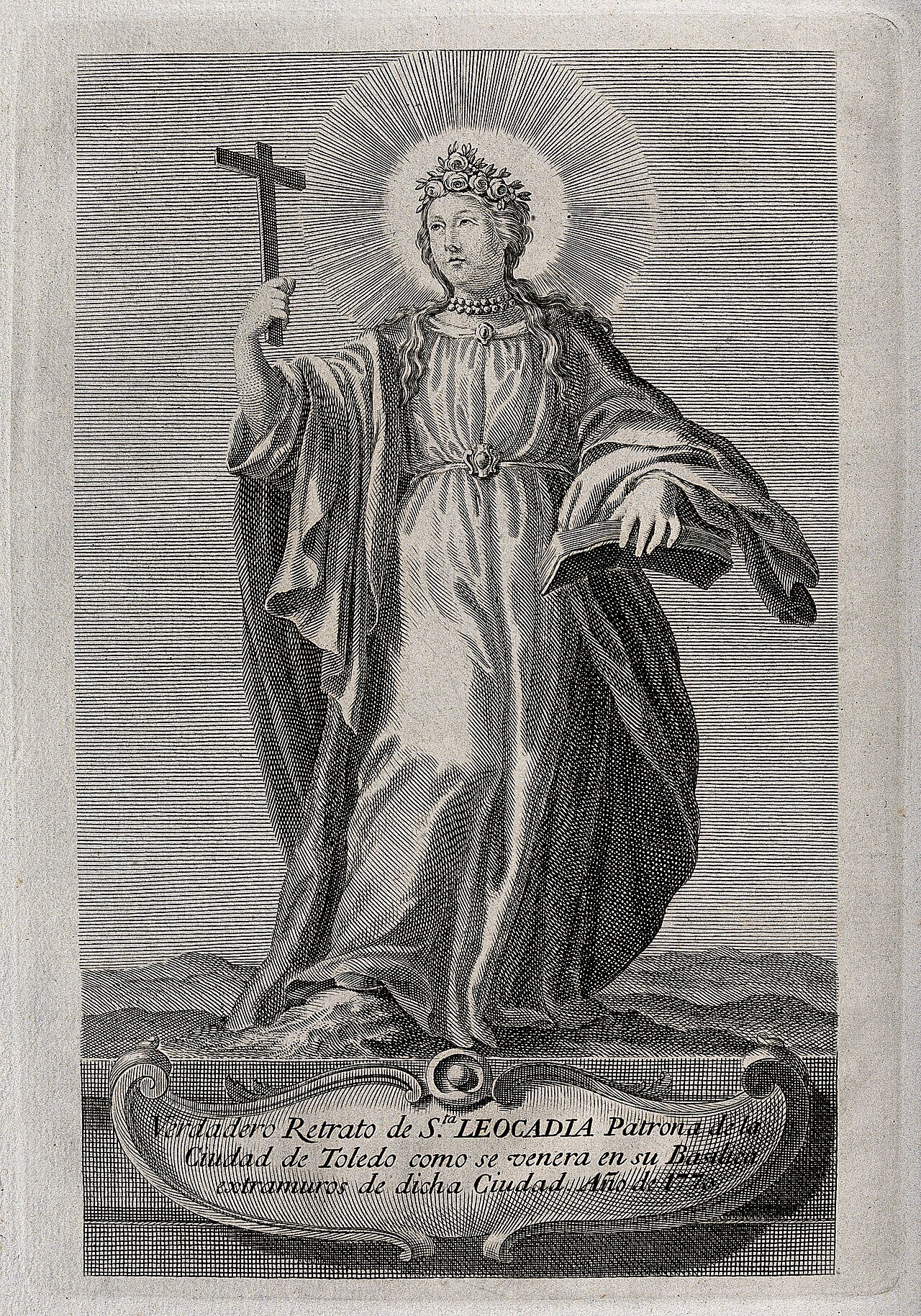
…was whipped, then sent back to prison and kept for another trial. While in her cell, suffering from the blows she had received, she heard about the martyrdom of Saint Eulalia in Merida. The account of the suffering she had endured affected her deeply, especially since her own nerves were shaken by the treatment she had experienced, and she died in prison. It is said that she scratched a cross on the wall of her prison and kissed it before she died. There are three churches in Toledo dedicated to her: one built over her tomb, another located at the site of the prison that contains the stone on which she scratched a cross, and the third stands where her family home once was.
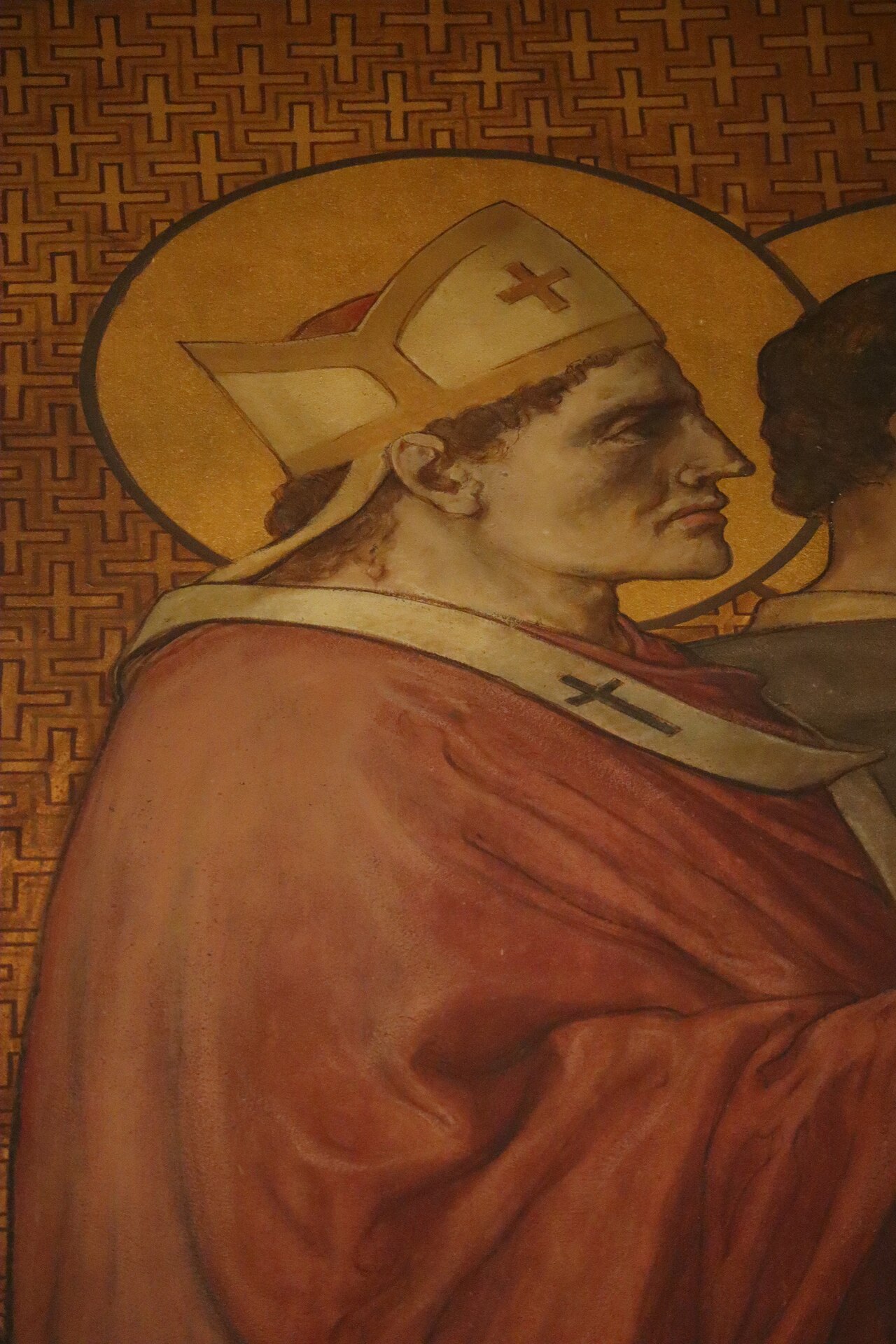
According to a strange legend, when Saint Ildefons of Toledo (died 667) was praying in the church of Saint Leocadia on her feast day, in the presence of King Receswinth, the tomb opened by itself. The martyr rose from it, took the archbishop by the hand, and proclaimed loudly, “O Ildefons, by you the life of Our Lady has been maintained!” This referred to his defense of the virginity of the Virgin Mary against heretics who claimed she had become a mother by Joseph of “the brethren of the Lord.” While she was speaking, Ildefons, thinking wisely about relics, grabbed the king’s sword with his free hand. As the virgin martyr gracefully returned to her grave, he cut off a piece of her veil, which is preserved in the church and is still honored today.
On another occasion, the Blessed Virgin Mary herself appeared to Saint Ildefons and gave him a chasuble, saying, “Receive this offering from my hands, which I have brought you from my Son’s treasury.”
The Church of Spain established a festival on January 21 to commemorate this latter miracle. If actual fraud was not involved on both occasions, then unscrupulous supporters invented these stories to bolster a disputed doctrine. Relics are found in Toledo, Oviedo, Soissons, and Saint Ghislain in Flanders; also at Vic-sur-Aisne near Soissons.
Read the original 1870s text
Baring-Gould’s sources: Usuardus, Ado, Notker, etc. Roman and Spanish Martyrologies. Authority: — The Acts of the Martyrdom, not ancient ]. LEOCADIA is not mentioned by Prudentius of Saragossa (d. 405), who celebrated most of the Spanish saints. But it is certain that the fourth council of Toledo (a.d. 633) was held in a church dedicated to this saint;3 so that in the seventh century she received veneration. The Acts, which are not very trustworthy, say that she was of noble birth, and a native of Toledo. She was summoned before Dacian, governor of Spain under the emperors Diocletian and Maximian, and 1 Pretended to have been disciple of the Apostles; probably belongs to the |th cent.
…was scourged, then sent back to prison and reserved for another trial. Whilst in her dungeon, suffering from the blows she had received, she heard of the martyrdom of S. Eulalia at Merida, and the account of the sufferings she had undergone produced such an effect on her nerves, shaken by the treatment she had herself endured, that she died in prison. She is said to have scratched a cross on the wall of her prison, and to have kissed it before she died. There are three churches in Toledo dedicated to her: one built over her tomb, another occupies the site of the prison and contains the stone on which she scratched a cross, the third stands where was her family mansion. According to an absurd legend, when S. Ildefons of Toledo (d. 667) was praying in the church of S. Leocadia, on her festival, in the presence of King Receswinth, the tomb opened of its own accord, and the martyr, rising from it, took the archbishop by the hand and proclaimed in a loud voice, “ O Ildefons, by thee the life of Our Lady has been maintained ! ” alluding to his defence of the immaculate virginity of the Virgin Mary against the heretics who argued that she had become a mother by Joseph of “ the brethren of the Lord.” Whilst she was talking, Ildefons, with a prudent eye to relics [the bodily remains of a saint, or objects they used, kept with honor], got hold of the king’s sword with his disengaged hand, and as the virgin martyr was gracefully retiring back into her grave, he snipped off part of her veil, and this fragment is preserved in the church, and receives the most devout homage to this day.
On another occasion the Blessed Virgin Mary herself appeared to S. Ildefons and presented him with a chasuble, saying, “ Receive this offering at my hands, which I have brought thee from my Son’s treasury.”
The Church of Spain instituted a festival on Jan. 21, in commemoration of this latter marveL If actual fraud was not on both occasions resorted to, to 6". Gorgonia.
help on the cause of orthodoxy, unscrupulous partisans invented these tales for the purpose of giving support to a controverted dogma. Relics at Toledo, at Oviedo, Soissons, and S. Ghislain in Flanders; also at Vic-sur-Aisne near Soissons.