St. Kevin

Kevin, called Coemgen in the Catholic Encyclopedia, was abbot of Glendalough in Ireland.

Read the essentials →
Feast June 3 · Abbot

St. Kevin

Current feast

June 3
Secondary source · Wikipedia infobox

Traditional feast

June 2
1914 / pre-1969 calendar, per Baring-Gould (1897)

Represents

Abbot

Feast days

Feast: June 3
Traditional: June 2

This Saint’s Story

The encyclopedia says he was born about 498—the date is very obscure—and died on 3 June 618; his name means “fair-begotten.” He was the son of Coemlog and Coemell (Baring-Gould writes Coemella). Baptized by St. Cronan and educated by St. Petroc, a Briton, he studied under monks from his twelfth year and eventually took the monastic life. The site’s calendar keeps him on 2 June; the encyclopedia and Baring-Gould give 3 June as the day of his death.

He founded the famous monastery of Glendalough—the Valley of the Two Lakes—parent of several other houses. After visiting Sts. Columba, Comgall and Cannich at Usneach (Usny Hill) in Westmeath, he went on to Clonmacnoise, where St. Cieran (Kieran) had died three days before, in 544. Having settled his community, he withdrew into solitude for four years and returned to Glendalough only at his monks’ earnest entreaty. He belonged to the second order of Irish saints and, the encyclopedia judges, was probably never a bishop. His followers were so many that Glendalough became a veritable city in the desert. The see later raised there is now incorporated with Dublin. St. Kevin’s house and the rock bed called St. Kevin’s Bed are still shown, and the Seven Churches of Glendalough have drawn pilgrims for centuries. His festival is kept throughout Ireland.

Baring-Gould warns that the written life abounds in marvels, sometimes of grotesque absurdity, and was composed very late, yet that the main outline can be drawn from the tangle of tradition: an O’Toole family origin, schooling under holy fathers, ordination, an earlier house at Cluainduach, care of the infant Foelan fed on a doe’s milk, and a hermit’s dry advice—“Birds do not hatch eggs whilst on the wing”—that kept the aged abbot from a long pilgrimage so he could perfect his foundations. When death drew near he received Viaticum from St. Mochnorog, a Briton who had a cell east of Glendalough.

Short entry · the summary here is 76 words; Baring-Gould’s fuller original text and its sources are below. We have not filled any gap with invented detail.

What he represents

How he teaches us to live

Drawn from themes in the original account

Make time for silence. Time alone in prayer is part of this story.

Celebrate this saint’s feast day. Remember him on June 3 with a short prayer, and ask for his help.

The full story

Baring-Gould’s account retold in modern English

Read the full story · 91 words · about 1 min

When he was quite old, he thought about going on a long pilgrimage, but he was discouraged by Carbhan, a hermit, who said dryly, “Birds do not hatch eggs while on the wing.” Coemgen understood the message and stayed at Glendalough, improving his institutions and spreading them to different places. When he sensed that his end was near, he received the holy Viaticum (the Eucharist given to someone near death) from S. Mochnorog, a Briton who had a cell to the east of Glendalough, and he died on June 3rd, 618.

Footnotes

  1. Viaticum: the Eucharist given to someone near death.

Baring-Gould’s own footnotes, in modern English.

Read the original 1870s text

Baring-Gould’s sources: Irish Martyrologies. Authority: — A life abounding in marvels, sometimes of grotesque absurdity,1 written very late, as is the case with all the lives of Irish saints. However, the main outlines of his story may be unravelled from the tangle of traditions which compose his life.J S. Kevin or Coemgen (the Fairbegotten) was of an illustrious family, in the country of the O’Tooles. His 1 Once a man ran away from twelve men who sought his life, to seek the protection of S. Kevin. The cell*door was shut, so he cast himself down outside. The pursuers came up. and seeing the door shut said, “ Here is a log of wood, we will sit on it and wait till our man comes out.*' Now by the virtue of S. Kevin to their eyes the man they were pursuing appeared to be a log. So they sat in solemn row on him, waiting. When the saint opened their eyes, they were so moved with compunction that they all became monks. He is said to have put his shirt outside his door for a cow to lick clean. The cow was unparalleled for the abundance of milk she gave after having cleansed the garment. father's name was Coemlog, and his mother was of the princely house of Dal-Messincorbh, and was called Coemella. They were Christians, and Coemgen was baptized as a child by the priest Cronan. At the age of seven he was placed under the care of S. Petroc, a Briton, then in Ireland. When twelve years old his parents consigned him to the care of the three holy fathers — Eogan, Lechan, and Enna — to be educated by them in their school, and he remained with them diligently studying for three years. After this he is said to have become the disciple of Beran, a hermit, and then of a bishop, Lugid, who ordained him priest By the advice of this bishop he is said to have founded a monastery for himself at a place called Cluainduach. Then, leaving some monks there, he repaired to his own country, and formed his chief establishment at Glendalough. At what time this monastery was founded is not recorded, but it must have been before a.d. 549, if it be true that he was abbot there when he went to pay a visit to S. Kieran of Clonmacnois, where he did not arrive till three days after the death of that saint. Into his charge was committed the care of Foelan, the infant son of Colman, a Leinster noble, or petty prince, to protect it from the fury of the divorced wife of Colman, who contrived the death of all his children. Coemgen fed the child on the milk of a doe which came from the forest to the door of his cell. A raven was wont, after the doe had been milked, to perch on the bowl, and sometimes upset it. 44 Bad luck to thee,” exclaimed the saint; 44 when I am dead, there will be a famous wake, but no scraps for thee and thy clan. Whilst all the mourners are making merry below, thou wilt be croaking round the mountaintop supperless, for not a bite shalt thou have.” When very old, the saint moved further up the valley among the woods to be more alone, and lived in complete solitude, save for the birds which fluttered singing around him, and perched on his shoulders.

When far advanced in years he meditated a long pilgrimage, but was dissuaded by Carbhan, a hermit, who said drily, “Birds do not hatch eggs whilst on the wing.” Coemgen took the hint, and remained at Glendalough perfecting his institutions, and extending them into different places. When he felt his end approach, he received the holy Viaticum from S. Mochnorog, a Briton, who had a cell to the east of Glendalough, and died June 3rd, 618.
From the Catholic Encyclopedia

1913 · 233 words

Coemgen (or Kevin), Saint, Abbot of Glendalough, Ireland, b. about 498, the date being very obscure; d. 3 June, 618; son of Coemlog and Coemell. His name signifies fair-begotten. He was baptized by St. Cronan and educated by St. Petroc, a Briton. From his twelfth year he studied under monks, and eventually embraced the monastic state. Subsequently he founded the famous monastery of Glendalough (the Valley of the Two Lakes), the parent of several other monastic foundations. After visiting Sts. Columba, Comgall, and Cannich at Usneach (Usny Hill) in Westmeath, he proceeded to Clonmacnoise, where St. Cieran had died three days before, in 544. Having firmly established his community, he retired into solitude for four years, and only returned to Glendalough at the earnest entreaty of his monks. He belonged to the second order of Irish saints and probably was never a bishop. So numerous were his followers that Glendalough became a veritable city in the desert. His festival is kept throughout Ireland. Glendalough became an episcopal see, but is now incorporated with Dublin. St. Kevin's house and St. Kevin's bed of rock are still to be seen: and the Seven Churches of Glendalough have for centuries been visited by pilgrims.

O'HANLON, Lives of Irish Saints (Dublin, 1875), VI, 28 sqq.; HEALY, Ireland's Ancient Schools and Scholars (Dublin, 1890); LANIGAN, Ecclesiastical Hist. or Ireland (Dublin, 1829), II; OLDEN in Dict. Nat. Biog., s.v.

More about St. Kevin

Checked against at least two sources, in our own words

Help us add to this saint's story

Everything is read by a person before anything appears. Facts are checked against trusted sources first.

Facts are welcome; a source link helps (optional).With your permission we may share it on this page.

Nine days · Free

Pray the novena
with us.

One short email a day for nine days. The day's prayer, a line from St. Kevin's story, and a nudge to keep going.

Also on June 2
Sts. Pothinus and Others

Sts. Pothinus and Others

June 2 · Martyrs
E

St. Erasmus

June 2 · Bishop, Martyr
M

Sts. Martyrs of Sandomir

June 2 · Feast
← All 1970 saints in the library
Sources & notes

Feast-day sources

Story sources

Sources

Credits

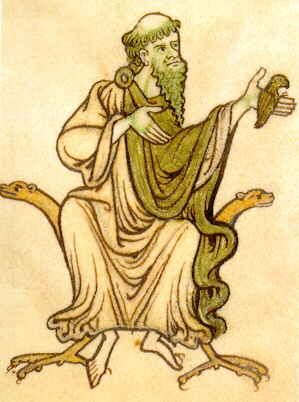
Image: Kevin-black.jpg · Unknown · Public domain, via Wikimedia Commons

Image: Unknown, Wikimedia Commons (Public domain)

From “Catholic Encyclopedia (1913)/St. Coemgen,” The Catholic Encyclopedia (New York: Robert Appleton Company, 1907–1914), via Wikisource. Public domain. Matched by name and feast date; text unedited except for our bracketed notes in grey.

Retold in plain modern English from Baring-Gould’s public-domain text, sentence by sentence, keeping the same facts and order. Short explanations in parentheses are ours.

From Sabine Baring-Gould, The Lives of the Saints, new edition in 16 vols. (London: John C. Nimmo, 1897–98); text from the Internet Archive scan (OCR, lightly cleaned; errors possible). Public domain in the United States. Reproduced unedited, except for short bracketed notes in grey that we added to explain names and terms (“S.” is the old abbreviation for Saint). Some history and judgments reflect 19th-century scholarship.

Notes

Story retold in our own words from the cited sources.