This Saint’s Story
He came from a family of Eastern Orthodox nobility, and his parents instilled in him a strong sense of religious devotion. Despite their noble background, financial difficulties led to his apprenticeship with a merchant in Vilnius, where he became aware of the various religious conflicts and ultimately developed an interest in Catholicism, influenced by a former Calvinist (Protestant, following John Calvin of Geneva) named Josyf Veliamyn Rutsky who had converted to Catholicism.
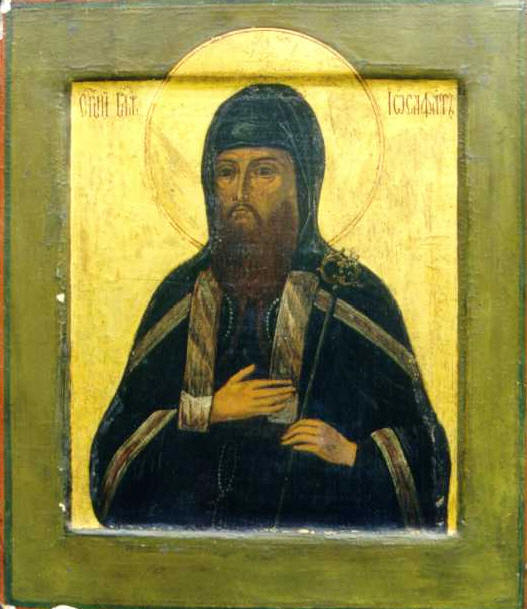
In 1604, Josaphat joined a Basilian monastery in Vilnius, taking on the name Josaphat. He immersed himself in prayer and ascetic practices, often engaging in acts of self-denial. His reputation for holiness attracted many visitors seeking spiritual guidance, and he played a significant role in revitalizing the monastery, which had been struggling. Josaphat passionately supported the Union of Brest, which aimed to unify Eastern Orthodox Christians with the Catholic Church, earning him the nickname 'The Soul-Snatcher' from his critics.
After being ordained as a priest in 1609, Josaphat's pastoral work flourished, leading to a notable increase in new members joining the monastic community. He was known for his compassionate care towards condemned prisoners, often accompanying them to their executions and providing them with spiritual support. His loyalty to the Catholic faith, and his work to bring others into the Eastern Catholic Church, made him bitter enemies among those who opposed the Union of Brest.
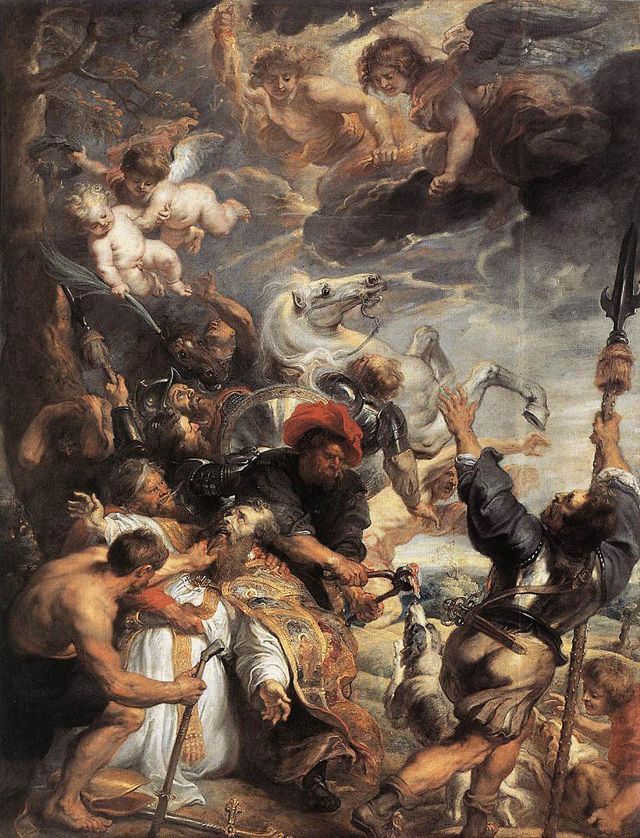
In 1618, Josaphat became the Archbishop of Polotsk, continuing his mission of promoting unity within the Church. His dedication to the Catholic faith and his efforts to reconcile differences among Christians made him a target for violence. On November 12, 1623, he was brutally murdered during an anti-Catholic riot in Vitebsk, dying as a martyr for his beliefs.
The Church recognized Josaphat's contributions and sacrifices, beatifying him on May 16, 1643, and canonizing him as a saint on June 29, 1867, under Pope Pius IX. His legacy continues to inspire devotion and commitment to the unity of the Church.