St. Livinus

At Ghent the same day honours a saint whose name was originally the same as St. Liafwin (Lebuinus) of Deventer; at Ghent it became Livinus. That St. Augustine should visit Ireland to baptize Livinus, or that Menalchus and the parents of Livinus should go to Canterbury to have the child baptized, is either way too absurd to need consideration.

Read the essentials →
Feast November 12 · Bishop, Martyr

St. Livinus

Current feast

November 12
Secondary source · Wikipedia infobox

Traditional feast

November 12
1914 / pre-1969 calendar, per Baring-Gould (1897)

Represents

Bishop
Martyr

Feast days

Feast: November 12

This Saint’s Story

Adapted in modern English from Baring-Gould (1897–98) · original text below

Baring-Gould thinks some relics of Liafwin reached Hauthem near Ghent in the 9th or 10th century and were moved in 1007 to the monastery of St. Bavo by Abbot Erembold. Erembold, he says, also has the unsavoury credit of turning a poor old traveller who died in his hospital in 1012 into a saintly patriarch of Antioch, Macarius. Baring-Gould believes Erembold had a monk forge a life of Liafwin making him a martyr and passing it off as written by St. Boniface.

The life opens as a letter from "Boniface, a man that is a sinner, the servant of the servants of Jesus Christ" and claims to record word for word what Livinus's disciples Foillan, Helias and Kilian told him. Baring-Gould shows why this cannot be: Boniface never used these titles; Foillan died in 655, so he would have had to tell the story before 650, yet Boniface was born in 680 and did not reach Frisia until 716; and Kilian was martyred at Wurzburg in 689.

What follows is the forged legend. It says that under Colomagnus, king of the Scots, a virtuous noble named Theagnius married Agalmia, daughter of Ephigenius, king of Ireland. Baring-Gould explains the names: Colomagnus may be an Irish or Scottish king; Theagnius is the Saxon title thane; and Ephigenius is an invented King Eoghan, probably dreamed up from the later Eoghan clan. At the baby's birth a vision came to an Archbishop Menalchus, and Livinus was supposedly baptized by St. Augustine of Canterbury and Menalchus together, named after an uncle said to be an archbishop martyred among the Northumbrians. No such archbishop or martyr is known, and Baring-Gould calls the baptism too absurd to consider. A column of light, a hand of fire tracing the cross on his brow and a voice from heaven are said to have marked it.

The legend continues that the young Livinus healed two paralytics, was taught by a priest named Benignus, crossed dry-shod to Canterbury with his three disciples, was ordained by Augustine and succeeded Menalchus as archbishop. Irish historians knew nothing of him; Dr. Lanigan calls the whole a fable not worth refuting. His appearance is described in detail: a big head bald at the front, brown hair going grey, broad sticking-out ears, lively cheerful eyes, white shaggy eyebrows, hollow cheeks, a white beard and graceful fingers. Leaving his archdeacon Sylvanus in charge, he went to Flanders, was welcomed by Abbot Floribert at Ghent and preached in Brabant, staying with two ladies, Berna and Chraphahild, and restoring the sight of Chraphahild's son Ingelbert.

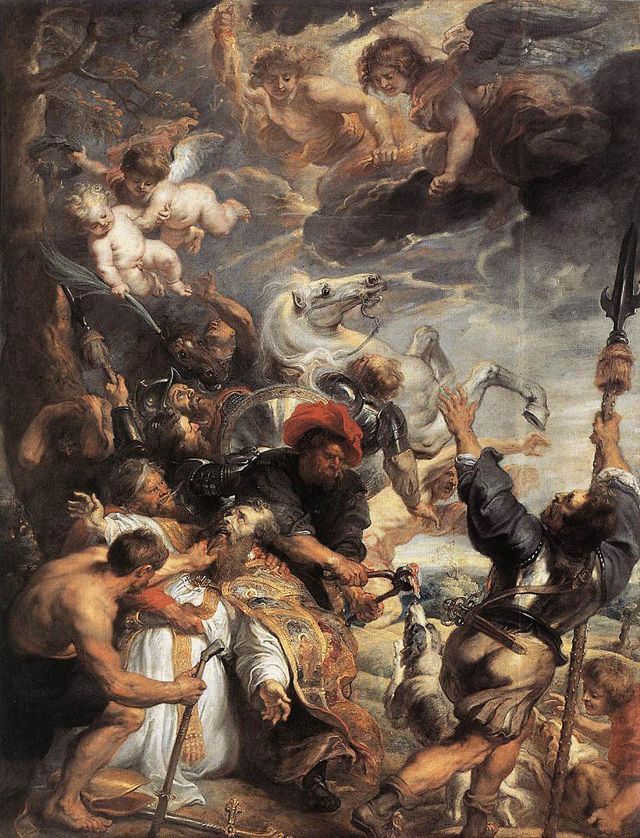
The story says a man named Walbert pulled out his tongue with pincers and threw it to the crowd, but Livinus recovered it and kept preaching, so his attackers beheaded him. Chraphahild took up his body while holding her baby, Brictius, whom he had baptized, and both were killed. His disciples buried the three.

The relics were enshrined at Hauthem in 842 by Theodore, bishop of Cambrai, and moved to Ghent by Erembold in 1020, about when the story was written. Baring-Gould concludes there probably never was a martyr bishop Livinus, and that the passion was invented to give importance to relics, true or false, of Liafwin kept at Hauthem.

What he represents

How he teaches us to live

Drawn from themes in the original account

Share your faith, in words and by example. Preaching and conversion are part of this story.

Celebrate this saint’s feast day. Remember him on November 12 with a short prayer, and ask for his help.

The full story

Baring-Gould’s account retold in modern English

Read the full story · 1,170 words · about 5 min

On the same day, at the port of Ghent, a saint with the same original name is commemorated. Liafwin has been Latinized at Deventer into Lebuinus, and at Ghent into Livinus. It is likely that some relics of Liafwin made their way to Hauthem, near Ghent, in the 9th or 10th century. These relics were moved in 1007 to the monastery of Saints Livinus.

Bavo, in Ghent, was established by the abbot Erembold. Erembold is infamously known for creating a saintly patriarch of Antioch from a poor old traveler who died in his hospital in 1012. This old man, Macarius, is now listed in the Roman martyrology on April 10. Erembold, having obtained the relics of Saint Liafwin from Hauthem, likely commissioned one of his monks to create a Life of him, to portray him as a martyr, and to give his Life the authority of the name of Saint Boniface.

The Life begins: “Boniface, a man who is a sinner, the servant of the servants of Jesus Christ, to all the Churches founded in highest happiness on the firm rock, under the authority of the holy and undivided Trinity.” The writer claims that he received his information from Foillan, Helias, and Kilian, disciples of Saint Livinus, and recorded their account of the martyrdom of the apostle of Ghent “verbatim.”

Saint Boniface never refers to himself as “homo peccator” (man of sin). The title “servus servorum” (servant of the servants) was first adopted by Saint Gregory the Great and later used by bishops, but never by Saint Boniface. Foillan was the brother of Saint Fursey and died in 655, murdered by robbers in Brabant (see October 31). Therefore, the date of the narration to Boniface could not have been later than 650. Saint Kilian was martyred at Wurzburg in 689. Of Helias, nothing is known. Saint Boniface was born in 680 and did not arrive in Frisia until 716, and he did not settle in Germany until 723. He died in 755, exactly one hundred years after Foillan, from whom he recorded the interesting history of the martyrdom of Saint Livinus. According to the story in the fabricated Life, Colomagnus was the king of the Scots at that time, and under him was a

A senator named Theagnius, one of his chief nobles and a man of great virtue, was married to Agalmia, the daughter of Ephigenius, king of Ireland. Colomagnus may be Colman Rimhe, who, along with Aidus Slani, ascended the Irish throne in 599 and reigned for six years. More likely, he is Congall II of Scotland, as the author clearly distinguishes between the Scots and the Irish. Early historians, when they mention Scots, mean Irish, but this later writer refers to natives of Scotland. Theagnius is a Saxon title, Thegn or Thane. Ephigenius, “the illustrious king of the Irish,” is Eugenius, believed to be the head of the Eogain clan, which fought against the rival Dalcais in the tenth century. The forger likely heard of the Eoghanists claiming alternate presentation with the Dalcais to the throne of Munster, and from that, he imagined there must have been a renowned King Eoghan, whom he made the maternal grandfather of his saint.

When Livinus was born, a vision appeared to Archbishop Menalchus—though it is not stated what see—informing him of the greatness in store for the child. Livinus is said to have been baptized by S. Augustine of Canterbury and Menalchus together, and he was given the name of his uncle, Livinus, the “archbishop of the Church of Ireland,” who suffered martyrdom for the faith among the Northumbrians. However, there was no archbishop of Armagh by that name, nor is there any martyr with a similar name known to have suffered among the Northumbrians.

The idea that S. Augustine would visit Ireland to baptize Livinus, or that Menalchus and Livinus's parents would travel to Canterbury for the baptism, is too absurd to warrant consideration. While the baptism was taking place, a column of light shone over the child, and a hand of fire traced the cross three times on his brow, while a voice from heaven thundered, “Beloved of God and men, whose memory shall be blessed.”

Saint Livinus. 303 While still young, Livinus healed two paralytics named Elymas and Symphronius. He was educated by Benignus, a Scottish priest. There was a Benignus, a disciple of Saint Patrick, whose life was written by John of Tynemouth, but he was the archbishop of Armagh and died in 468. After performing many miracles in Ireland, Livinus, along with his three disciples, Foillan, Helias, and Kilian, went to see Saint Augustine at Canterbury. The sea parted before them, allowing them to cross on dry land. Augustine ordained him as a priest and sent him back to Ireland, where, upon the death of his uncle Menalchus, he was elevated to the archbishopric. Irish historians were completely unaware of his existence, which is understandable. “Neither Colgan, Ware, nor Harris knew anything about him, and the whole is undoubtedly a fable, which it would be a waste of time to refute,” says Dr. Lanigan. His physical appearance is described in detail. He had a large head, was somewhat bald on the forehead, had brown hair mixed with grey, broad protruding ears, lively and cheerful eyes, white shaggy eyebrows, a fair complexion, hollow cheeks, a white beard, and “ductile and graceful fingers.” His miracles made him so well-known in Ireland that he appointed a substitute in the archbishopric—his archdeacon, Sylvanus—who is also completely unknown to Irish ecclesiastical historians. He crossed the seas to Flanders with his three disciples and settled in Ghent at the monastery founded by Saint Amandus. The abbot Floribert welcomed him warmly. After a time, he traveled into Brabant, destroying idols and preaching the Word. Two ladies, Bema and Chraphahild, welcomed him into their home and took care of him. The son of the latter, named Ingelbert, was blind. Livinus restored his sight.

A rude, insolent heathen named Walbert put a pair of pincers into the saint’s mouth, pulled out his tongue, and threw it among the people. However, Livinus recovered his tongue and continued to speak to the people. The heathen, undeterred by this miracle, attacked him and cut off his head. Chraphahild picked up his body, also carrying her baby, whom Livinus had baptized and named Brictius. In a fit of rage, the pagans struck her on the head and cut the baby into three pieces. The disciples of Livinus buried the three martyrs.

The first translation of the relics took place in 842 by Theodore, the bishop of Cambrai, who placed them in a shrine at Hauthem. Erembold, the abbot of S. Bavo in Ghent, moved them in 1020 to Ghent, and this is around the time the legendary story was written. There is little doubt that a martyr bishop named Livinus never existed, and that the account of his suffering was created to add significance to some relics, whether genuine or not, of Liafwin that were kept at Hauthem.

Footnotes

  1. There was another Kilian sent by Saint Faro (died 672) to Aubigny in Artois; he is commemorated on November 13, but nothing in his Life suggests he was connected with Saint Livinus.
  2. Ephigenius, “the illustrious king of the Irish,” is Eugenius, believed to be the head of the Eogain clan.
  3. Livinus is said to have been baptized by S. Augustine of Canterbury and Menalchus together.
  4. There was no archbishop of Armagh by that name, nor is there any martyr with a similar name known to have suffered among the Northumbrians.
  5. Lanigan ingeniously suggests that Menalchus may be Melanchus, which may be a translation of Dubtach, which means Blade-mound. Dubtach II died in 548, but was succeeded by David MacGuaire, and not by Livinus.
  6. The account of Livinus's passion was fabricated to give importance to relics.

Baring-Gould’s own footnotes, in modern English.

Read the original 1870s text

Baring-Gould’s sources: Roman and Belgian Martyrologies. Authority: — A Life, fabricated probably in the nth century, and attributed to S. Boniface. Also an “ Elegia S. Livini.... ad Florbertum abbatem S. Bavonis de imminente sibi a Brabant is palma martyrii, ” a forgery of the same date. No MSS. earlier than the nth century of the Life of S. Livinus exist. The only one of that century is at Ghent, and is probably the original.] Liafwin, apostle of the Frisians, was perhaps at some time in Brabant Liafwin died in 773, and was buried at the port of Deventer, where his deposition is commemorated on November 12th.

On the same day, at the port of Ghent, is commemorated a saint of originally the same name. Liafwin has been Latinized at Deventer into Lebuinus, and at Ghent into Livinus. Probably some relics [the bodily remains of a saint, or objects they used, kept with honor] of Liafwin had found their way to Hauthem, near Ghent, in the 9th or 10th century. These relics were translated in 1007 to the monastery of S. S. Livinus.

Bavo, in Ghent, by the abbot Erembold. Erembold has the unsavoury credit of the concoction of a saintly patriarch [the title of the bishops of the great ancient sees: Rome, Constantinople, Alexandria, Antioch, Jerusalem] of Antioch out of a poor old traveller who died in his hospital in 1012. This old man, Macarius, is now found in the Roman martyrology on April 10. Erembold, having acquired the relics of S. Liafwin from Hauthem, probably commissioned one of his monks to fabricate a Life of him, to make him into a martyr, and to give to his Life the authority of the name of S. Boniface [English missionary to Germany, martyred 754].

The Life begins: “ Boniface, a man that is a sinner, the servant of the servants of Jesus Christ, to all the Churches founded in highest felicity on the firm rock, under the authority of the holy and undivided Trinity.” The writer pretends that he received his information from Foillan, Helias, and Kilian, disciples of S. Livinus, and took down their relation of the martyrdom of the apostle of Ghent “ verbatim.”

S. Boniface never designates himself “ homo peccator.” The title, “servus servorum,” was first adopted by S. Gregory the Great, and afterwards used by bishops, though never by S. Boniface. Foillan was the brother of S. Fursey, and died in 655, murdered by robbers in Brabant (see October 31). Consequently the date of the narration to Boniface could not have been later than 650. S. Kilian was martyred at Wurzburg in 689. 1 Of Helias nothing is known. S. Boniface was born in 680, and did not come to Frisia [the North Sea coast of the Netherlands and Germany] till 716, and did not settle in Germany till 723. He died in 755, just a hundred years after Foillan, from whose lips he took down the interesting history of the martyrdom of S. Livinus. According to the story in the forged Life, Colomagnus was at the time king of the Scots, and under him was a 1 There was another Kilian sent by S. Faro (d. 672) to Aubigny in Artois; he is commemorated on Nov. 13, but nothing in his Life leads one to suppose he was connected with S. Livinus.

[Nor. n. senator named Theagnius, one of his chief nobles, of great virtue, married to Agalmia, daughter of Ephigenius, king of Ireland. Colomagnus may be Colman Rimhe, who jointly with Aidus Slani ascended the Irish throne in 599 and reigned six years; or more probably Congall II. of Scotland, for the author evidently distinguishes between the Scots and the Irish. Early historians, when they say Scots mean Irish, this late fabricator means natives of Scotland. Theagnius is Thegn or Thane, a Saxon title. Ephigenius, “ the illustrious king of the Irish,” is Eugenius, imagined to be the head of the Eogain clan, which fought with the rival Dalcais in the tenth century. The forger had probably heard of the Eoghanists claiming alternate presentation with the Dalcais to the throne of Munster, and therefrom conceived that there must have been a renowned KingEoghan, and he made him maternal grandfather of his saint When Livinus was born a vision appeared to Archbishop Menalchus — of what see not stated — informing him of the greatness in store for the babe. Livinus is said to have been baptized by S. Augustine of Canterbury and Menalchus in concert, and to have been given the name of his unde Livinus the “ archbishop of the Church of Ireland,” who suffered martyrdom for the faith among the Northumbrians. As it happens, there was no archbishop of Armagh of that name, nor is any martyr of a name approaching it known to have suffered among the Northumbrians.

That S. Augustine should visit Ireland to baptize Livinus, or that Menalchus and the parents of Livinus should go to Canterbury to have the child baptized, is either way too absurd to need consideration. Whilst the baptism was taking place a column of light shone over the child, and a hand of fire traced the cross thrice on his brow, whilst a voice from heaven thundered, “ Beloved of God and men, whose memory shall be blessed.”

S. Livinus. 303 Whilst still young, Livinus cured two paralytics named Elymas and Symphronius. He was educated by Benignus, a Scottish priest There was a Benignus, disciple of S. Patrick [apostle of Ireland (5th century)], a Life of whom was written by J ohn of Tynemouth, but he was archbishop of Armagh, and died in 468. After having performed many miracles in Ireland, Livinus, accompanied by his three disciples, Foillan, Helias, and Kilian, went to S. Augustine at Canterbury, the sea dividing before them, so that they went over dry-shod. By Augustine he was ordained priest, and sent back to Ireland, where, on the death of his uncle Menalchus, he was elevated to the archiepiscopal throne. Irish historians were wholly unaware of his existence, naturally enough. “ Neither Colgan, Ware, nor Harris knew anything about him, and the whole is undoubtedly a fable, which it would be a waste of time to refute,” says Dr. Lanigan.1 His personal appearance is minutely described. He had a big head, rather bald on the forehead, the hair brown mixed with grey, broad protruding ears, lively and cheerful eyes, white shaggy eyebrows, a white skin, hollow cheeks, a white beard, and “ ductile and graceful fingers.” His miracles made him in such request in Ireland, that he appointed a substitute in the archiepiscopal see — his archdeacon, Sylvanus — also wholly unknown to Irish ecclesiastical historians, and crossed the seas to Flanders, with his three disciples, and settled at Ghent in the monastery founded by S. Amandus. The abbot Floribert received him cordially. After a while he went on into Brabant, destroying idols, and preaching the Word. Two ladies, Bema and Chraphahild, received him into their house and ministered to him. The son of the latter, named Ingelbert, was blind. Livinus restored to him his sight. A 1 “ Ecd. Hist of Ireland,” ii. p. 472. lanigan ingeniously suggests that Menalchus may be Melanchus, which may be a translation [the solemn moving of a saint’s relics to a new shrine] of Dubtach, which means Blade-mound. Dubtach II. died in 548, but was succeeded by David MacGuaire, and not by Livinus.

(Not. is. rude, insolent heathen, named Walbert, put a pair of pincers into the saint’s mouth, pulled out his tongue, and flung it among the people, but Livinus recovered his tongue, and went on talking with it to the people. The heathen, undismayed by this miracle, fell on him and cut off his head. Chraphahild took up his body, carrying also in her arms her babe, which Livinus had baptized and called Brictius. The pagans in a rage cleft her skull, and cut the babe in three pieces. The disciples of Livinus buried the three martyrs.

The first translation of the relics took place in 842 by Theodore, bishop of Cambrai, who enshrined them at Hauthem: Erembold, abbot of S. Bavo at Ghent, transferred them in 1020 to Ghent, and this is about the date of the composition of the fabulous story. There can be little doubt that there never existed a martyr bishop Livinus; and that the account of his passion was fabricated to give importance to some relics, true or false, of Liafwin preserved at Hauthem.1
Help us add to this saint's story

Everything is read by a person before anything appears. Facts are checked against trusted sources first.

Facts are welcome; a source link helps (optional).With your permission we may share it on this page.

Nine days · Free

Pray the novena
with us.

One short email a day for nine days. The day's prayer, a line from St. Livinus's story, and a nudge to keep going.

Also on November 12
N

St. Nilus (November 12)

November 12 · Abbot
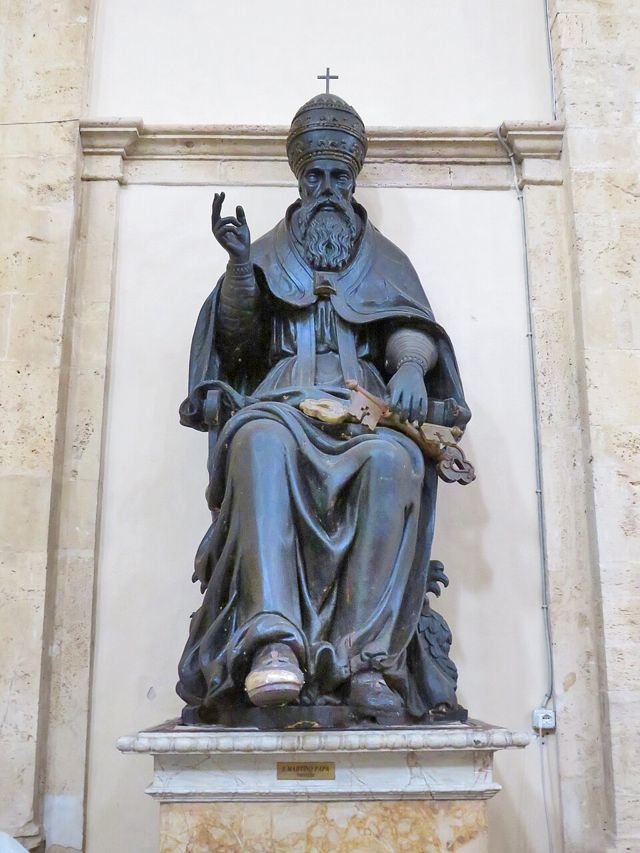
St. Martin, Pope

St. Martin

November 12 · Martyr
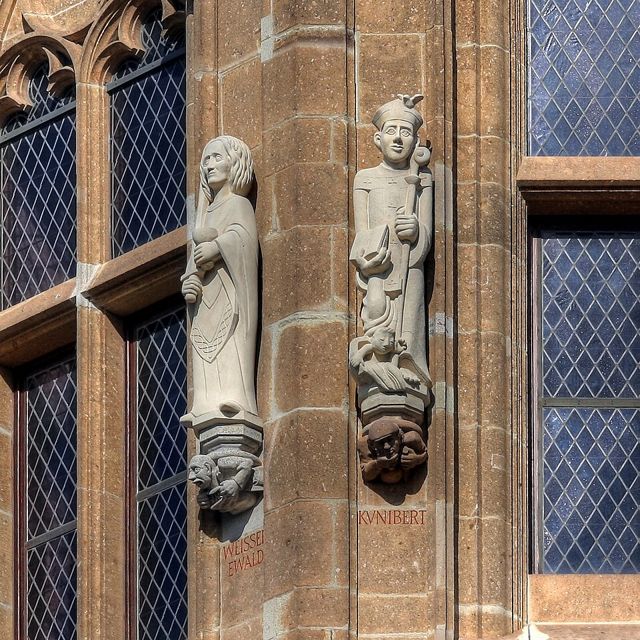
St. Cunibert of Cologne

St. Cunibert of Cologne

November 12 · Archbishop
← All 1970 saints in the library
Sources & notes

Feast-day sources

Story sources

Sources

Credits

Image: The Martyrdom of St Livinus by Rubens.jpg · Peter Paul Rubens · Public domain, via Wikimedia Commons

Image: Peter Paul Rubens, Wikimedia Commons (Public domain)

Retold in plain modern English from Baring-Gould’s public-domain text, sentence by sentence, keeping the same facts and order. Short explanations in parentheses are ours.

From Sabine Baring-Gould, The Lives of the Saints, new edition in 16 vols. (London: John C. Nimmo, 1897–98); text from the Internet Archive scan (OCR, lightly cleaned; errors possible). Public domain in the United States. Reproduced unedited, except for short bracketed notes in grey that we added to explain names and terms (“S.” is the old abbreviation for Saint). Some history and judgments reflect 19th-century scholarship.