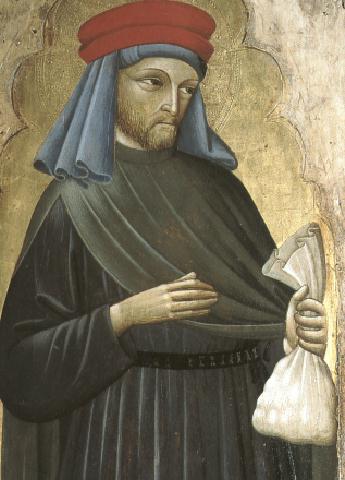
St. Homobonus

Saint Homobonus is remembered as a compassionate merchant who dedicated his life to helping the poor and living out the Gospel through his business practices. He was born into a family of merchants and inherited wealth from his father, a prosperous tailor.

Read the story →
November 13 · Layman

St. Homobonus

Feast

November 13
Secondary source · Wikipedia

Status

Saint
Canonized January 12, 1199 by Pope Innocent III

Represents

Layman

Feast days

Feast: November 13

This Saint’s Story

Written for this site from Wikipedia and The Holy See (vatican.va)

Homobonus, originally named Omobono Tucenghi, was a cloth merchant from Cremona, Italy. Despite his financial success, he lived simply and devoted a significant portion of his income to helping those in need, embodying the spirit of charity and mercy. His name, meaning 'good man' in Latin, reflects his character and life choices.

His commitment to aiding the poor was profound; he actively engaged in spiritual and corporal works of mercy, including attending to the burial of abandoned individuals. Legend has it that during one of his travels, he selflessly gave away his food to a beggar, and as he replenished his flask from a stream, the water turned into wine. This act exemplified his deep faith and generosity.

Homobonus was a man of prayer, attending nightly services at the church of St. Giles, where he would pray until morning Mass. His life was marked by a dedication to the Eucharist and a desire to live out the teachings of Christ. On November 13, 1197, he passed away while attending Mass, a testament to his devotion and faithfulness to God.

His legacy was solidified when he was canonized (officially declared a saint by the pope) by Pope Innocent III on January 12, 1199, following requests from the citizens of Cremona who recognized his virtuous life and the miracles attributed to him. The Pope described him as 'father of the poor' and 'a man good in name and deed.' Homobonus became a beloved figure in Cremona, where his body is preserved in the cathedral, and his feast day is celebrated annually on November 13.
What he represents

How he teaches us to live

Drawn from their life story

Live simply and generously. Homobonus exemplified how wealth can be used to serve others, showing that true richness lies in generosity.

Integrate faith into daily life. His daily practices of prayer and service remind us to incorporate our faith into every aspect of our lives.

Be a peacemaker. Homobonus worked to resolve conflicts, teaching us the importance of fostering peace in our communities.

More about St. Homobonus

Checked against at least two sources, in our own words

  • His body is interred in the cathedral of Cremona, where he is venerated by many. · Wikipedia Vatican
  • The Cathedral of Cremona was dedicated to him in 1592, highlighting his importance to the local community. · Wikipedia Vatican

A note on sources

Tradition says that water miraculously turned into wine when he filled his flask from a stream.

Help us add to this saint's story

Everything is read by a person before anything appears. Facts are checked against trusted sources first.

Facts are welcome; a source link helps (optional).With your permission we may share it on this page.

Nine days · Free

Pray the novena
with us.

One short email a day for nine days. The day's prayer, a line from St. Homobonus's story, and a nudge to keep going.

Also on November 13
A

Sts. Antoninus

November 13 · Martyrs
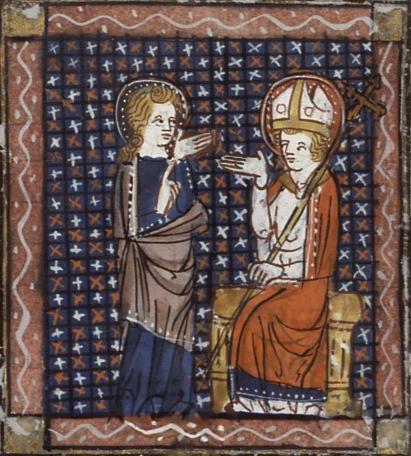
St. Brice of Tours

St. Brice of Tours

November 13 · Bishop
St. Machar

St. Machar

November 13 · Bishop
← All 1970 saints in the library
Sources & notes

Feast-day sources

Story sources

Sources

Credits

Image: Omobono lianori.jpg · Unknown · Public domain, via Wikimedia Commons