This Saint’s Story
Devasahayam Pillai was born Neelakanta Pillai on April 23, 1712, at Nattalam in the kingdom of Travancore (today Kanyakumari District, Tamil Nadu), into a prosperous Hindu Nair family. Following the matrilineal custom of the day he was raised by his maternal uncle, though his father, a temple priest, taught him Sanskrit and Vedanta.
As a young man he entered the service of the royal palace of Maharaja Marthanda Varma and was soon given charge of state affairs as an official under the chief minister.
In 1741 Travancore defeated the Dutch East India Company at the Battle of Colachel. The captured Dutch commander, Eustachius De Lannoy, was pardoned on condition that he serve the king, and he went on to command and train the Travancore army. Working alongside him, Neelakanta grew curious about De Lannoy's Christian faith, and De Lannoy instructed him in it.
In 1745 he was baptized at the Jesuit (member of the Society of Jesus, founded by St. Ignatius of Loyola) mission in Vadakkankulam, taking the name Lazarus, which in Tamil and Malayalam became Devasahayam, "God's help." His wife, Bhargavi, was baptized as well, taking the name Gnanapoo (Theresa), and some other members of his family later followed.
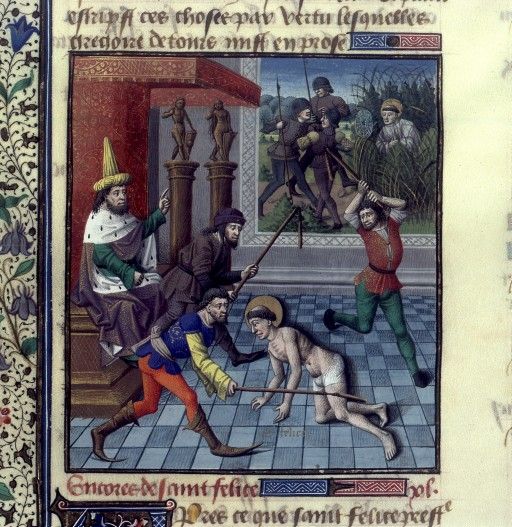
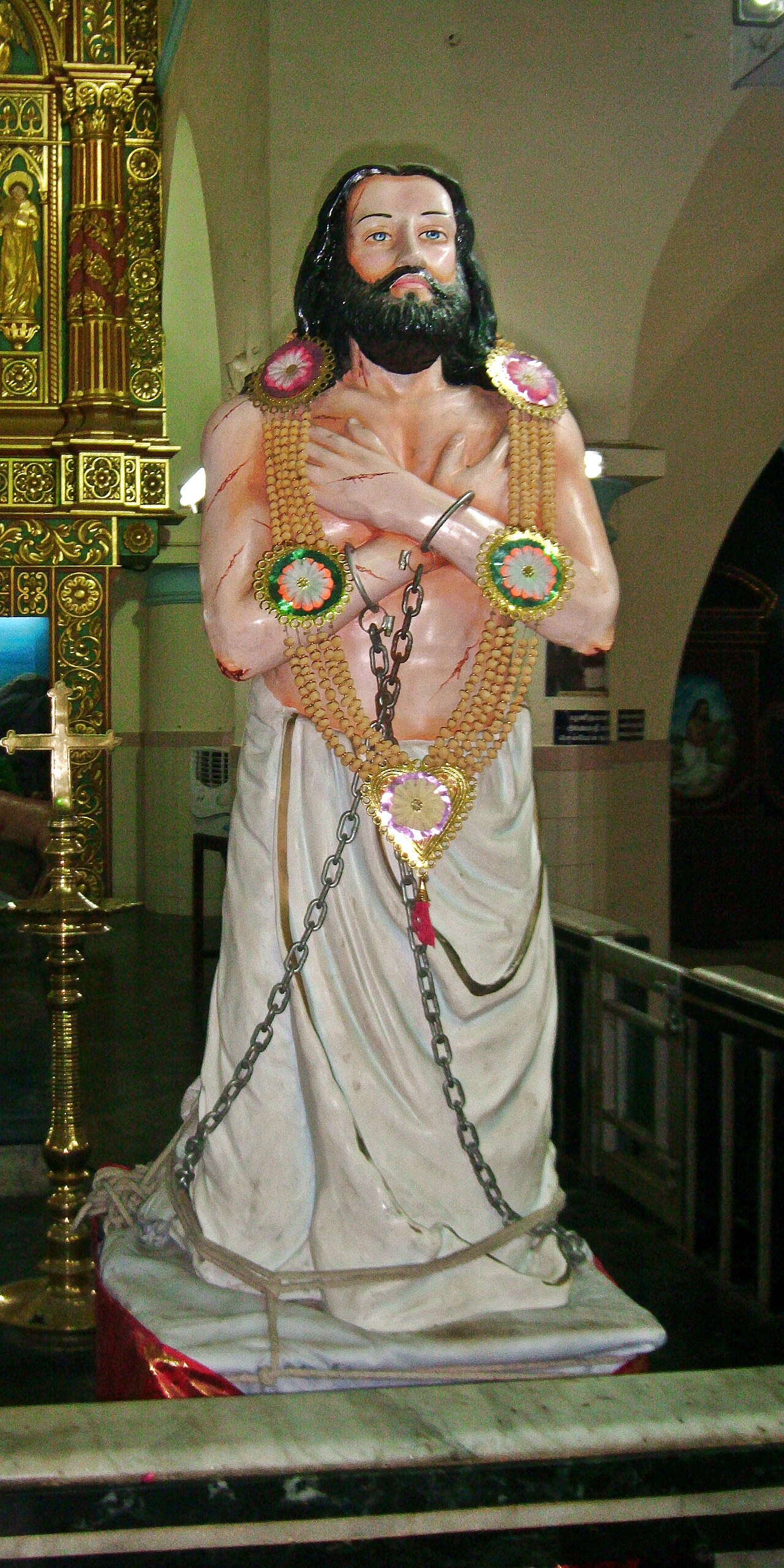
His conversion provoked fierce opposition at court. Accused before the chief minister of abandoning the religion of his caste and kingdom, he lost his office and was imprisoned for about three years. He was then paraded through the villages of South Travancore seated backward on a water buffalo, beaten, and denied proper food and water, before being taken to the hills at Aralvaimozhy on the border. Through all of this, Christian accounts recall, he kept praying and encouraged those who came to see him.
There, on January 14, 1752, he was shot dead by soldiers. Local Christians recovered his remains and buried them near the altar of St. Francis Xavier's Church in Kottar, now the cathedral of the Diocese of Kottar and a place of pilgrimage.
He was beatified (declared 'Blessed', the step before sainthood) at Kottar on December 2, 2012, and canonized (officially declared a saint) by Pope Francis on May 15, 2022, the first Indian layman to be raised to the altars. His feast is January 14.