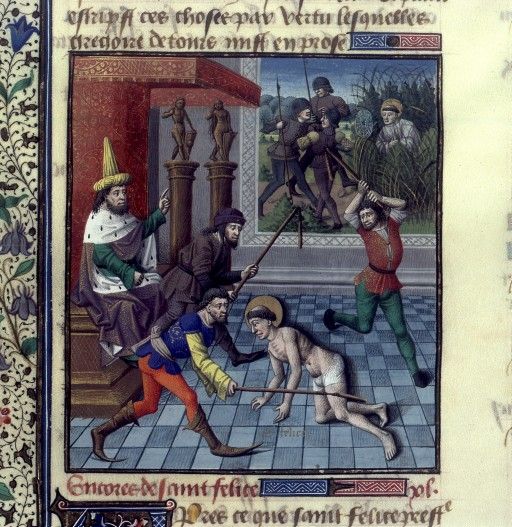
Saint Felix was born in Nola, in Campania, where his father, Hermias, who was originally from Syria and had served in the army, bought a property and settled down. He had two sons, Felix and Hermias, to whom he left his estate upon his death. The younger son, who preferred the things of Caesar over the things of God, according to Bede, served in the army, but Felix, whose name means "happy," chose to become a soldier of Jesus Christ. After progressing through the roles of lector and exorcist, he was eventually ordained as a priest by Maximus, the Bishop of Nola.
When persecution broke out, the elderly Bishop, remembering the instruction, "When they persecute you in one city, flee to another" (Matthew 10:23), escaped to the hills, leaving his congregation in the care of Felix, whom he appointed as his successor. The persecutors, unable to find the Bishop, captured Felix and threw him, heavily shackled, into a dungeon filled with broken pottery, where no light could enter. Meanwhile, Maximus was suffering from cold and hunger in the mountains, hardships that his old age made difficult for him to endure.
One night, an angel appeared to Felix and told him to leave prison and help the aged Bishop. At that moment, his chains fell off his neck, hands, and feet, and the doors opened on their own. Guided by the angel, he was led to Maximus's hiding place, where he found him lying down, unable to speak, and seemingly dying. Felix moistened the old man's lips with wine, forced some food into his mouth, and rubbed his frozen limbs. Gradually, the Bishop began to recover, and then Felix lifted him onto his shoulders and carried him home before dawn, where a kind old woman took care of him.
Felix, with the blessing of his pastor, secretly returned to his own lodgings and kept himself hidden, praying for the Church without stopping, until peace was restored by the death of Emperor Decius in 251. When persecution broke out again, officers were sent to find Felix. They encountered him in the street but did not recognize him. They stopped him and asked if he had seen Felix on the way. "No," he replied, "I have not seen him." They continued on, but something made them suspicious, and they did not go far before they turned around and hurried back. Meanwhile, Felix had crawled through a small hole in some old broken walls. The officers arrived at the spot, but seeing a spider's web covering the hole, they did not search the area, thinking that Felix could not have escaped that way. But this was the Lord's doing. He had sent the little spider to quickly weave its web over the place through which His servant had escaped.
Finding an old, half-dug well among the ruins between two houses, Felix hid himself in it for six months. During that time, a devout Christian woman provided him with food.
Once peace was restored to the Church, the Saint left his hiding place and was welcomed in the city like an angel from heaven. Soon after, when S. Maximus died, Felix was unanimously elected Bishop. However, he persuaded the people to choose Quintus instead, as he was the senior priest, having been ordained seven days before Felix.
Having had his property confiscated during the persecution, S. Felix rented a small piece of barren land, not exceeding three acres, which he worked with his own hands. Through his hard work, he was able to support himself and give some alms to the poor. He died at a good old age on January 14th, a day on which the Martyrology, under the name of S. Jerome, and all later sources mention him.
He is the patron of Nola, along with other Saints.
His relics are in the Cathedral at Nola.
In art, he is depicted (1) with an angel breaking his chains; (2) with a bunch of grapes, which he used to feed S. Maximus; (3) carrying S. Maximus on his shoulders or in his arms; (4) with a spider.
Footnotes
- Bede: an English monk and historian from the 7th century.
- The Martyrology is a list of Christian martyrs and their feast days.
Baring-Gould’s own footnotes, in modern English.
Read the original 1870s text
Baring-Gould’s sources: On this day are commemorated two priests, Confessors, of Nola, of the same name, Felix. This has led to almost inextricable confusion among Martyrologists. There is another, a martyr, of this name. The life of S. Felix is given by S. Gregory of Tours, De Glor. Martyr, lib. i. c. 104, and by the Venerable Bede. The miracles wrought by him have also been recorded by S. Paulinus of Nola.
Saint Felix was a native of Nola, in Campania, where his father, Hermias, who was by birth a Syrian, and had served in the army, had purchased an estate and settled. He had two sons, Felix and Hermias, to whom, at his death, he left his property. The younger, loving the things of Cæsar rather than the things of God, says Bede [English monk and historian (d. 735)], served in the army, but Felix, more happy —as his name implies—enrolled himself as a soldier of Jesus Christ. Having passed the grades of lector and exorcist, he was finally ordained priest by Maximus, Bishop of Nola.
Persecution having broken out, the aged Bishop, mindful of the injunction, "When they persecute you in one city flee to another" (Matt. x. 23), escaped to the hills, and left his flock to the charge of Felix, whom he designated as his successor. The persecutors, not finding the Bishop, seized on Felix, and cast him, heavily ironed, into a dungeon strewn with broken crockery, into which no ray of light entered. In the meantime, Maximus was perishing with cold and hunger in the mountains, hardships which his great age made him unable to endure.
One night an angel appeared to Felix, and bade him go forth out of prison and succour the aged Bishop. Then his chains fell off his neck, and hands, and feet, and the doors opened to him of their own accord, and guided by the angel, he was brought to the hiding place of Maximus, whom he found prostrate and speechless, and apparently dying. He moistened the old man's lips with wine, and forced some food into his mouth, and chafed his frozen limbs. By slow degrees the Bishop was restored, and then laying him upon his shoulders, Felix carried him home before daybreak, where a pious old woman took care of him.
Felix, with the blessing of his pastor, repaired secretly to his own lodgings, and there kept himself concealed, praying for the Church without ceasing, till peace was restored to it by the death of the Emperor Decius [Roman emperor 249–251, who ordered everyone to sacrifice to the gods] in 251. Persecution breaking forth again, the sergeants were sent in quest of Felix. Meeting him in the street, and not recognizing him, they stopped him and asked if he had met Felix on the way. "No," he answered; "I have not met him." They went on, but something arousing their suspicion, they had not gone far before they turned and hastened back. Felix had, in the meantime, crept through a small hole in some old broken walls. The officers came to the place, but seeing a spider's web covering the hole, they did not search the place, thinking that Felix could not have passed that way. But this was the Lord's doing. He had sent the little spider to drop his lines and lace them together, with the utmost rapidity, over the place through which His servant had escaped. Felix, finding among the ruins, between two houses, an old well half dug, hid himself in it for six months; and received during that time wherewithal to subsist from a devout Christian woman.
Peace having been restored to the Church, the Saint quitted his retreat, and was received in the city as an angel from heaven. Soon after, S. Maximus dying, Felix was unanimously elected Bishop; but he persuaded the people to make choice of Quintus, because he was the senior priest, having been ordained seven days before him.
His property having been confiscated in the persecution, S. Felix rented a little spot of barren land, not exceeding three acres, which he tilled with his own hands, and was able by his industry to support himself, and give something in alms to the poor. He died at a good old age, on Jan. 14th, on which day the Martyrology, under the name of S. Jerome [translator of the Bible into Latin (d. 420)], and all others of later date mention him.
Patron of Nola, in conjunction with other Saints.
Relics, in the Cathedral at Nola.
In art, he is represented (1), with an angel striking off his chains; (2), with a bunch of grapes, wherewith he fed S. Maximus; (3), bearing S. Maximus on his shoulders, or in his arms; (4), with a spider.