This Saint’s Story
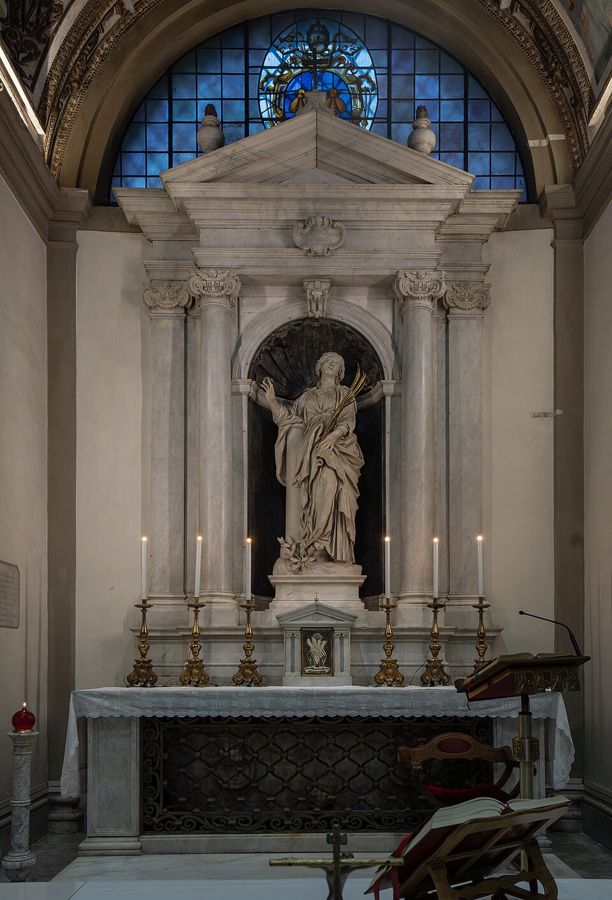
In the life of Pope Simplicius (468–483) that book records that the pope "consecrated a basilica of the holy martyr Bibiana, which contained her body, near the palatium Licinianum." The basilica still stands. By the fifth century, then, her bodily remains rested within the city walls of Rome. The Catholic Encyclopedia stresses that we have no further historical particulars of the martyr or of the circumstances of her death, and that we do not know why she was buried inside the city itself.
In later times a legend grew up around her, tied to the Acts (the written account of a martyr's trial and death) of the martyrdom of Saints John and Paul. The Encyclopedia judges that this story has no historical claim to belief. In that later telling she is the daughter of a former prefect, Flavianus, banished under Julian the Apostate (emperor 361–363, raised Christian, who tried to restore paganism); her mother Dafrosa and her sister Demetria are also persecuted; Dafrosa and Demetria die a natural death and are buried by Bibiana in their own house; Bibiana herself is tortured and dies of her sufferings; two days later a priest named John buries her near her mother and sister, and the house becomes a church.
The Encyclopedia notes that the legend seeks in this way to explain the origin of the church and the presence of the bodies. The account in the martyrologies of the ninth century is drawn from that legend. The Roman cult, at least, is historically sure: a named martyr whose relics were already honored in a basilica under Simplicius in the later fifth century.
People keep her memory at that Roman church. The calm claim of the sources is a holy martyr of Rome whose feast the calendar still carries, without needing the later household romance.