The pseudo-Hippolytus says, “Simon the Canaanite, the son of Cleophas, also called Jude, was made bishop of Jerusalem after James the Just died and was buried there, at the age of 120;” but this testimony is not credible. The writer's ignorance is evident in his confusion of Simon with Jude. Similarly, the Menology and Menaea confuse Simon with Nathaniel. On April 22, they have “the memorial of the holy Apostle Nathaniel, who is also called Simon Zelotes;” and the Synaxarium, on May 10, states, “This is Simon, who is also called Nathaniel.” The Menology of Basil does not make this error: it commemorates S. Simon on May 10 and Nathaniel on April 22, and it also distinguishes Nathaniel from S. Bartholomew on June 11. A misunderstanding of the title “Canaanite” has led the Greeks to believe that Simon was from Cana of Galilee, and the Synaxarium for May 10 states about him: “He was the bridegroom at the marriage to which Christ and His disciples were invited, in Cana, where He changed water into wine.”
And it adds that Simon left the marriage table and wine to follow Christ and become His Apostle. However, Bede and others believe that the bridegroom was Saint John the Divine, and that he left his bride to follow Christ. Saint Augustine held the same belief.
It is very uncertain where Simon preached. Moses of Chorene, an Armenian writer from the 5th century, states that he preached in Persia. However, he also mentions that "some relate that a certain Simon the Apostle perished at the Bosphorus in Iberia." But whether this is true, and why he would have gone there, I do not know. Ado and Saint Isidore of Seville, who were later writers and not very authoritative, suggest he went to Egypt, but neither the Copts nor the Abyssinians commemorate him. The Pseudo-Dorotheus claims he preached in Africa and Britain, but this testimony is also unreliable.
Since there is no certainty about where he preached, it is also doubtful whether he died a martyr's death or where he died. The Menology of Basil states that he preached at Edessa and died there peacefully. The Latin Martyrologies generally claim that he was martyred in Persia, but it is unlikely that he died a cruel death, as Eastern sources say he died in peace, and the Latins had no authority for their statement.
In the year 1204, an Armenian bishop or some wandering Oriental who claimed to be one came to Cologne, pretending that he had traveled from his homeland to venerate the Three Kings. He brought with him an arm of Saint Simon Zelotes and gave it to Bruno, the provost of Bonn, who transferred the precious relic to the Prémontré convent of Seyn in the diocese of Treves, where it has performed many notable miracles.
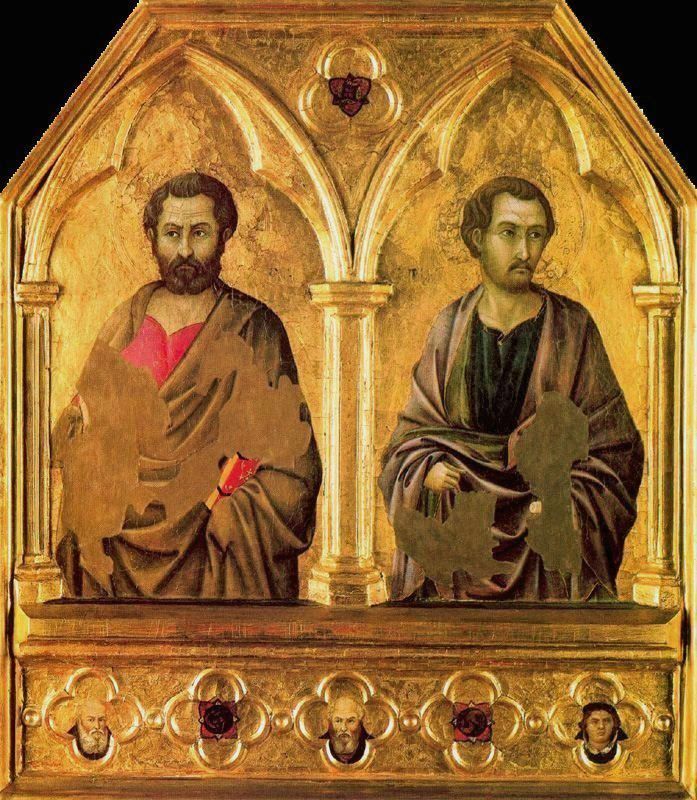
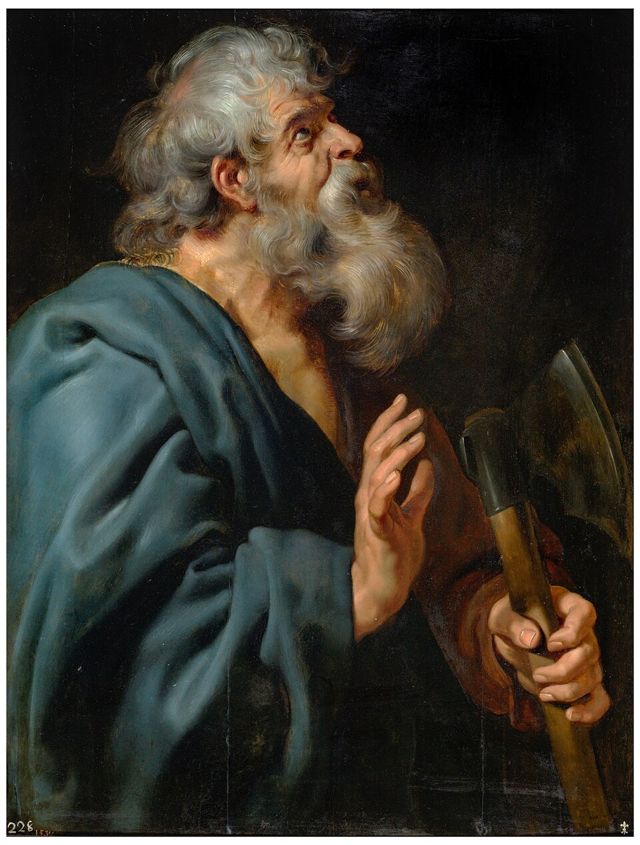
In art, Saint Simon is depicted with a long saw, as he is believed to have been sawn in half; but sometimes he holds one or two fish. The Greek paintings represent him as an old man, bald, with a rounded beard.
Footnotes
- He was the bridegroom at the marriage to which Christ and His disciples were invited, in Cana, where He changed water into wine.
- In Preface to Tract. and Sermons on John.
Baring-Gould’s own footnotes, in modern English.
Retold in plain modern English from Baring-Gould’s public-domain text, sentence by sentence, keeping the same facts and order. Short explanations in parentheses are ours.