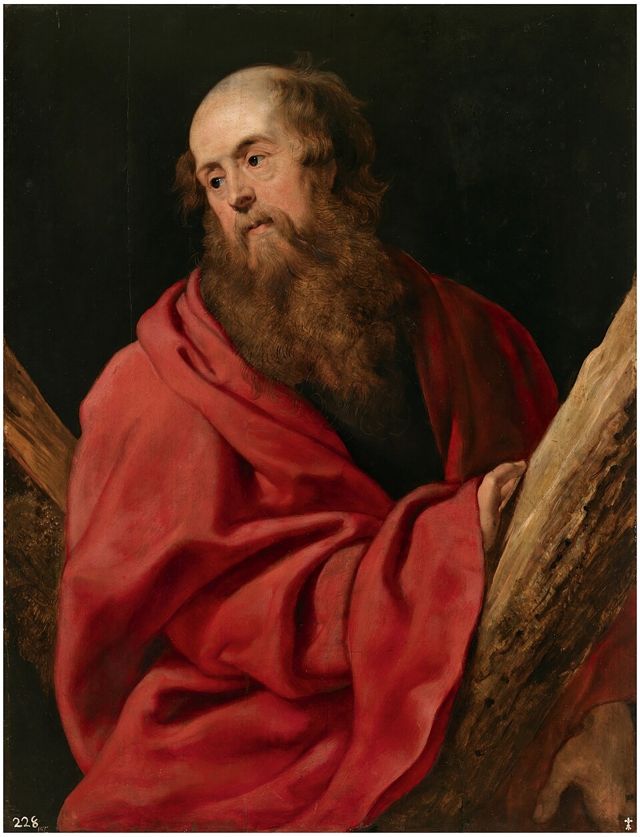
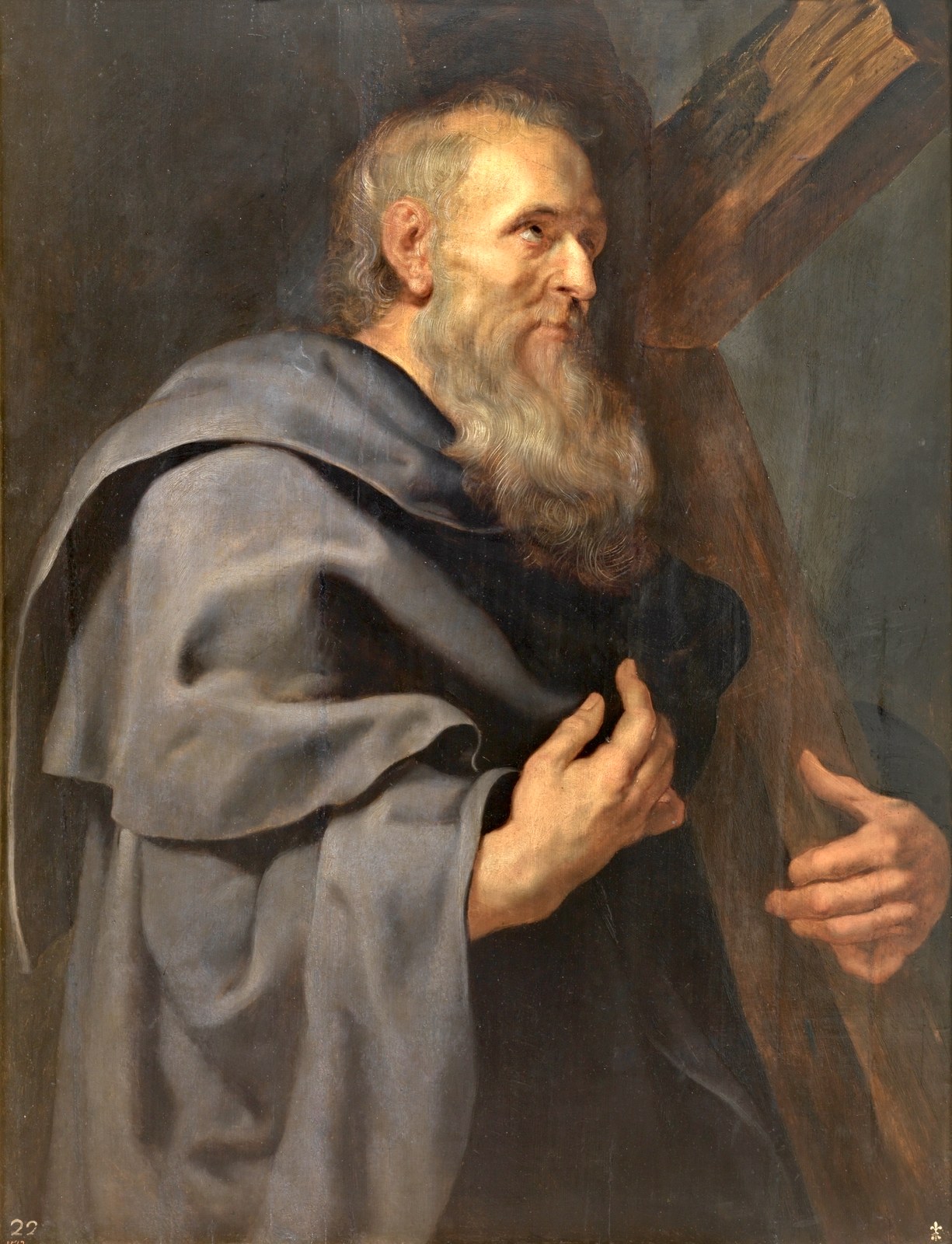
St. Philip the Apostle

The one who said, “Come and see”

Pray the novena →

St. Philip

Philip does not argue Nathanael into faith. He says, “Come and see.” The few other scenes John gives him are just as practical: a sum for the loaves, a request to be shown the Father. They are the speeches of a man still learning, and they were kept.

Feast day

May 3
with St. James the Less

This Saint’s Story

In our own words, from the sources listed below. An older English account is kept further down this page.

Philip, like Peter and Andrew, came from Bethsaida on the Lake of Galilee. John's Gospel says Jesus found him and said, "Follow me," and that Philip went at once and found Nathanael, and told him, "We have found him of whom Moses in the law, and the prophets did write, Jesus the son of Joseph of Nazareth." When Nathanael doubted whether anything good could come from Nazareth, Philip did not argue. He said, "Come and see."

He is fifth in all three lists of the Twelve. John shows him a few more times, and the picture is consistent: a practical, slightly overwhelmed man, brought forward when a question needs a plain answer. Before the feeding of the five thousand, Jesus asks him where they will buy bread. Philip answers with a sum: two hundred pennyworth would not be enough. At the Last Supper he says, "Lord, shew us the Father, and it is enough for us." Jesus answers that whoever has seen Him has seen the Father. These are not the speeches of a hero.

Second-century tradition about him is uncertain, because he was early confused with Philip the deacon, the Philip of Acts who meets the Ethiopian on the road. About the year 190, Bishop Polycrates of Ephesus counted among the "great lights" of Asia "Philip, one of the Twelve Apostles, who is buried in Hierapolis with his two daughters." Some of that may belong to the other Philip. The two men should not be merged without a warning. The General Roman Calendar keeps this apostle with James the Less on May 3. (The older Western date was May 1.)

For today: Philip's best sentence may be the shortest. When someone you trust is unsure, you do not have to win the argument. You can say, "Come and see," and you can walk with them.

The short version

Philip, from Bethsaida, is fifth in the lists of the Twelve. John’s Gospel records his call, his bringing of Nathanael, and his questions at the feeding of the five thousand and at the Last Supper. He was early confused with Philip the deacon of Acts; the two should not be merged without a warning. The feast, with James the Less, is May 3.

Did you know?

He and Andrew both come from Bethsaida.

A second-century bishop, Polycrates, says an apostle Philip was buried at Hierapolis; some of that may belong to the other Philip.

The older Western feast date was May 1.

Patron saint of

  • Luxembourg and Uruguay
    Popular associations, listed in some modern calendars. They are not early.

The full story

Baring-Gould’s account retold in modern English

Read the full story · 1,044 words · about 5 min

He had the honor of being the first called to be a disciple. This happened soon after Our Lord returned from the wilderness. He met with Saint Andrew and his brother Saint Peter, and after a brief conversation, He parted from them. The very next day, as He was passing through Galilee, He found Saint Philip, whom He immediately commanded to follow Him. Thus, Saint Philip had the privilege of being the first of Our Lord’s disciples. Although Saints Andrew and Peter were the first to approach and speak with Christ, they quickly returned to their trade and were not called to discipleship until more than a year later, when Saint John the Baptist was imprisoned.

Saint Clement of Alexandria reports, as a well-known fact, that Saint Philip was the one who asked Christ for permission to first go and bury his father before following Him. He received the response from Christ, “Let the dead bury their dead” (Matthew 8:22). It is said that in the distribution of the various regions of the world assigned by the Apostles, Upper Asia was designated as Saint Philip's province. There, he worked tirelessly and diligently to rescue people from the snare of the devil and lead them to embrace and acknowledge the truth. Through the steadfastness of his preaching and the effectiveness of his miracles, he gained many converts, whom he baptized into the Christian faith. He healed both souls and bodies, cast out demons, established churches, and appointed pastors for them. After many years of successfully carrying out his apostolic mission in those regions, he eventually arrived in Hierapolis, in Phrygia, a wealthy and thriving city, but also a stronghold of idolatry. Among the many false gods worshipped there was a huge serpent. Saint Philip was troubled to see the people so wretchedly enslaved to error.

Therefore, he continually begged God, until by prayer and calling upon the name of Jesus Christ, he had caused the death of the monster. After this, Saint Philip took the opportunity to convince the people of the uselessness of their superstitions, with such success that many renounced their errors. Enraged by this, the city magistrates seized the apostle, and after throwing him into prison, had him severely whipped. Following this cruel treatment, he was led to execution, and after being bound, he was hanged by the neck against a pillar; although others say that he was crucified. It is further recorded that at his execution, the earth suddenly began to quake, and the ground where the people stood began to sink beneath them; but when they realized this and mourned it as a clear act of Divine vengeance pursuing them for their sins, it suddenly stopped and did not continue. After the apostle died, his body was taken down by Saint Bartholomew—his fellow sufferer, who was executed later—and Mariamne, Saint Philip's sister (who is said to have been his constant travel companion), and they buried him decently. After this, having strengthened the people in their faith in Christ, they departed from them. Saint Philip was married and had several daughters. Some of them, according to Clement of Alexandria, were married. Two lived single and died at an old age, and were buried at Hierapolis, as we learn from Polycrates, who is quoted by Eusebius; another was buried at Ephesus. Sozomen says that the daughters of Philip raised a dead man to life; but Papias, whom Eusebius quotes, also speaks of this resurrection, which he claims he heard from their lips, but does not say that they raised the man to life. The fact that Saint Philip had daughters has led some writers to confuse him with Philip the Deacon, who lived at Caesarea, and of whose four virgin daughters mention is made in the Acts of the Holy Apostles. He was one of the apostles who left no sacred writings behind him, as most of the apostles, as Eusebius notes, had little time to write books because they were engaged in ministries that were more directly useful and beneficial to humanity. However, Saint Epiphanius relates that the Gnostics used to produce a Gospel forged in Saint Philip's name, which they misused to promote their strange heresies.

Saint Philip appears "young and beardless" in Greek paintings. In Western art, he is generally depicted in the prime of life, but with little beard. He usually carries a long staff topped with a cross; sometimes the cross is in the shape of a Tau, and more rarely it is a double cross. He often holds a basket with loaves and fishes, referencing Saint John.

The arm of Saint Philip was moved in 1204 from Constantinople to Florence, where it is still displayed. The crown of his head is in Troyes, obtained at the same time, while other relics are in Toulouse. The body of the saint is preserved in the church of the Apostles Philip and James in Rome, which was dedicated by Pope John III. However, in Cyprus, the head is preserved along with several bones; one of the bones was removed in 1616 and taken to Naples. Another head was given by John III, Duke of Berry, son of King John II of France, to the cathedral church of Notre Dame in Paris. Another head is displayed in Portugal, at Montemayor, in the church of Saint Francis. This was given to Don Fernando Mascarenhas, the envoy of King Sebastian to the Council of Trent, by the Pope.

Emperor Charles IV obtained many relics of Saint Philip, which he donated to the churches of Prague, including an arm of the apostle. This arm and another head of Saint Philip were brought from Rome in 1355. However, the head, one whole arm, and a portion of another are displayed in the monastery church of Andechs or Heiligen-Berg, near Ammersee, in Bavaria. In 1148, Pope Eugenius III consecrated the church of Saint Matthias in Treves, and relics of Saint Philip were then given to it. Gelenius states that relics of the same apostle are preserved in ten or more churches in Cologne.

The Spanish historians and martyrologists claim, without any evidence, that the Greeks whom Saint Philip brought to Saint Andrew, and Saint Andrew to our Lord (John 12:20), were a group of Spaniards.

Footnotes

  1. Saint Clement of Alexandria was an early Christian theologian and philosopher.
  2. Hierapolis was an ancient city in Phrygia, known for its hot springs and temples.
  3. Some of them, says Clement of Alexandria, were married.
  4. Two lived single, and died at a great age, and were buried at Hierapolis, as we learn from Polycrates, quoted by Eusebius.
  5. Sozomen says that the daughters of Philip raised a dead man to life.
  6. Papias, whom Eusebius quotes, speaks also of this resurrection, which he says he heard from their lips, but does not say that they raised the man to life.
  7. Eusebius observes, having little leisure to write books, through being employed in ministries more immediately useful and subservient to the happiness of mankind.
  8. Gelenius says that relics of the same apostle are preserved in ten or more of the churches in Cologne.

Baring-Gould’s own footnotes, in modern English.

Retold in plain modern English from Baring-Gould’s public-domain text, sentence by sentence, keeping the same facts and order. Short explanations in parentheses are ours.
Feast days

Feast: May 3
Traditional: May 1

What he represents

How he teaches us to live

Drawn from themes in the original account

Share your faith, in words and by example. Preaching and conversion are part of this story.

Celebrate this saint’s feast day. Remember him on May 3 with a short prayer, and ask for his help.

From the Catholic Encyclopedia

1913 · 639 words

Like the brothers, Peter and Andrew, Philip was a native of Bethsaida on Lake Genesareth (John 1:44). He also was among those surrounding the Baptist when the latter first pointed out Jesus as the Lamb of God. On the day after Peter's call, when about to set out for Galilee, Jesus met Philip and called him to the Apostolate with the words, "Follow me". Philip obeyed the call, and a little later brought Nathaniel as a new disciple (John 1:43-45). On the occasion of the selection and sending out of the twelve, Philip is included among the Apostles proper. His name stands in the fifth place in the three lists (Matt., x, 2-4; Mark, iii, 14-19; Luke, vi, 13-16) after the two pairs of brothers, Peter and Andrew, James and John. The Fourth Gospel records three episodes concerning Philip which occurred during the epoch of the public teaching of the Saviour:

These three episodes furnish a consistent character-sketch of Philip as a naïve, somewhat shy, sober-minded man. No additional characteristics are given in the Gospels or the Acts, although he is mentioned in the latter work (i, 13) as belonging to the Apostolic College. The second-century tradition concerning him is uncertain, inasmuch as a similar tradition is recorded concerning Philip the Deacon and Evangelist — a phenomenon which must be the result of confusion caused by the existence of the two Philips. In his letter to St. Victor, written about 189-98, bishop Polycrates of Ephesus mentions among the "great lights", whom the Lord will seek on the "last day", "Philip, one of the Twelve Apostles, who is buried in Hieropolis with his two daughters, who grew old as virgins", and a third daughter, who "led a life in the Holy Ghost and rests in Ephesus." On the other hand, according to the Dialogue of Caius, directed against a Montanist named Proclus, the latter declared that "there were four prophetesses, the daughters of Philip, at Hieropolis in Asia where their and their father's grave is still situated." The Acts (xxi, 8-9) does indeed mention four prophetesses, the daughters of the deacon and "Evangelist" Philip, as then living in Caesarea with their father, and Eusebius who gives the above-mentioned excerpts (Hist. Eccl., III, xxxii), refers Proclus' statement to these latter. The statement of Bishop Polycrates carries in itself more authority, but it is extraordinary that three virgin daughters of the Apostle Philip (two buried in Hieropolis) should be mentioned, and that the deacon Philip should also have four daughters, said to have been buried in Hieropolis. Here also perhaps we must suppose a confusion of the two Philips to have taken place, although it is difficult to decide which of the two, the Apostle or the deacon, was buried in Hieropolis. Many modern historians believe that it was the deacon; it is, however, possible that the Apostle was buried there and that the deacon also lived and worked there and was there buried with three of his daughters and that the latter were afterwards erroneously regarded as the children of the Apostle. The apocryphal "Acts of Philip," which are, however purely legendary and a tissue of fables, also refer Philip's death to Hieropolis. The remains of the Philip who was interred in Hieropolis were later translated (as those of the Apostle) to Constantinople and thence to the church of the Dodici Apostoli in Rome. The feast of the Apostle is celebrated in the Roman Church on 1 May (together with that of James the Younger), and in the Greek Church on 14 November.

Acta SS., May, I, 11-2; BATIFFOL, in Analecta Bollandiana, IX (1890), 204 sqq.; LIPSIUS, Die Apokryphen Apostelgeschicten und Apostellegenden, II, II (Brunswick, 1884), 1 sqq.; Bibl. Hagriogr. Latina, II, 991; on the two Philips cf. ZAHN in Forschungen sur Gesch. Des neutestamentl. Kanons, VI (Erlangen, 1900), 158 sqq.

The novena

Nine days · one intention

A novena is nine days of prayer for one intention, modeled on the nine days the apostles and Mary prayed between the Ascension and Pentecost (Acts 1–2). Pray this each day:

Nine days · Free

Pray the novena
with us.

One short email a day for nine days. The day's prayer, a line from St. Philip's story, and a nudge to keep going.

Your Confirmation saint?

Choose St. Philip if…

  • you would rather invite than persuade
  • you ask practical questions and sometimes they are the right ones
  • you are still learning, and you do not mind that being on the record

Take the saint finder →  Need a sponsor?

“Come and see.”

Douay-Rheims, John 1:46
Related saints
Sources & notes

Story sources

Sources

Credits

Image: Peter Paul Rubens, Wikimedia Commons (Public domain)

We only print prayer texts we can trace to a public-domain printed source, and we have not verified one for St. Philip yet. Until we do: for nine days, pray an Our Father, a Hail Mary and a Glory Be, then add your intention and “St. Philip, pray for us.”

Help us add to this saint's story

Everything is read by a person before anything appears. Facts are checked against trusted sources first.

Facts are welcome; a source link helps (optional).With your permission we may share it on this page.