Saint Luke (8:1, 2, 3) says that our Blessed Lord traveled from place to place, “and the twelve were with Him, and certain women, who had been healed of evil spirits and infirmities, Mary called Magdalene, out of whom went seven devils, and Joanna, the wife of Chusa, Herod’s steward, and Susanna, and many others, who ministered to Him of their substance.” This was in the first year of His ministry. Saint Mark (16:9) confirms the statement of Saint Luke that Christ had cast seven devils out of Mary Magdalene.
When He was on the cross, “There stood by the cross of Jesus His mother, and His mother’s sister, Mary the wife of Cleopas, and Mary Magdalene.” Saint Mary Magdalene was also one of the women who came with Him from Galilee, who followed after, and beheld the tomb, and how His body was laid, and returned and prepared spices and ointments; and rested on the Sabbath day according to the commandment.
“Now on the first day of the week, very early in the morning, they came to the tomb, bringing the spices which they had prepared, and certain others with them. And they found the stone rolled away from the tomb.” When they had seen a vision, “they returned from the tomb, and told all these things to the eleven, and to all the rest. It was Mary Magdalene, and Joanna, and Mary the mother of James, and other women that were with them, who told these things to the apostles.”
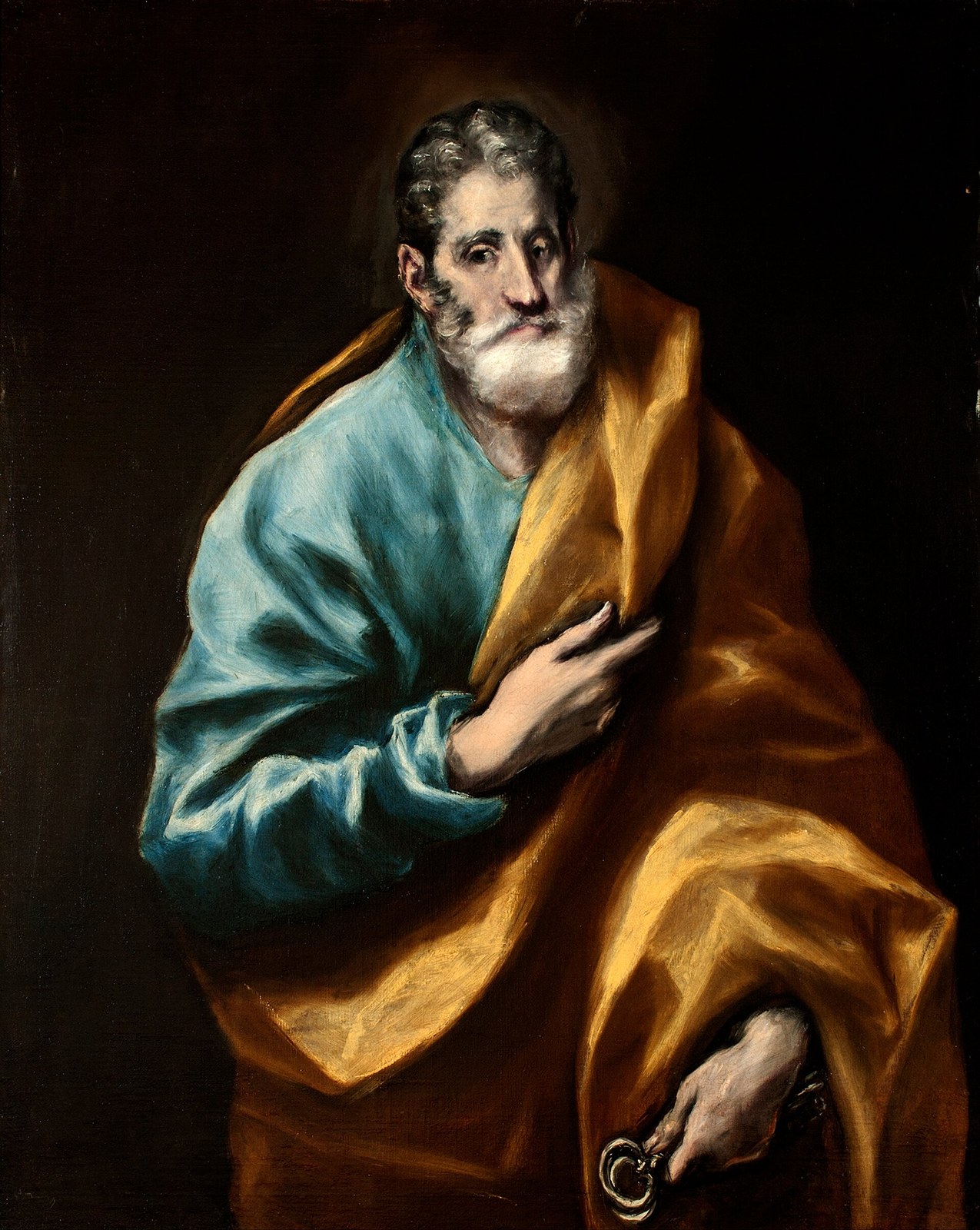
It is not easy at first glance to harmonize this account with the order of events as related by Saint John; but it is probable that Saint Luke is combining two visits into one. Saint John tells us that Mary Magdalene went early to the tomb while it was dark and found the stone rolled away. She was not alone; the other women were with her. They returned to the apostles and told them, “They have taken away the Lord out of the tomb, and we do not know where they have laid Him.” Then Saint Peter and Saint John ran to the tomb and found it just as the women had told them.
Then Mary Magdalene, who had gone back to the tomb with Saints Peter and John, and who was also perhaps accompanied by the other women, saw the vision of angels. In Saint Luke, all the women see it; in Saint John, Mary Magdalene alone.
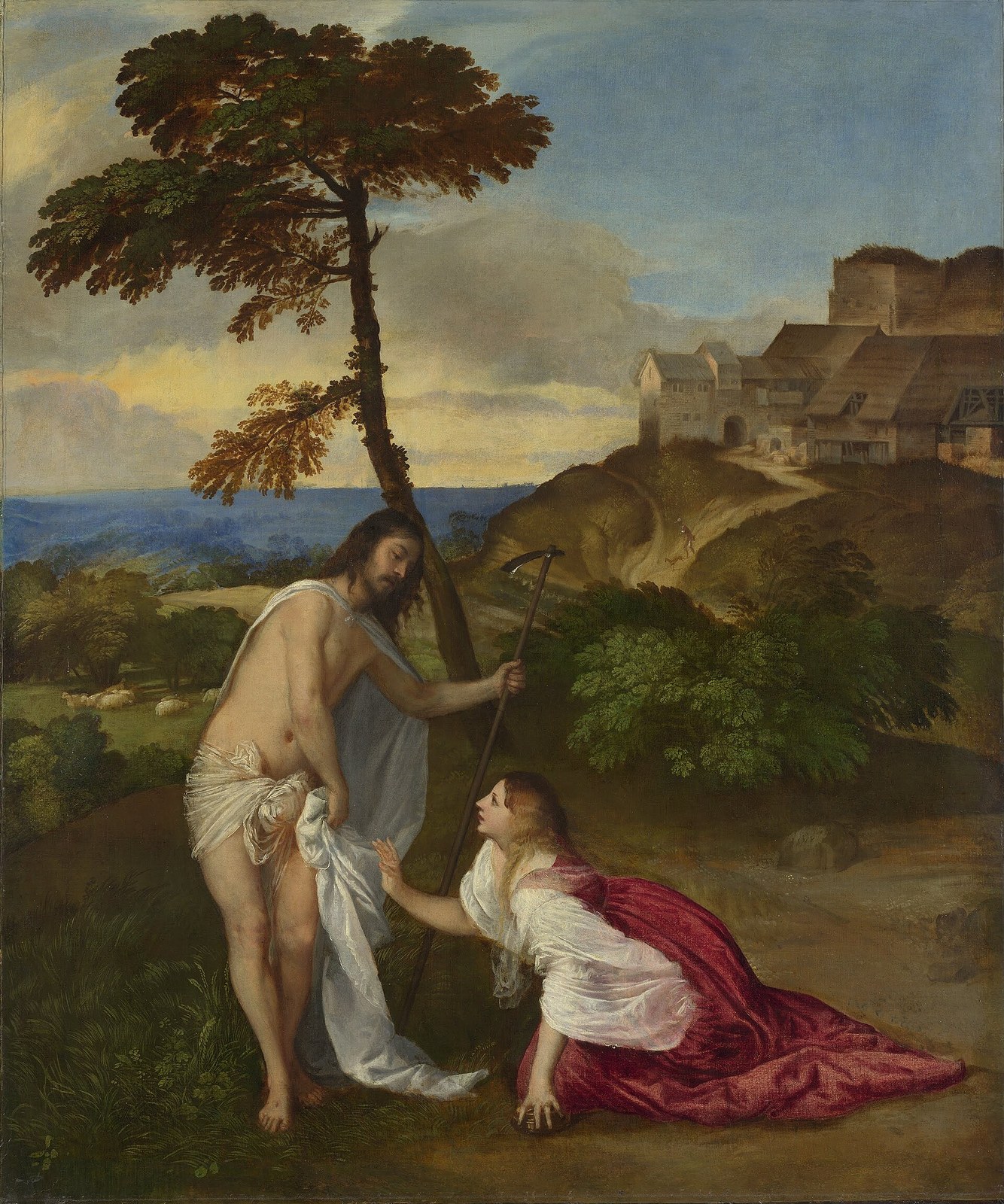
But there were probably two visions; the first occurred when the other women were with her. The account in Matthew complicates the matter further, as he describes the descent of the angel, the rolling back of the stone, and the flight of the guards, after mentioning that "Mary Magdalene and the other Mary" went to the tomb. However, it is likely that this happened before the women reached the tomb. When they saw the stone rolled away and had witnessed the vision of angels, they ran to tell the apostles. But—this is probably the order—Mary Magdalene returned, and after the apostles had left, she remained standing outside the tomb, weeping. As she wept, she bent down and looked into the tomb and saw two angels in white sitting, one at the head and the other at the feet, where the body of Jesus had been. They said to her, "Woman, why are you weeping?" She replied, "Because they have taken away my Lord, and I do not know where they have laid him." After she said this, she turned around and saw Jesus standing there, but she did not realize that it was Jesus. Jesus said to her, "Woman, why are you weeping? Whom are you seeking?" She, thinking he was the gardener, said to him, "Sir, if you have carried him away, tell me where you have laid him, and I will take him away." Jesus said to her, "Mary." She turned and said to him, "Rabboni," which means "Master." Jesus said to her, "Do not cling to me, for I have not yet ascended to my Father; but go to my brothers and say to them, 'I am ascending to my Father and your Father, to my God and your God.'" Mary Magdalene went and told the disciples that she had seen the Lord and that He had said these things to her. This is all that Holy Scripture tells us about Mary Magdalene by name. However, it has been suggested that Mary, the sister of Lazarus, and the woman who was a sinner and anointed Christ with ointment at Nain, are the same person.
It is quite likely that the woman who anointed Christ at Nain was Mary Magdalen. Magdala is a small town, or village, on the Sea of Tiberias in Galilee. Mary was probably called Magdalen because she was from that place.
The touching event took place in Galilee, at Nain, and is recorded by Luke (7:36-50): “One of the Pharisees invited Him to eat with him. He went into the Pharisee's house and reclined at the table. And behold, a woman in the city, who was a sinner, learned that Jesus was reclining at the table in the Pharisee's house. She brought an alabaster jar of ointment and stood behind Him at His feet weeping. She began to wash His feet with her tears and wiped them with the hair of her head. She kissed His feet and anointed them with the ointment.
When the Pharisee who had invited Him saw this, he said to himself, ‘If this man were a prophet, He would know who and what kind of woman this is who is touching Him, for she is a sinner.’ Jesus answered him, ‘Simon, I have something to say to you.’ He said, ‘Teacher, say it.’ There was a certain creditor who had two debtors: one owed five hundred denarii, and the other fifty. When they could not pay, he forgave them both. Tell me, therefore, which of them will love him most?’
Simon answered, ‘I suppose the one whom he forgave more.’ Jesus said to him, ‘You have judged rightly.’ Then He turned to the woman and said to Simon, ‘Do you see this woman? I entered your house; you gave Me no water for My feet, but she has washed My feet with her tears and wiped them with the hair of her head. You gave Me no kiss, but this woman has not ceased to kiss My feet since the time I came in. You did not anoint My head with oil, but this woman has anointed My feet with ointment. Therefore, I say to you, her sins, which are many, are forgiven, for she loved much. But to whom little is forgiven, the same loves little.’
He said to her, ‘Your sins are forgiven.’ Those who sat at the table with Him began to say among themselves, ‘Who is this who even forgives sins?’ He said to the woman, ‘Your faith has saved you; go in peace.’”
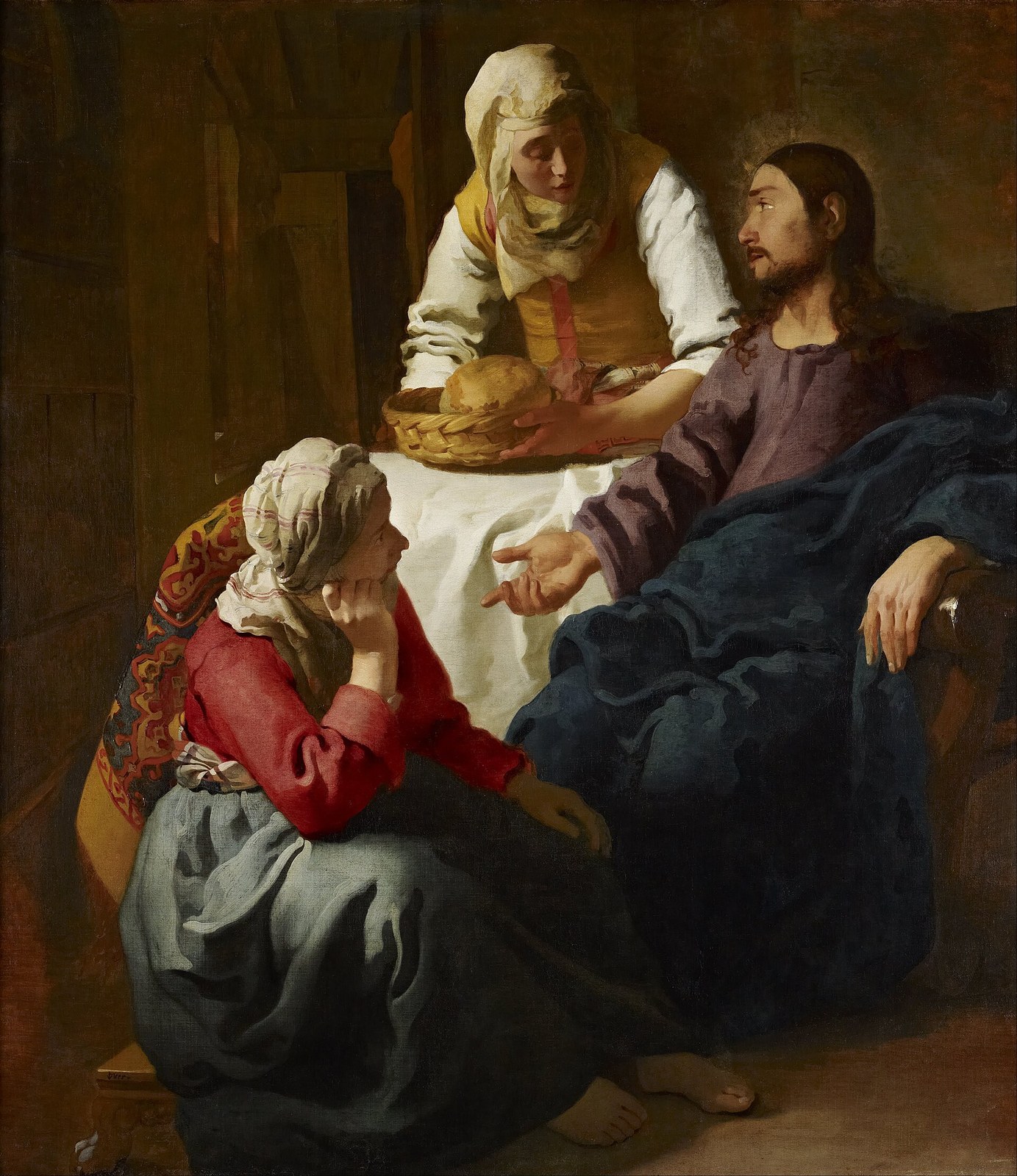
This took place in the first year of our Lord’s ministry, and shortly after, we find Mary Magdalen following Him. Of Mary, the sister of Lazarus, it is said, “Now a certain man was sick, named Lazarus, of Bethany, the town of Mary and her sister Martha. It was Mary who anointed the Lord with ointment and wiped His feet with her hair, whose brother Lazarus was sick.”
But this anointing refers to the event that took place at Bethany, in the house of Simon the Leper, in the third year of His ministry, as recorded by Matthew. “Now when Jesus was in Bethany, in the house of Simon the leper, there came to Him a woman having an alabaster box of very precious ointment, and she poured it on His head as He sat at the table. But when His disciples saw it, they were indignant, saying, ‘To what purpose is this waste? For this ointment might have been sold for much and given to the poor.’ When Jesus understood it, He said to them, ‘Why do you trouble the woman? For she has done a good work for Me. For you have the poor always with you, but you do not always have Me. For in that she has poured this ointment on My body, she did it for My burial. Truly I say to you, wherever this gospel shall be preached in the whole world, there shall also this, that this woman has done, be told for a memorial of her.’”
It is difficult to understand how Mary of Magdala and Mary of Bethany can be the same person; however, it is quite possible that Mary Magdalen may have been the woman whose act is described in the seventh chapter of Luke. Origen mentions that in his time some believed that “the woman who was a sinner,” the Magdalen, and Mary of Bethany were one and the same person. “But I,” he says, “rather think that they were three separate persons.”
Victor of Antioch, who lived around A.D. 400, states: “Apollinaris and Theodorus assert that what is written by all the evangelists refers to the same woman, but that John gave the history of her more fully than the others.” These are the earliest references to the identification, and they show that it had not been firmly established in the first four centuries. In the Eastern Church, it has always been believed that Mary of Bethany and Mary of Magdala were distinct. Nothing reliable is known about what happened to Mary Magdalen after the Resurrection. The Greeks say that she went to Ephesus, to John the Divine, where she died and was buried at the entrance to the cave where the Seven Sleepers later took refuge.
Her relics were moved from there by the emperor Leo VI and placed in the monastery of Saint Lazarus in Constantinople.
However, there is a tradition that she came to Gaul with Lazarus and Martha — for she is identified in medieval Western belief with Mary of Bethany — and that she settled in Marseilles, where she is considered the apostle of Provence. Two churches in France claim to possess her body: the church in Vezelai, which displays papal bulls from popes Lucius II, Urban III, Clement III, and Innocent III, affirming the authenticity of the body kept there, and the church in Marseilles, where the body was found in the 13th century. In addition to these, there are countless other relics.
There is a long story about the voyage of Saint Mary Magdalen with her brother Lazarus and her sister Martha to Provence, and about her missionary work in Marseilles; however, this account is so apocryphal and modern that the Bollandists chose not to include it in their collection.
In art, Saint Mary Magdalen is depicted with a vessel of ointment, her hair loose and flowing. “There still remains an immense collection of things, if all the places are to be explored, where the sacred relics of Saint Mary Magdalen are said to be preserved and honored.” After listing many arms and fingers, the Bollandist adds, “Of all these and other relics under the name of Saint Mary Magdalen, no one should ask me whether I consider them true and genuine.”
Footnotes
- The phrase "the twelve" refers to the twelve apostles of Jesus.
- The term "Herod’s steward" indicates a high-ranking official in Herod's court.
- The term "Sabbath" refers to the day of rest in Jewish tradition.
- This is all that Holy Scripture tells us about Mary Magdalene by name.
- The term "denarii" refers to a silver coin used in ancient Rome.
- Origen mentions that some believed the woman who was a sinner and Mary of Bethany were the same person.
- Victor of Antioch states that Apollinaris and Theodorus believed all evangelists referred to the same woman.
- There still remains an immense collection of things, if all the places are to be explored, where the sacred relics of Saint Mary Magdalen are said to be preserved and honored.
- Of all these and other relics under the name of Saint Mary Magdalen, no one should ask me whether I consider them true and genuine.
Baring-Gould’s own footnotes, in modern English.
Retold in plain modern English from Baring-Gould’s public-domain text, sentence by sentence, keeping the same facts and order. Short explanations in parentheses are ours.