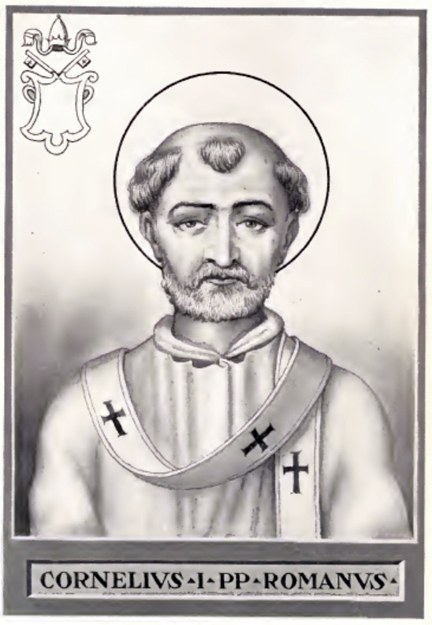
This Saint’s Story
Cornelius was bishop of Rome from March 251 until his death in June 253, in the aftermath of the Decian persecution (Emperor Decius's 250 order that everyone sacrifice to the gods and obtain a certificate). The emperor had required sacrifice to the Roman gods. Many Christians had complied, or had bought certificates saying they had, and then wanted to return to the church. The quarrel that followed was about whether they could. Novatian, a priest in Rome, said they could not be received again. Cornelius, and Cyprian of Carthage with him, said they could, after a penance proportioned to what they had done. A synod in Rome confirmed Cornelius and put Novatian out of communion. Novatian set up a rival church. The division lasted for a time, and then faded.
The question was forgiveness after failure under threat. It was not an abstract argument. People had been afraid, and some of them had given way, and now they were at the door. Cornelius and Cyprian left the door open. Their letters to each other, which survive, show two bishops trying to hold a church together without pretending that nothing had happened. Cornelius is not Cornelius the centurion of Acts 10, who has a separate, thinner page on this site.
He died in June 253. The church remembers him as a martyr. Later notices place the death in exile at Centumcellae, now Civitavecchia. The General Roman Calendar keeps him with Cyprian on September 16.
For today: If someone failed under pressure and wants to come back, you can ask what repair is honest, and you can leave a door open. Cornelius and Cyprian did that. Novatian did not.
