
St. Cornelius the Centurion

Cornelius was a centurion of the Italian band at Caesarea.

Read the essentials →
Feast February 2 · Bishop

St. Cornelius the Centurion

Current feast

February 2 (also listed: October 20, February 4, February 7, September 13)
Secondary source · Wikipedia infobox

Traditional feast

February 2
1914 / pre-1969 calendar, per Baring-Gould (1897)

Represents

Bishop

Feast days

Feast: February 2

This Saint’s Story

Adapted in modern English from Baring-Gould (1897) · original text below

He was a devout man who feared God with all his household, gave generously to the poor and prayed often and earnestly. In a vision an angel told him that his prayers and alms had risen before God as a memorial, and that he should send to Joppa, to the house of Simon the tanner, for Peter, who would teach and baptise him.

He did so. Peter hurried to Caesarea and baptised him and his whole household, and the Holy Spirit came down on them.

Tradition says Peter later made Cornelius bishop of Caesarea, where he worked hard to spread the kingdom of Christ and confessed his faith before the chief magistrate. He died at a ripe old age and was buried secretly in a tomb belonging to a wealthy Christian friend. It is said a bramble grew over the entrance and sealed it with its thorns until St Silvanus, Bishop of Philippopolis, cut it away in the early fifth century and moved the relics.
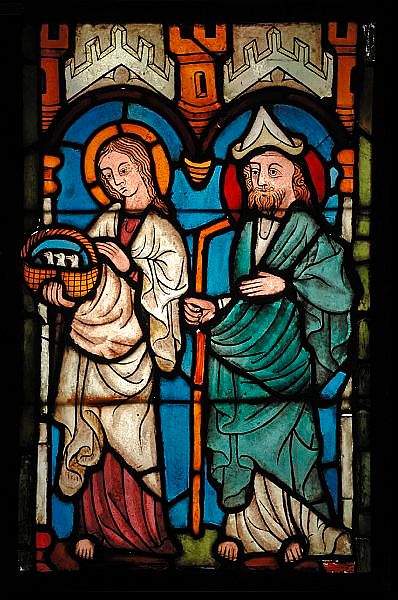
Short entry · the summary here is 235 words; Baring-Gould’s fuller original text and its sources are below. We have not filled any gap with invented detail.

What he represents

How he teaches us to live

Drawn from themes in the original account

Give to people in need. The account records care for the poor.

Share your faith, in words and by example. Preaching and conversion are part of this story.

Pray a little every day. Prayer is part of this story.

The full story

Baring-Gould’s account retold in modern English

Read the full story · 213 words · about 1 min

Cornelius, the centurion, was an officer of the Italian band stationed at Cæsarea. He was a devout convert who feared God, along with all his household. He gave generously to the poor and prayed often and earnestly to God. One day, he saw a vision of an angel who told him that his prayers and alms had been remembered by God. The angel instructed him to send for Simon, a tanner, who lived in Joppa, to bring S. Peter, the prince of the Apostles. S. Peter would teach him and baptize him.

Cornelius followed these instructions, and S. Peter hurried to Cæsarea, where he baptized Cornelius and all his household. The Holy Spirit came upon them.

Later, S. Peter ordained Cornelius as bishop of Cæsarea, where he worked hard to promote the kingdom of Christ and made a strong confession of faith before the chief magistrate. He died at an old age and was secretly buried in a tomb belonging to a wealthy Christian friend. It is said that a bramble grew over the burial site and covered the entrance with its thorny branches, preventing anyone from entering until S. Silvanus, the bishop of Philippopolis in Thrace, in the early 5th century, cut away the bramble and discovered and moved the sacred relics.

Footnotes

  1. Philippopolis: an ancient city in Thrace, now part of Bulgaria.

Baring-Gould’s own footnotes, in modern English.

Read the original 1870s text

Baring-Gould’s sources: Roman and other Western Martyrologies. Commemorated by the Greeks on Sept. 13th. Authorities:—The Acts of the Holy Apostles, c. 10, the notices in the Martyrologies, and allusions in the Epistles of S. Jerome. The Acts given by Metaphrastes are not deserving of much attention.

Cornelius, the centurion, was officer of the Italian band at Cæsarea. He was a devout proselyte, who feared God, with all his household, and gave much alms to the poor and prayed often and earnestly to God. He saw in a vision an angel, who told him that his prayers and alms had come up for a memorial before God, and that he was now to hear the words of Salvation, and to be instructed in the fulness of divine truth. He was to send to Joppa, to the house of one Simon, a tanner, for S. Peter, the prince of the Apostles, who would instruct and baptize him.

This he accordingly did, and S. Peter, hastening to Cæsarea, baptized him and all his house. And the Holy Ghost fell upon them.

Cornelius was afterwards, by S. Peter, ordained bishop of Cæsarea, where he strove mightily to advance the kingdom of Christ, and witnessed a good confession before the chief magistrate. He died at a ripe old age, and was buried secretly in a tomb belonging to a friend, a Christian of wealth. And, it is said, that a bramble grew over the spot and laced the entrance over with its thorny arms, so that none could enter in till S. Silvanus, bishop of Philippopolis, in Thrace, in the beginning of the 5th century, hacked away the bramble, and discovered, and translated the sacred relics [the bodily remains of a saint, or objects they used, kept with honor].

More about St. Cornelius the Centurion

Checked against at least two sources, in our own words

Help us add to this saint's story

Everything is read by a person before anything appears. Facts are checked against trusted sources first.

Facts are welcome; a source link helps (optional).With your permission we may share it on this page.

Nine days · Free

Pray the novena
with us.

One short email a day for nine days. The day's prayer, a line from St. Cornelius the…'s story, and a nudge to keep going.

Also on February 2
The Purification of S. Mary, or the Presentation of Christ in the Temple

The Purification of S.…

February 2 · Feast
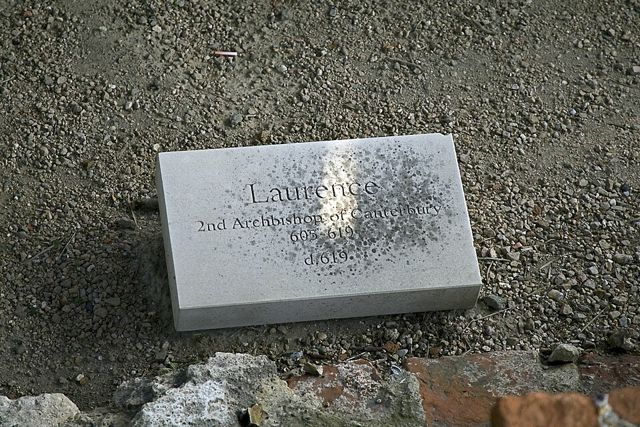
St. Laurence of Canterbury

St. Laurence of…

February 2 · Archbishop
A

St. Adalbald

February 2 · Confessor
← All 1970 saints in the library
Sources & notes

Feast-day sources

Story sources

Sources

Credits

Image: 'Vision of the Centurion Cornelius' by Zanobi Rosi (cropped).jpg · Zanobi Rosi · Public domain, via Wikimedia Commons

Image: Zanobi Rosi, Wikimedia Commons (Public domain)

Retold in plain modern English from Baring-Gould’s public-domain text, sentence by sentence, keeping the same facts and order. Short explanations in parentheses are ours.

From Sabine Baring-Gould, The Lives of the Saints, new edition in 16 vols. (London: John C. Nimmo, 1897), digitized text from Project Gutenberg. Public domain in the United States. Reproduced unedited, except for short bracketed notes in grey that we added to explain names and terms (“S.” is the old abbreviation for Saint). Some history and judgments reflect 19th-century scholarship.