St. Zacharias, Pope

Zacharias, a Greek by birth, the son of Polychronius, was educated with care in every science.

Read the essentials →
Feast March 15 · —

St. Zacharias, Pope

Current feast

March 15
Secondary source · Wikipedia infobox

Traditional feast

March 15
1914 / pre-1969 calendar, per Baring-Gould (1897)

Represents

Feast

Feast days

Feast: March 15

This Saint’s Story

Zachary (Zacharias), who reigned from 741 to 752, came of a Greek family in Calabria; the Liber Pontificalis (the early medieval 'Book of the Popes', not always reliable for the earliest ones) names his father Polichronius. Probably a deacon of Rome, he was elected unanimously after the burial of Gregory III and consecrated on 5 December 741. His biographer calls him gentle, conciliatory, and charitable to clergy and people.

Rome was then threatened by the Lombard king Liutprand. Zachary went in person to meet him at Terni, and won back four cities and the Church's lost patrimonies, with a twenty-year truce. Baring-Gould adds that many Lombards wept at a bishop's ordination there, and that the king said he had never enjoyed a dinner so much. When Liutprand moved on Ravenna, the pope went to Pavia and persuaded him to withdraw. Later King Ratchis, with his wife and daughter, took monastic vows before him.

In 743 he held a Roman synod of sixty bishops on church discipline. He kept up a close correspondence with St Boniface, confirming the new sees of Würzburg, Buraburg and Erfurt, naming him legate to the Frankish synods, and condemning the heretics Adelbert and Clement. In 747 Carloman gave up his power and was received by Zachary into monastic life. The pope also encouraged reform synods in England, such as Clovesho in 747. He urged the Emperor Constantine V to restore the veneration of images.

When Pepin's envoys asked whether one should be king who did not hold the royal power, Zachary answered that this did not seem good, and on his authority Pepin was proclaimed king. He restored churches and the Lateran palace, gave alms daily, ransomed slaves about to be sold abroad, and translated the Dialogues of Gregory the Great into Greek. He died in March 752 and was buried in St Peter's; Baring-Gould gives 15 March, his burial day, as his feast.

What he represents

How he teaches us to live

Drawn from themes in the original account

Be a peacemaker. Making peace is part of this story.

Celebrate this saint’s feast day. Remember him on March 15 with a short prayer, and ask for his help.

The full story

Baring-Gould’s account retold in modern English

Read the full story · 624 words · about 3 min

Zacharias, a Greek by birth and the son of Polychronius, was carefully educated in all sciences. He went to Rome, where he was ordained as a priest during a time when the eternal city faced constant threats from the Lombards. Luitprand, the king of the Lombards, was unhappy because Gregory III had shown favor to Thrasymund, the duke of Spoleto. He laid siege to Rome and did not leave until his troops had looted the church of St. Peter, which had previously been respected by the Goths. At this moment, just as Gregory had requested help from Charles Martel against Luitprand, the papacy became vacant due to Gregory's death.

Zacharias was elected to the papacy. His innocent life and sharp intellect were complemented by a natural kindness that captivated everyone he met. He was consecrated on November 19, 741, nine days after the death of his predecessor and nine days before his burial. Determined to do everything for the sake of his people, Zacharias sent a messenger to King Luitprand with a letter filled with courtesy and respect. This letter touched the barbarian king, leading him to show a willingness to negotiate with the new pope. Zacharias seized the opportunity; he went, accompanied by many of his clergy, to Terni in Umbria, where he met King Luitprand, who welcomed him warmly. They concluded a treaty, Luitprand released his prisoners, and the towns that had been taken were returned to the Holy See. The next day, Zacharias participated in the ordination of a bishop for Terni, which took place in the Church of St. Valentine. The ceremony had a strong emotional impact on the Lombards, many of whom wept. After the ordination, the pope invited the barbarian prince to dinner and gave him his blessing. Luitprand reportedly remarked that he had never enjoyed a dinner so much.

Zacharias later helped to secure peace for many of the troubled states and cities of Northern Italy. Luitprand was succeeded by Hildebrand, who reigned for only seven months, and then Rachis, the duke of Forli, took the Lombard throne and established a peace lasting twenty years with all of Italy.

Zacharias then focused on the discipline of the Church, which had become quite lax due to the troubles in the region. He supported St. Boniface in his mission to Germany. In the East, he worked to mitigate the harshness of Emperor Constantine Copronymus, who opposed sacred images and pictures in churches.

Pepin, the mayor of the palace who effectively ruled France under the name of Childeric III, sent Burchard, the bishop of Würzburg, and Fulrad, the abbot of Saint Denis, to Zacharias to seek his advice on fulfilling his ambition to take the crown of France from the "Faineant" (meaning "do-nothing") kings. Zacharias, who wanted help and protection against the Lombards, not only approved of Pepin's plan but also wrote secretly to him, encouraging him not to refuse the crown that Providence was offering him. At the same time, his more carefully phrased letter to the Frank nobles helped persuade them to support the strong and decisive leadership of the mayor. Without directly suggesting the removal of Childeric or the election of Pepin, Zacharias argued that "he who had the power in fact ought to be the king." This was enough for Pepin. Everyone interpreted this statement as an endorsement of his plan; Pepin's election was seen as sanctioned by heaven, and he was crowned at Soissons the following year by Boniface, the archbishop of Mainz. This coronation took place on May 1st; Zacharias did not live to witness it, as he died on the previous March 3rd. The day of his burial in the Church of Saint Peter, March 15th, is when the Church commemorates his memory.

Footnotes

  1. Zacharias, who desired help and protection against the Lombards, not content with approving his design, wrote secretly to Pepin urging him not to refuse the crown which Providence extended to him.
  2. For, without recommending the deposition of Childeric, or the election of Pepin, Zacharias urged that "he who had the power in fact ought to be the king."
  3. This coronation took place on May 1st; Zacharias did not live to see it, for he died on the preceding March 3rd.

Baring-Gould’s own footnotes, in modern English.

Read the original 1870s text

Baring-Gould’s sources: Roman Martyrology, and those of Ado, Maurolycus, and Notker, on March 14th, so also Molanus in his additions to Usuardus. Authority:—His life by Anastasius the Librarian.

Zacharias, a Greek by birth, the son of Polychronius, was educated with care in every science. He went to Rome, where he was ordained priest, at a time when the eternal city was subject to constant alarms from the Lombards [a Germanic people who ruled much of Italy from 568 to 774]. Luitprand, king of the Lombards, ill satisfied because Gregory III. extended his favour to Thrasymund, duke of Spoleto, laid siege to Rome, and did not retire till his troops had pillaged the church of S. Peter, which the Goths [Germanic peoples who invaded the Roman Empire, many of them Arian Christians] had hitherto respected. At this moment, just as Gregory had asked help of Charles Martel against Luitprand, the see became vacant through his death.

Zacharias was elected to the throne of S. Peter. The innocence of his life, and the vigour of his understanding, were accompanied by a natural kindliness which fascinated all with whom he was brought in contact. He was consecrated on November 19th, 741, nine days after the death of his predecessor, and nine days before his interment. Resolved to expose himself to everything for the sake of his people, Zacharias sent a nuncio to king Luitprand with a letter overflowing with expressions of courtesy and respect, which so touched the barbarian, that he gave token of being disposed to negotiate with the new pontiff. Zacharias knew how to profit by the opportunity; he went, accompanied by many of his clergy, to Terni, in Umbria, and met king Luitprand, who received him with the utmost courtesy. He concluded a treaty with him, released his prisoners, recovered to the Holy See the towns that had been taken, and on the morrow assisted at the ordination of a bishop for Terni, which took place in the Church of S. Valentine. The ceremony produced a lively effect upon the Lombards, many of whom wept. After the ordination, the pope invited the barbarian prince to dinner, and gave him his blessing; Luitprand is reported to have observed that he had never enjoyed a dinner so much.

Zacharias was afterwards the means of procuring peace for many of the distressed states and cities of Northern Italy. Luitprand was succeeded by Hildebrand, who only reigned seven months; and the Lombard throne was then filled by Rachis, duke of Forli, who concluded a peace of twenty years with all Italy.

Zacharias now turned his attention to the discipline of the Church, which had become much relaxed by the troubles that had fallen on the land. He encouraged S. Boniface [English missionary to Germany, martyred 754] in his mission to Germany. In the East he laboured to soften the violence of the emperor Constantine Copronymus, who opposed sacred images and pictures in churches.

Pepin, mayor of the palace, who was master of France, under the shadow and name of Childeric III., sent Burchard, bishop of Wurtzburg, and Fulrad, abbot of S. Denys, to Zacharias to consult him on the accomplishment of his ambition, the assumption for himself of the crown of France from the heads of the "Faineant" race. Zacharias, who desired help and protection against the Lombards, not content with approving his design, wrote secretly to Pepin urging him not to refuse the crown which Providence extended to him; at the same time his more cautiously worded epistle to the Frank nobles on the subject did not a little serve towards determining them to place the sovereignty in the bold, firm hand of the mayor. For, without recommending the deposition of Childeric, or the election of Pepin, Zacharias urged that "he who had the power in fact ought to be the king." This was enough for Pepin. Every one considered this expression to be an approval of the design; the election of Pepin was regarded as approved by heaven; and he was crowned at Soissons the year following, by Boniface, archbishop of Mentz. This coronation took place on May 1st; Zacharias did not live to see it, for he died on the preceding March 3rd. The day of his burial in the Church of S. Peter, March 15th, is that on which the Church honours his memory.
Help us add to this saint's story

Everything is read by a person before anything appears. Facts are checked against trusted sources first.

Facts are welcome; a source link helps (optional).With your permission we may share it on this page.

Nine days · Free

Pray the novena
with us.

One short email a day for nine days. The day's prayer, a line from St. Zacharias's story, and a nudge to keep going.

Also on March 15
St. Aristobulus

St. Aristobulus

March 15 · Martyr
L

St. Longinus

March 15 · Martyr
N

St. Nicander

March 15 · Martyr
← All 1970 saints in the library
Sources & notes

Feast-day sources

Story sources

Sources

Credits

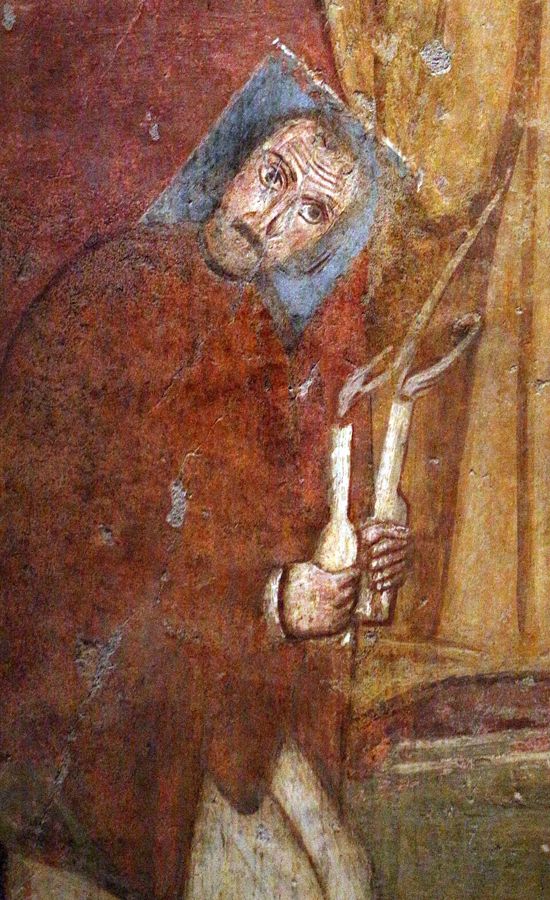
Image: Età di papa Zaccaria, cappella del primicerius Teodoro, Madonna in trono con Theodoto e la moglie, 741-752 (09).jpg · Sailko · CC BY 3.0, via Wikimedia Commons

Image: Sailko, Wikimedia Commons (CC BY 3.0)

Retold in plain modern English from Baring-Gould’s public-domain text, sentence by sentence, keeping the same facts and order. Short explanations in parentheses are ours.

From Sabine Baring-Gould, The Lives of the Saints, new edition in 16 vols. (London: John C. Nimmo, 1897), digitized text from Project Gutenberg. Public domain in the United States. Reproduced unedited, except for short bracketed notes in grey that we added to explain names and terms (“S.” is the old abbreviation for Saint). Some history and judgments reflect 19th-century scholarship.

Notes

Story retold in our own words from the cited sources.