This Saint’s Story
It places his birth about 353 and his death on 26 June 405, the day of his feast. His father’s name is unknown in the Acta Sanctorum, though some writers call him Theodosius; his mother Maxentia and his brothers Claudian and Magorian are numbered among the saints. At an early age he came with his parents to Trent—possibly he was born there—and studied at Athens, where he became noted for holiness and learning and seems to have formed a friendship with St. John Chrysostom. From Rome he returned to Trent in 380, and the people chose him bishop by acclamation.
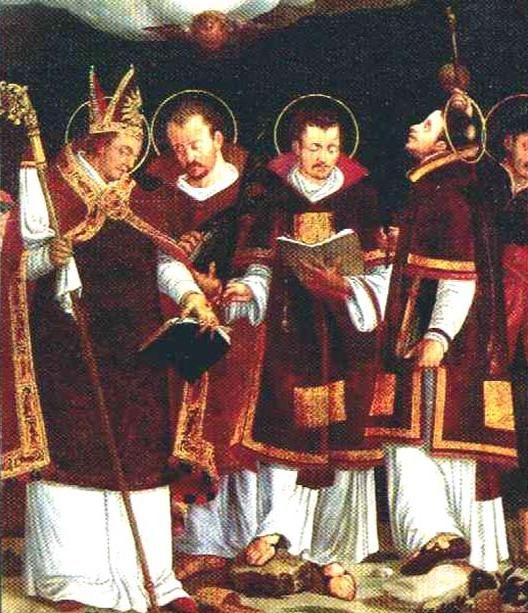
He was consecrated by Valerian of Aquileia, or possibly by St. Ambrose of Milan, who gave him episcopal insignia and showed a fatherly care for him, urging him to oppose marriages with heathens. Vigilius laboured to convert the Arians (followers of Arius's teaching that the Son is a created being, not fully God) of Trent and the many idolaters of the diocese. Beyond his own borders he preached in the districts of Brescia and Verona and is said to have founded some thirty parishes, placing missionary companions over them. Among these were Sts. Sisinnius, Martyrius, and Alexander, Cappadocians brought from Milan, who were martyred after a short apostolate; Vigilius wrote an account of their martyrdom later printed among the Latin Fathers.
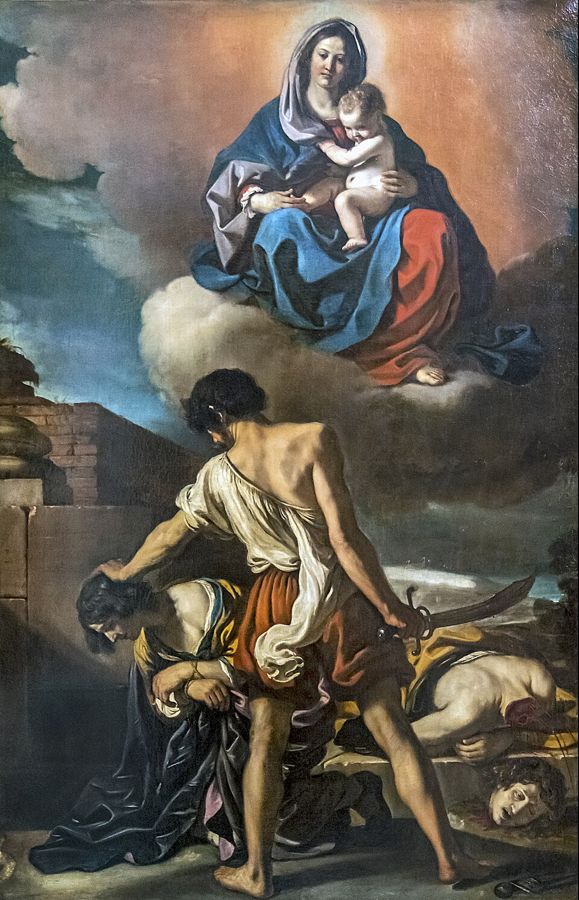
Baring-Gould notes that the surviving Acts are a late recension of an older narrative, trustworthy in substance but not of great antiquity in their present form. Tradition holds that, with his brothers and a priest named Julian, Vigilius went west into the Rendena Valley to teach worshippers of Saturn; that he offered Mass and cast a statue of Saturn into the River Sarka (Sarca); and that the enraged people stoned him to death. His body was brought back to Trent and buried in the church he had built. The Acts (the written account of a martyr's trial and death) were sent to Rome; Innocent I is said to have given them to the Emperor Honorius, and Benedict XIV later called Vigilius the first martyr formally canonized (officially declared a saint by the pope) by a pope. Eugippius enlarged the cathedral and dedicated it to him; in 1386 the right hand was enclosed in a precious reliquary, and many churches in Tyrol bear his name.