This Saint’s Story
He is not Turibius of Liébana, and not the much later Turibius of Mogrovejo. Butler calls him a zealous keeper of church order and a defender of the faith against Priscillianism, the Spanish movement that mixed the Christian name with older errors about the stars, the body, and marriage. Butler adds that Turibius's predecessor, Dictinius, had fallen into that teaching and was never deposed, and that Dictinius died about 420.
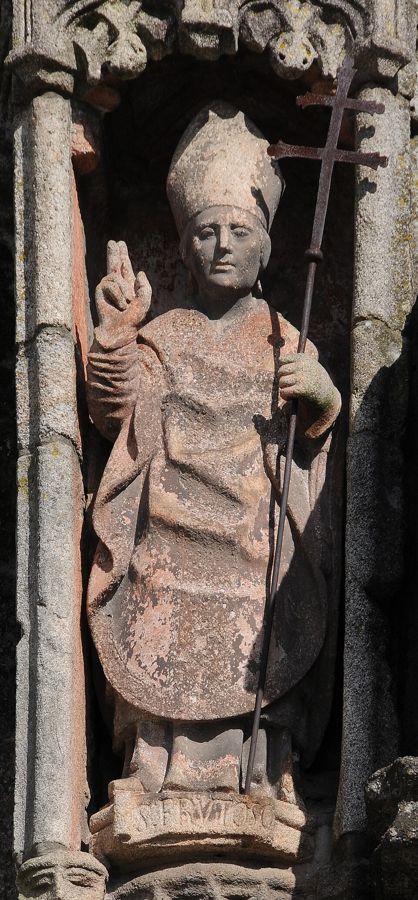
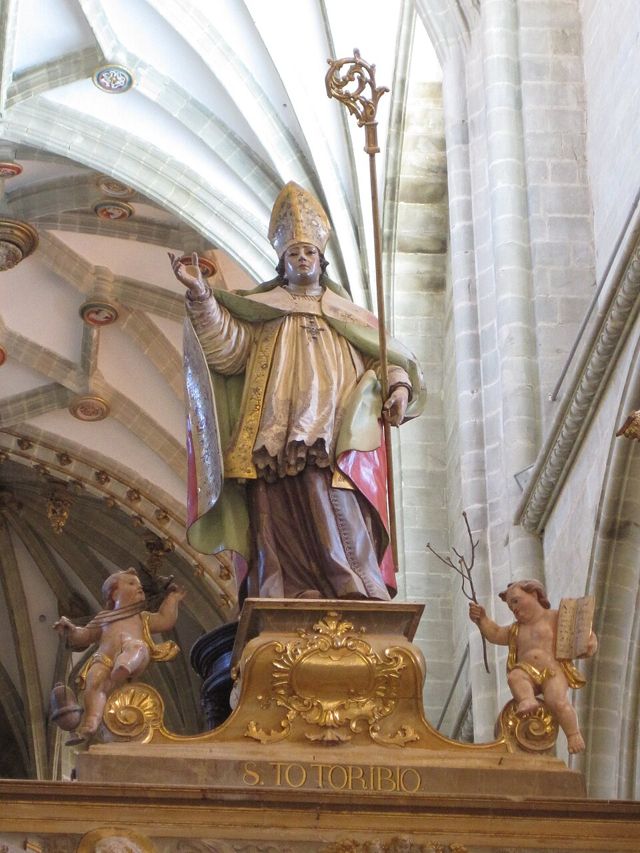
What survives of Turibius's own work is the packet he sent to Rome: a letter, a list of the errors, and his replies. Pope Leo the Great answered on 21 July 447. Leo thanks him for his zeal for the Catholic faith and for the care he spends on his flock, then takes the Priscillianist teachings apart and asks the Spanish bishops to meet in council. War in Spain kept that council from gathering. Wikipedia adds that Turibius had been archdeacon of Tui and that he held a local synod in 446. He died at Astorga in 460. The Roman Martyrology (the Church's official list of saints for each day) names him on 16 April. A later tradition says that his relics, and a fragment of the cross he had brought from Jerusalem, were taken in the middle of the eighth century to the monastery of Santo Toribio de Liébana. He is usually shown wearing a mitre.
This page keeps 16 April.
For today: When a confused teaching spreads around you, do what he did. Write down what you have heard, answer it as far as you can, and ask someone wiser to read it with you. You do not have to settle the whole controversy by yourself.