This Saint’s Story
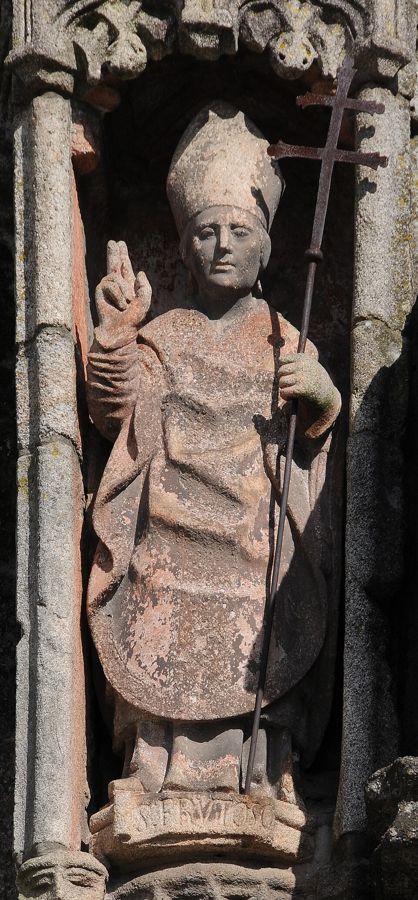
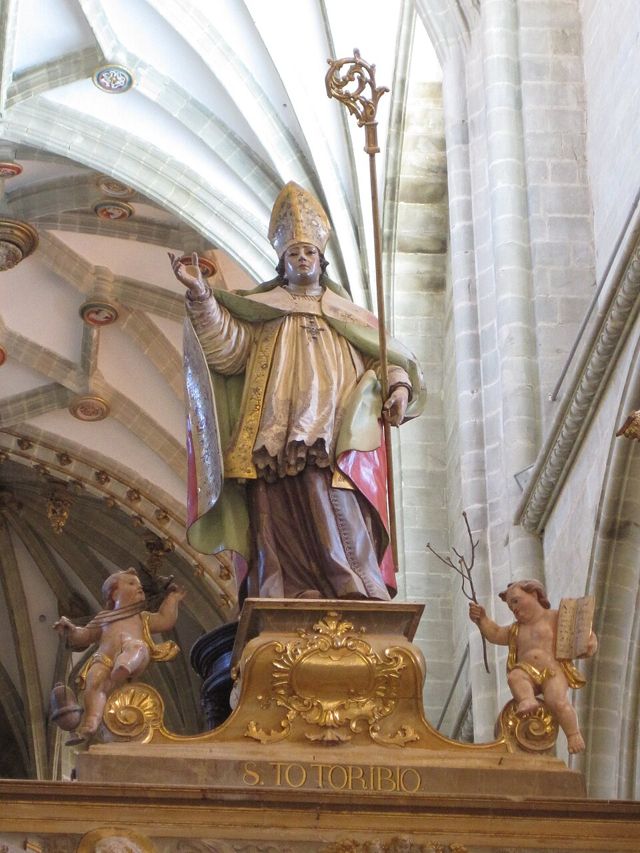
After his parents died he retired as a hermit into a desert in Galicia. Pupils gathered round him, and so began the monastery of Compludo (Complutum), which he first ruled himself and later left under an abbot while he returned to solitude. He aimed at disengagement rather than at building a personal following, yet disciples kept finding him.
In the course of time he founded nine further monasteries, and one house of eighty virgins under the abbess Benedicta. In 654 he was called to the Bishopric of Dumium, and on 1 December 656 to the Archbishopric of Braga. He died on 16 April about 665. His life was written by Abbot Valerius from the accounts of his pupils. In 1102 his relics were translated to Compostela. His feast day is 16 April.
Two monastic rules written by him are still extant. The first, of twenty-five chapters, was meant for Compludo and has an appendix called a pactum, with formulae of consecration and vows. The second, the "common" rule, addresses superiors of a union of monasteries governed by an abbot-bishop. He is depicted with a stag; tradition holds that he saved the animal from hunters. That is how artists show him, not a patronage claim stated in the Encyclopedia.
Baring-Gould's short notice calls him of Visigothic (of the Germanic kingdom ruling Spain) royal stock, says he gave almost all his goods to churches and the poor, and notes that the tenth Council of Toledo moved him from Dumium to Braga in 656. The Encyclopedia does not call him a king's son and speaks only of a Gothic general for a father. Neither source assigns him particular patronages.
How he teaches us to live
Drawn from themes in the original account
Make time for silence. Time alone in prayer is part of this story.
Give to people in need. The account records care for the poor.
Build up the community you belong to. Community life is part of this story.
From the Catholic Encyclopedia
1913 · 228 words
An Archbishop, d. 16 April, c. 665. He was the son of a Gothic general, and studied in Palencia. After the death of his parents he retired as a hermit to a desert in Galicia. Numerous pupils gathered around him, and thus originated the monastery of Complutum (Compludo) over which he himself at first presided, later, he appointed an abbot and again retired into the desert. In the course of time, he founded nine other monasteries, also one for 80 virgins under the saintly abbess Benedicta. In 654, Fructuosus was called to the Bishopric of Dumium, and on 1 December, 656, to the Archbishopric of Braga. The life of this greatest of Spanish monastic bishops was written by Abbot Valerius, and based on the accounts of his pupils. In 1102, his relics [the bodily remains of a saint, or objects they used, kept with honor] were transferred to Compostela. The feast day is the 16 of April. Fructuosus is depicted with a stag, which was devoted to him, because he had been saved by Fructuosus from the hunters. There are still extant two monastic rules written by Fructuosus. The first (25 chapters) was destined for the monastery of Complutum, it has an appendix (called pactum), containing the formulae of consecration and the vows. The second, called the "common" rule, which consists of chapters and refers to a union of monasteries governed by an abbot-bishop, is addressed chiefly to superiors of monasteries.