The Gospel of John is the only one that provides us with much information about him. When our Lord spoke to His disciples about the dangers and death that awaited Him in Judea, Thomas said to his fellow disciples, “Let us also go, that we may die with Him.” During the Last Supper, Thomas said to Him, “Lord, we do not know where You are going, and how can we know the way?” He was absent when Christ appeared after the Resurrection to His apostles, and the others told him what they had seen. He expressed skepticism; however, the words of his exclamation show us how strong an impression had been made on his mind by the sight of Christ’s dead body as he had seen it prepared for burial.
On the evening of Low Sunday, he was with the rest of the apostles when Jesus stood in their midst. Turning to Thomas, He told him to reach out his hand and put it into His side, and to put his fingers in the marks of the nails. The effect on Thomas was immediate. The conviction he felt after his doubt was removed became deeper and stronger than that of any of the other apostles. The words in which he expressed his belief contain a much higher assertion of his Master’s Divine nature than any other expression used by the apostles: “My Lord and my God.” We hear of Thomas only two more times in the New Testament: once on the Sea of Galilee with the seven disciples, where he is listed next after Peter, and again in the gathering of the apostles after the Ascension. Eusebius says that Thomas sent Thaddeus to Edessa and went himself into Parthia. Sophronius, quoted by Jerome, says that he planted the standard of the Cross among the Medes, Persians, Hyrcanians, Bactrians, and other neighboring nations.
The later Greeks consider him the apostle of India, following the apocryphal Acts. According to these Acts, he was chosen for India by casting lots. He then said, “I do not have the strength for this. I am weak. How can I, a Hebrew, teach the Indians?” But during the night, our Lord appeared to him and said, “Do not be afraid, Thomas. My grace will be sufficient for you.” However, he would not be convinced and replied, “Wherever You wish, O Lord, but not to India.”
While he was reasoning this out, a merchant from India named Habban came from King Gudnaphar, or Gondophorus, looking for a skilled carpenter. Our Lord met him in the street and said to him, “You want to find a carpenter. I have a slave for sale, well skilled in carpentry,” and He pointed to Thomas, selling him to the merchant for twenty pieces of silver. A formal bill of sale was created, and then Habban approached Thomas and asked him, “Is this your master?” while pointing to our Lord. Thomas replied, “Yes, He is my Master.” The merchant then said, “He has sold you to me outright.” Thomas remained silent.
In the morning, he got up and prayed, asking his Lord, “As You will, so be it.” He then went to Habban, bringing with him the twenty pieces of silver, which the Lord had returned to him. Thomas then sailed with the merchant and arrived at the city of Sandarak.
It is clear from the Syriac Acts that Thomas is identified with Judas, the brother of James, and is thus represented as a skilled carpenter, having been raised in the house of Joseph to that trade. Later, our Lord says, "I am not Judas, but the brother of Judas" (referring to Thomas).
is very beautiful. When Habban and his slave arrived in the city, they heard the sound of pipes, organs, and much singing, for it was the wedding festival of the king's daughter. The merchant and Thomas were invited to the feast. Thomas would not eat, but he took oil and anointed his heart and brow with a cross. He placed a wreath of myrtle on his head and took a reed branch in his hand.
Now there was a flute-girl, a Hebrew maiden, present at the feast. As she moved around the banquet hall, she came in front of Judas (Thomas), but he would not look at her; he kept his eyes cast down. Only when she played on her pipes did he break into a beautiful song: “My Church is the daughter of light, and the splendor of the king is hers. Her ways are lovely and inviting, fair and adorned with good works. Her garments glow like flowers, and their fragrance is sweet. Her king has crowned her, and He provides for all her servants. Truth is on her head, and her feet move with joy. Her beautiful mouth is open and sings songs of praise. The twelve apostles of the Son, and the seventy-two, proclaim His praises in her. Her tongue is the veil that the priest lifts as he enters the temple. Her neck is a flight of stairs built by the chief architect. Her hands point out the way to life, and with her ten fingers, she opens the gate of heaven.
Her bridal chamber is lit with lamps and fragrant with the scent of salvation. A censer stands in the middle, on which the grains of hope, faith, and charity smoke, bringing joy to all. Truth dwells within her, in humility. Her gates are adorned with truth; her groomsmen surround her, and her pure bridesmaids go before her, singing praises. The living attend to her, waiting for the coming of the Bridegroom, when they shall shine with His glory and dwell with Him in the kingdom that will never pass away. They shall share in the glory to which the righteous are gathered; they shall join in the celebration that some enter; they shall wear shining garments and be clothed with the glory of their Lord. They shall praise the living Father, whose majestic light has covered them, and they shall shine with the splendor of their Lord, from whom they have partaken of food that never fails. They have drunk of the life that makes those who drink of it long for more, and they have glorified the Father, the Lord of all, and the only-begotten Son, who is from Him, and have praised the Spirit, His Wisdom.”
“And when He had sung this song,” say the Syriac Acts, “all who were beside Him were looking at Him and saw that His appearance had changed; but they could not understand what He said, for He spoke in Hebrew. Only the flute-girl had heard everything, for she was a Hebrew, and she was looking at Him. When she left Him and played for others, her eyes still sought Him, and she loved Him as her own countryman; and in His looks, He was more beautiful than all the rest. When the flute-girl had finished, she sat down before Him and did not turn her eyes from Him; but He did not look up or at anyone, but kept His eyes always cast on the ground, waiting until He might retire.”
In the evening, our Lord appeared in the bridal chamber and encouraged the king’s daughter and her bridegroom to mutual self-control. His appearance was so similar to that of Judas (Thomas) that they thought it was the merchant’s slave who spoke to them. But in the morning, when the king heard about the impression made on the hearts of his children by the words of the stranger, he was filled with rage and went to the inn where the merchant and his slave had spent the night. But they were gone, and they found there the weeping flute-girl, “sitting still and weeping because Judas-Thomas had not taken her with him. But when they told her what had happened, she was glad and said, ‘I have found rest here.’ She arose and went to the young people and stayed with them for a long time.”
After a successful journey, the merchant and his slave reached India and went to greet King Gudnaphar. “The king ordered Judas to come into his presence and said to him, ‘What craft do you practice?’ Judas replied, ‘I am a carpenter and architect.’ The king asked him, ‘What are you skilled at making?’ Judas said to him, ‘In wood, I make yokes and plows, and ox goads, and oars for barges and ferry-boats, and masts for ships; and in hewn stone, tombstones and monuments and palaces for kings.’ The king said to Judas, ‘And I want such a craftsman. Will you build me a palace?’ Judas replied, ‘I will build it and finish it, for I have come to work at building and carpentry.’”
The king showed him the place where he wanted his palace to be built and asked the apostle to outline its plan on the ground. Judas took a cane and began to measure. He left doors facing east for light and windows facing west for air. He placed the bakehouse to the south and the water pipes for the house's service to the north. The king said to him, "Truly, you are a good craftsman," and he left him a large sum of money before departing.
During the absence of the king, Thomas spent all the money on the poor. When Gudnaphar returned from a distant journey, he found his treasure gone and no palace built. In a rage, he ordered Thomas to be thrown into prison and that the next day he should be flayed alive and then burned. However, the king’s brother, Gad, had died. When his soul left him, angels took it and carried it to heaven. They showed him each place in succession and asked him where he would like to dwell. When they came to the palace that Judas had built for the king, his brother saw it and said to the angels, "I beg of you, let me dwell in one of the lower chambers of this palace." The angels replied, "You cannot dwell in this palace, for it is the one that the Christian has built for your brother." Then the soul of Gad was allowed to return to his body.
The prince, the king's brother, rose up and told King Gudnaphar that he had seen in heaven a glorious mansion that the carpenter, now in prison, had built for him. The king then released Thomas and agreed to be baptized, along with his brother. When they entered the bath-house, Judas went in before them. Our Lord appeared to them and said, "Peace be with you, my brethren." They heard the voice but did not see the form, as they were not yet baptized. Judas stood on the edge of the cistern, poured oil on their heads, and said, "Come, holy name of the Messiah! Come, power of grace, which is from on high! Come, perfect mercy! Come, exalted gift! Come, sharer of the blessing! Come, revealer of hidden mysteries! Come, mother of seven houses, whose rest is in the eighth house! Come, messenger of reconciliation, and communicate with the minds of these youths! Come, spirit of holiness, and purify their reins and hearts!"
He baptized them in the name of the Father, and of the Son, and of the Spirit of Holiness. When they came out of the water, a youth appeared holding a lighted taper, and the light of the lamps grew dim in its presence. After they had gone forth, he became invisible to them. The apostle said, "We were not able to bear Your light, because it is too bright for our vision." When it dawned, he broke the Eucharist and allowed them to partake of the table of the Messiah, and they were filled with joy and gladness. The Acts say that St. Thomas suffered under Mazdai.
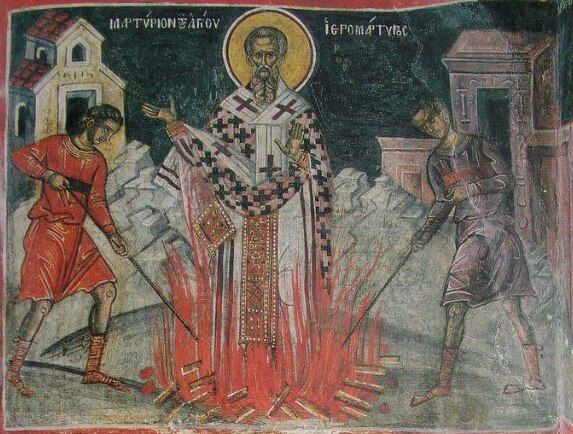
S. Thomas is believed to have been a Masdaean prince in Persia. It is said that he was stabbed to death on top of a hill by the soldiers of Mazdai. The Christians of S. Thomas in India claimed that his body was buried at Meliapore, where they built a chapel over it. John III of Portugal had this body exhumed and transported to Goa. Another body was moved to Edessa and was venerated there during the time of S. Chrysostom. The Roman Martyrology states: “At Calamina suffered S. Thomas,.... whose relics were first translated to Edessa and then to Ortona.” Since there is no place called Calamina in India, it has been cleverly suggested that Calamina is another name for Meliapore.
Gudnaphar, or Gondophorus, is not a mythical figure. An Aiano Pali inscription has been found at ShihbizGarhi, in the Yusufzai region, on the Punjab frontier, which is now housed in the Lahore museum. This inscription mentions the name Gudupharasa, along with the year of his reign and the name of the month, among other details. The date of the inscription is Samvat 103, the fourth day of the month Vesakh (equivalent to A.D. 46), in the 26th year of the king's reign. The inscription itself is mainly a record of a votive offering by a Buddhist worshipper, and much of it is illegible. However, it seems almost certain that this Gudupharasa is the Gudnaphar or Gondophorus mentioned in the Acts. Relics of the saint are displayed in Goa and in Ortona in Apulia. Before the Revolution, a hand was shown in a reliquary given by John, Duke of Berry, the third son of King John of France, at Saint Denis. It had the inscription: “This is the hand of blessed Thomas, Apostle, which was sent into the side of our Lord Jesus Christ.”
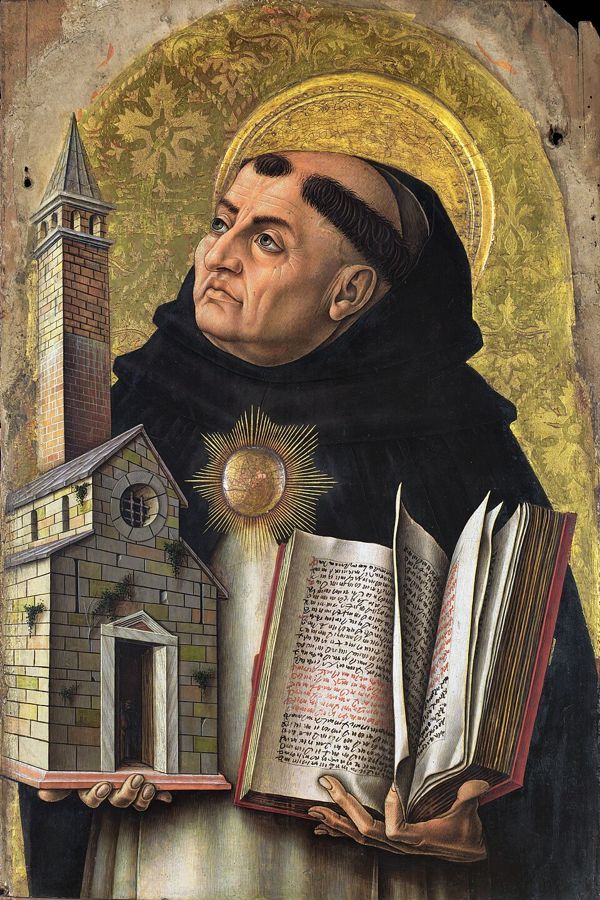
S. Thomas is the patron saint of Portugal and of Parma. In Greek art, S. Thomas is depicted as young and beardless; in Western art, he is usually shown with a beard. He is often represented with a spear or an arrow in one hand and a book of the gospels in the other. However, sometimes he holds a builder's rule instead of the spear.
Footnotes
- Sophronius, quoted by Jerome, refers to a Christian scholar and translator from the late 4th century.
- It is clear from the Syriac Acts that Thomas is identified with Judas the brother of James, and is thus represented as a skilled carpenter, having been brought up in the house of Joseph to that trade.
- In the Greek Acts Andropolis.
- The king Gudnaphar is a historical figure from ancient India.
- "Verily thou art a good artificer" modernized to "Truly, you are a good craftsman."
- The Acts say that St. Thomas suffered under Mazdai.
- From the Vienna Missal.
- The date of the inscription is Samvat 103, the fourth day of the month Vesakh (equivalent to A.D. 46).
- The hand, before the Revolution, in a reliquary given by John, Duke of Berry, third son of King John of France, was shown at Saint Denis.
Baring-Gould’s own footnotes, in modern English.
Read the original 1870s text
Baring-Gould’s sources: Roman and all Western Martyrologies. By the Greeks on Oct. 6; the Christians of S. Thomas in India on July 1. The Greek Memeas, published by Chifletus and Sirmondi, on June 20, “ The Translation to Constantinople of the Tunic of S. Thomas/’ and those of certain other apostles. The Marble Kalendar of Naples (9th cent. ) on Sept 18, and again on Dec. 21, the Commemoration of S. Thomas the Apostle. The Passion of S. Thomas by all the Greek Menaeas and MenoIcgies, including that of the Emperor Basil, and that of Constantinople (8th cent.) on Oct. 6. In the Mart of Bsde, Dec. 21, is “Natalis S. Thomae; ” but in that of Usuardus, “ In Mesopotamia civitate Edessa translatio corporis S. Thomae apostoli, qui translatus est ab India, cujus passio ibidem celebrata v. non. Julii ” (July 3). So also Wan* delbert, “Translati Thomae celebrat duodenus honorem, A urea quo structore Dei cognoscere regnum India promeruit, signis comitata tremendis. ” According to the so-called Martyrology of Jerome, the Translation of relics, on July 3, and the “ Natalis ” on Dec. 21. In the Greek Church there is a commemoration of S. Thomas on the first Sunday after Easter. On Dec. 21, at S. Denis, near Paris, the special veneration of the hand of S. Thomas. In Milan anciently on May 9, the commemoration of S. Thomas, S. John, and S. Andrew.] HE name “Thomas ” means a twin, is so translated in John xi. 16, xxi. 2, and is the same as the Greek Didymus. This apostle is said by Eusebius to have been the same as Judas, in which case he was twin brother of S. James, and one of the Lord’s “brethren.” The Syriac Acts call him Judas Thomas, or Judas the Twin. But it is more probable that Judas is the same as Thaddeus. According to another account the apostle Thomas had a twin sister named Lydia. It is possible that his name may have been Judas, as well as that of two other apostles, and that he was generally designated as the Twin for the purpose of distinction. In the catalogues of the Apostles he is coupled with Matthew, in Matt. x. 3, Mark iii. 18, and Luke vi. 15; but with Philip, in Acts i. 13.
The Gospel of S. John is the only one which gives us much information concerning him. When our Lord spoke to His disciples of the dangers and death that awaited him in Judaea, Thomas said to his fellow-disciples, “ Let us also go, that we may die with him.” During the Last Supper, “ Thomas saith unto him, Lord, we know not whither thou goest, and how can we know the way ? " He was absent when Christ appeared after the Resurrection to His apostles; the others told him what they- had seen. He broke forth into an expression of scepticism; the terms of his exclamation, however, show us what a strong impression had been made on his imagination by the sight of the dead body of Christ as he had seen it prepared for entombment. On the evening of Low Sunday he was with the rest of the apostles, when Jesus stood in the midst, and turning to Thomas bade him reach forth his hand and thrust it into His side, and put his fingers in the print of the nails. The effect on Thomas was immediate. The conviction produced by the removal of his doubt became deeper and stronger than that of any of the other apostles. The words in which he expressed his belief contain a far higher assertion of his Master’s Divine nature than is contained in any other expression used by apostolic lips, “My Lord and my God.” We only hear twice again in the New Testament of Thomas: once on the Sea of Galilee with the seven disciples, where he is ranked [Dec ax.
next after Peter, and again in the assemblage of the apostles after the Ascension. Eusebius [Eusebius of Caesarea (d. c. 339), the first historian of the Church] says that Thomas sent Thaddeus to Edessa, and went himself into Parthia. Sophronius, quoted by S. Jerome [translator of the Bible into Latin (d. 420)], says that he planted the standard of the Cross among Medes, Persians, Hyrcanians, Bactrians, and other neighbouring nations.
The later Greeks make him the apostle of India, following the apocryphal Acts. According to these Acts, he was appointed to India by the casting of lots. Then he said, “ I have not strength for this. I am weak. How can I, a Hebrew, teach the Indians ? ” But in the night our Lord appeared to him and said, “ Fear not, Thomas. My grace will be sufficient for thee." But he would not be persuaded, and said, “Whither Thou wilt, O Lord, but not to India." Whilst he was thus reasoning, a merchant of India, whose name was Habban, came from King Gudnaphar, or Gondophorus, in quest of a skilful carpenter. And our Lord met him in the street and said to him, “Thou wishest to obtain a carpenter. I have a slave for sale, well skilled in carpentering," and He indicated Thomas, and sold him to the merchant for twenty pieces of silver.1 A regular bill of sale was drawn up, and then Habban went to Thomas and said to him, u Is this your master? ” and he pointed to our Lord. Thomas sstd, “ Yes, He is my Master.” Then the merchant said, “ He has sold you to me outright.” And Thomas was silent And in the morning he arose and prayed, and entreated his Lord, “ As Thou wilt so be it.” And he went to Habban, carrying with him the twenty pieces of silver, his price, which the Lord returned to him. Then Thomas sailed with the merchant and came to the city of Sandarak.2 The next episode 1 It is clear from the Syriac Acts that Thomas is identified with Judas the brother of James, and is thus represented as a skilled carpenter, having been brought up in the house of Joseph to that trade. Further on our Lord says, "I am not Judas, but the brother of Judas ” (*>. Thomas). 9 In the Greek Acts Andropolis. S. Thomas.
is very beautiful. When Habban and his slave came to the city, they heard the sound of pipes and organs and much singing, for it was the wedding festival of the king's daughter. And the merchant and Thomas were invited to the feast. Thomas would not eat, but he took oil and anointed his heart and brow with a cross, and placed a wreath of myrtle on his head, and took a reed branch in his hand. Now there was present a flute-girl, a Hebrew maiden, and as she went round the party in the banquet-hall, she came opposite Judas (Thomas), but he would not look at her; he remained with his eyes cast down; only when she played on her pipes he broke forth into a beautiful song: “ My Church is the daughter of light, and the splendour of the king is hers. Her ways are comely and winning, fair and adorned with goodly works. Her garments glow as the flowers, and their fragrance is sweet. Her king hath crowned her, and He feeds all her servants. Truth is on her head, and her feet move with joy. Her beautiful mouth is open, and singeth songs of praise. The twelve apostles of the Son, and the seventy-two, thunder forth His praises in her. Her tongue is the veil which the priest lifteth as he entereth the temple. Her neck is a flight of stairs builded of the chief architect. Her hands point out the place of life, and with her ten fingers she opens the gate of heaven. Her bridal chamber is lighted with lamps and fragrant with the savour of salvation. A censer stands in the midst, on which smoke the grains of hope and faith and charity, gladdening all Truth dwells within, in humility. Her gates are adorned with truth; her groomsmen surround her, and her pure bridesmaids go before her, uttering praise. The living attend on her, looking for the coming of the Bridegroom, when they shall be resplendent with His glory, and shall dwell with Him in the kingdom that never shall pass away. And they shall be in the glory to which the just are gathered; and [Dec. ax they shall be at the festivity to which some enter; and they shall put on shining garments, and shall be clothed with the glory of their Lord. And they shall praise the living Father, whose majestic light has covered them, and they shall shine with the splendour of their Lord, of whose food they have partaken, and which never faileth, and have drunk of the life which makes those who drink of it long and thirst for more; and have glorified the Father, the Lord of all, and the only-begotten Son, who is of Him, and have praised the Spirit, His Wisdom.”
“ And when he had sung this song,” say the Syriac Acts, “ all who were beside him were looking on him, and saw that his aspect was changed; but they could not understand what he said, for he spake in Hebrew. Only the flute-girl had heard everything, for she was a Hebrew, and she was looking at him. And when she left him and played to others, her eyes still sought him, and she loved him as her own countryman; and in his looks he was more beautiful than all the rest. And when the flute-girl had finished, she sat down before him, and did not turn her eyes from him; but he did not look up, or at any one, but kept his eyes ever cast on the ground, waiting till he might retire.” In the evening our Lord appeared in the bridal chamber, and exhorted the king’s daughter and her bridegroom to mutual continence. And His appearance was so like that of Judas (Thomas) that they thought it was the merchant’s slave who spake to them. But in the morning, when the king heard of the impression produced on the hearts of his children by the words of the stranger, he was filled with rage, and went to the inn where the merchant and his slave had spent the night. But they were gone, and they found there the weeping flute-girl, “sitting still and weeping, because Judas-Thomas had not taken her with him. But when they told her what had happened, she was glad, and said, * I have found rest here.* And she arose, and went to the young people, and dwelt with them a long time.”
After a prosperous journey, the merchant and his slave reached India, and went to salute King Gudnaphar. “ The king ordered Judas into his presence, and said to him, ‘What art dost thou practise?* Judas said to him: ‘I am a carpenter and architect.* He saith to him: ‘ What art thou skilled to make?* Judas saith to him: ‘ In wood I make yokes and ploughs, and ox goads, and oars for barges and ferry-boats, and masts for ships; and in hewn stone, tombstones and monuments and palaces for kings/ The king saith to Judas: ‘And I want such an artificer. Wilt thou build me a palace?’ Judas saith to him: ‘I will build it and finish it, for I am come to work at building and carpentering/ ”
The king showed him the place where he wished his palace to be built, and bade the apostle trace its plan on the ground. “ And Judas took a cane and began to measure; and he left doors towards the east for light, and windows towards the west for air; and he put the bakehouse to the south, and the water-pipes for the service of the house to the north. The king saith to him: ‘ Verily thou art a good artificer/ and he left him a large sum of money, and departed.”
During the absence of the king, Thomas spent all the money among the poor, and when Gudnaphar returned from a distant journey he found his treasure dispersed and no palace built. In a rage he ordered Thomas to be cast into prison, and that next day he should be flayed alive, and then burnt But the king’s brother Gad had died: “ And when the soul left him, angels took it and bore it to heaven, and showed it each place in succession, and asked it in which it would like to be. Then, when they came to the palace which Judas had built for the king, his brother saw it, and said to the angels: i I beg of you, let me dwell in one of the lower chambers of this palace.' The angels say to him: 6 Thou canst not dwell in this palace, for it is that which the Christian hath built for thy brother.1 *' Then the soul of Gad was permitted to return to its body. And the prince, the king's brother, rose up, and told King Gudnaphar that he had seen in heaven a glorious mansion which the carpenter now in prison had built for him. Then the king released Thomas, and consented to be baptized, he and his brother. “And when they had entered into the bath-house, Judas went in before them. And our Lord appeared unto them, and said to them: * Peace be with you, my brethren.' And they heard the voice only, but the form they did not see, for they were not as yet baptized. And Judas went up, and stood on the edge of the cistern, and poured oil on their heads, and said: — ‘ Come, holy name of the Messiah ! come, power of grace, which art from on high ! come, perfect mercy ! come, exalted gift ! come, sharer of the blessing ! come, revealer of hidden mysteries ! come, mother of seven houses, whose rest is in the eighth house ! come, messenger of reconciliation, and communicate with the minds of these youths ! come, spirit of holiness, and purify their reins and hearts ! ' And he baptized them in the name of the Father and of the Son and of the Spirit of Holiness. And when they had come out of the water, a youth appeared holding a lighted taper; and the light of the lamps waxed dull through its light. And when they had gone forth, he became invisible to them; and the apostle said: ‘ We were not able to bear Thy light, because it is too bright for our vision.* And when it dawned, he broke the Eucharist and let them partake of the table of the Messiah; and they were glad and rejoicing.'* The Acts say that S. Thomas suffered under Mazdai, 8. THOMAS. From the Vienna Missal.
Dec. ex. probably a Masdaean prince in Persia; and relate that he was stabbed to death on the top of a hill by the soldiers of Mazdai. The Christians of S. Thomas in India pretended that his body lay at Meliapore, and had a chapel over it. John III. of Portugal had this body dug up and transported to Goa. Another body was translated to Edessa, and received veneration there in the time of S. Chrysostom [St. John Chrysostom, archbishop of Constantinople (d. 407)]. The Roman Martyrology says: “At Calamina suffered S. Thomas,.... whose relics [the bodily remains of a saint, or objects they used, kept with honor] were first translated to Edessa and then to Ortona.” As there is no such place as Calamina, at all events in India, it is ingeniously suggested that Calamina is another name for Meliapore.
Gudnaphar, or Gondophorus, is not a mythical personage. An Aiano Pali inscription has been found at ShihbizGarhi, in the Yusufzai country, on the Punjaub frontier, which is now in the Lahore museum. This inscription bears the name of Gudupharasa, with the year of his reign, and the name of the month, &c. The date of the inscription is Samvat 103, the fourth day of the month Ves&kh (equivalent to a.d. 46), in the 26th year of the king's reign. The inscription itself is simply the record of a votive offering by a Buddhist worshipper, and the greater part of it is illegible.1 But it seems almost certain that this Gudupharasa is the Gudnaphar or Gondophorus of the Acts. Relics of the saint are shown at Goa, and at Ortona in Apulia. The hand, before the Revolution, in a reliquary given by John, duke of Berri, third son of King John of France, was shown at Saint Denis. It bore the inscription: “ Hie est manus beati Thomae, Apostoli, quam misit in latus Domini nostri Jesu Christi.”
S. Thomas is the patron saint of Portugal and of Parma. In the Greek pictures, S. Thomas is young and beardless; in Western art he is usually bearded. He is represented 1 TrObncr’s ** American and Oriental Literary Record,** vol. viii. p. 7S j [Dec. ax.
with a spear or an arrow in one hand, and a book of the gospels in the other. Frequently, however, instead of the spear, he has a builder's rule.