St. Poppo of Stavelot

Poppo was born in Flanders in 978 and served as a soldier in his youth. He made a pilgrimage to the Holy Land, and, on his return, engaged himself to the daughter of his friend Frumhold.

Read the essentials →
Feast January 25 · Abbot

St. Poppo of Stavelot

Current feast

January 25
Secondary source · Wikipedia infobox

Traditional feast

January 25
1914 / pre-1969 calendar, per Baring-Gould (1914)

Represents

Abbot

Feast days

Feast: January 25

This Saint’s Story

Adapted in modern English from Baring-Gould (1914) · original text below

After a pilgrimage to the Holy Land he became engaged to the daughter of his friend Frumhold. On the night he rode out with his men to fetch his bride, the story says, a dazzling light filled his soul and seemed to bathe his body, and afterwards a flame burned on the tip of his spear like a church candle. He reined in and told his companions, 'God calls me to another life.'

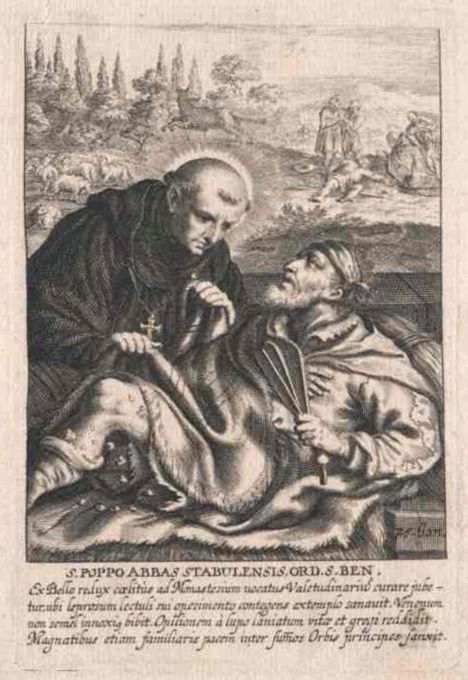
He served in a hospital for the sick. One night he laid his own blanket over a leper too covered in sores to be kept with the others, and the story says the man was healed by morning. Richard, abbot of Verdun, put him in charge of the abbey of St. Vedast, which had fallen into scandalous disorder.

Visiting Emperor Henry II on monastery business, Poppo found him enjoying a favourite sport: a naked man smeared with honey was set among bears and had to dodge them, and men were sometimes hurt or killed. Poppo rebuked the emperor and made him see how wrong it was. Another time, travelling with his monks, he saw a wolf drag a man into a marsh by the neck. Poppo called his monks, they surrounded the marsh and followed the blood, found the badly mauled man, bound his wounds, and he recovered.

Later he became abbot of Stavelot, where the monks had also fallen into serious disorder. Some of the worst were so angry at his reforms that they tried to poison him, but failed. He reformed the house, rebuilt and beautified the church, and died on the feast of the Conversion of St. Paul, after receiving the last anointing from Abbot Everhelm, his biographer.

What he represents

How he teaches us to live

Drawn from themes in the original account

Look after people who are sick or suffering. Care for the sick is part of this story.

Give to people in need. The account records care for the poor.

Build up the community you belong to. Community life is part of this story.

The full story

Baring-Gould’s account retold in modern English

Read the full story · 662 words · about 3 min

The blessed Poppo was born in Flanders in 978. As a young man, he served in the military. He made a pilgrimage to the Holy Land, and upon his return, he became engaged to the daughter of his friend Frumhold. When the time for his marriage approached, Poppo mounted his horse one night, along with some attendants, to go and fetch his bride. He had not traveled far when a dazzling flash of light illuminated him from within, filling his soul and surrounding his body in a blaze of glory. As the light faded, he urged his horse onward and then noticed that a flame burned at the tip of his spear; it was as if he were riding while holding a tall church candle in his hand. Astonished by this marvel, he pulled back on his horse and turned to his companions, saying, "God calls me to another life."

He then left home and, with the light still shining in his soul, served in a hospital for the sick. One day, a miserable leper was brought in, so covered with sores that he could not be placed with the other patients. Thinking that the poor man was cold at night, Poppo went to him with his own blanket and laid it over him. The next morning, the leper was completely healed; Poppo's charity had restored him to health. Richard, the abbot of Verdun, appointed Poppo to lead the abbey of S. Vedast, which had fallen into scandalous disorder. When Emperor Henry II was in the Betawe region, between the two branches of the Rhine, Poppo, needing to visit him regarding some matters concerning his monastery, found the prince enjoying one of his favorite pastimes. A naked man was smeared with honey and exposed to bears; the sport involved the bears trying to lick the man while he attempted to evade them. Since this activity often ended with the man being injured or sometimes killed, Poppo rebuked the king and made him aware of the impropriety of encouraging such coarse and dangerous amusements. The popularity of this sport is evident, as Hincmar, the Archbishop of Rheims, had to forbid his clergy and monks from attending it or bear-baiting.

On another occasion, when Poppo was on his way to the Emperor, who was then in Strasburg, he passed through the Ellisgau with some of his monks. They saw a wolf carry off a man by the neck into a marsh. Poppo immediately called his monks to the rescue. They could not go directly to where the man lay due to the loose texture of the swamp, but they surrounded the marsh and, following the bloody traces, managed to recover the man, who was badly injured. They bandaged his wounds, and he eventually recovered. They did not see what happened to the wolf, but they hoped and believed that he was drowned in the marsh.

Poppo was later made the abbot of Stavelot, where the monks had fallen into serious disorder. His attempts to reform them angered some of the worst offenders so much that they tried to poison him, but they failed. After thoroughly reforming the monastery, he rebuilt and beautified the church. He died on the feast of the Conversion of Paul, after receiving extreme unction from the abbot Everhelm, who is also his biographer.

Alpha and Omega; the first and the Last.

Saint Polycarp, Bishop and Martyr of Smyrna, died in 167 AD. Saint Simeon the Old, Abbot in Syria, died at the end of the 4th century. Saint Paula, a woman, died at Bethlehem in 404 AD. Saint Xenophon, his wife and sons, lived in the 5th century. Saint Bathild, Queen, died in France around 670 AD. Saint Theoritgitha, a virgin, lived at Barking in Essex in the 7th century. Saint Gobert, a confessor, died at Foss in Belgium. Saint Alberic, Abbot of Citeaux, lived in the early 12th century. Blessed Haseka, a religious, died in Westphalia in 1261 AD.

Footnotes

  1. Hincmar was the Archbishop of Rheims in the 9th century.
  2. Saint Polycarp, Bishop and Martyr of Smyrna, died in 167 AD.
  3. Saint Simeon the Old, Abbot in Syria, died at the end of the 4th century.
  4. Saint Paula, a woman, died at Bethlehem in 404 AD.
  5. Saint Xenophon, his wife and sons, lived in the 5th century.
  6. Saint Bathild, Queen, died in France around 670 AD.
  7. Saint Theoritgitha, a virgin, lived at Barking in Essex in the 7th century.
  8. Saint Gobert, a confessor, died at Foss in Belgium.
  9. Saint Alberic, Abbot of Citeaux, lived in the early 12th century.
  10. Blessed Haseka, a religious, died in Westphalia in 1261 AD.

Baring-Gould’s own footnotes, in modern English.

Read the original 1870s text

Baring-Gould’s sources: Modern Roman Martyrology. The name occurs in no ancient Martyrologies; it owes its insertion to Baronius. His life was written by Everhelm, abbot of Hautmont, his contemporary, in 1069.

The blessed Poppo, born in Flanders in 978, as a youth served in arms. He made a pilgrimage to the Holy Land, and, on his return, engaged himself to the daughter of his friend Frumhold. When the time of his marriage drew nigh, Poppo mounted his horse one night, together with some retainers, to ride to fetch his bride. He had not gone far before a dazzling flash of light illumined him within, in his soul, and bathed his body in a blaze of glory. As it faded away, he spurred on his horse, and then noticed that a flame burnt on the point of his spear; it was as though he rode bearing a tall church taper in his hand. Astounded at this marvel, he reined in his steed, and turning to his companions said, "God calls me to another life."

Then he left home and went, with the light still illuminating his soul, and served in a hospital for the sick. One day a miserable leper was brought in so covered with sores that he could not be placed with the other inmates. Thinking that the poor creature was cold in the night, Poppo went to him with his own coverlid, and laid it over him. Next morning the leper was whole, the charity of Poppo had healed him. Richard, abbot of Verdun, appointed Poppo to rule the abbey of S. Vedast, which had fallen into scandalous disorder. When the Emperor Henry II. was in the Betawe, between the two branches of the Rhine, Poppo, having to visit him about some affairs concerning his monastery, found the prince enjoying a favourite pastime of his; a naked man was smeared with honey and exposed to bears; and the sport consisted in the bears trying to lick the man, and he eluding their embraces. As this sport not unfrequently ended in the man being injured, and sometimes killed, Poppo rebuked the king, and brought him to a sense of the impropriety of encouraging such coarse and dangerous amusements. That this sport was popular, appears from Hincmar, Archbishop of Rheims, being obliged to forbid his clergy and monks attending either it or bear-bating.

On another occasion, when Poppo was on his way to the Emperor, then at Strasburg, as he passed through the Ellisgau, with some of his monks, they saw a wolf carry off a man by the neck into a marsh. Poppo at once called his monks to the rescue. They were unable, on account of the loose texture of the swamp, to go direct to where the man lay, but they surrounded the marsh, and following the bloody traces, recovered the man, who was much mangled; they bound up his wounds, and he finally recovered. What became of the wolf they saw not, and hoped, and hoping believed, he was smothered in the marsh.

Poppo was afterwards created abbot of Stavelot, where the monks had fallen into grave disorders. His efforts to reform them so irritated some of the worst, that they attempted to poison him, but failed. Having thoroughly reformed the monastery, he rebuilt and beautified the church, and died on the feast of the Conversion of S. Paul, after having received extreme unction from the hands of the abbot Everhelm, who is his biographer.

Alpha and Omega; the first and the Last.

S. Polycarp , B. M. of Smyrna , a.d. 167. S. Simeon the Old , Ab. in Syria, end of 4th cent. S. Paula , W., at Bethlehem , a.d. 404. S. Xenophon, his Wife and Sons , 5th cent. S. Bathild , Q., in France, circ. a.d. 670. S. Theoritgitha , V., at Barking, in Essex, 7th cent. S. Gobert , C., at Foss, in Belgium . S. Alberic , Ab. of Citeaux, beginning of 12th cent. B. Haseka , R., in Westphalia , a.d. 1261.
Help us add to this saint's story

Everything is read by a person before anything appears. Facts are checked against trusted sources first.

Facts are welcome; a source link helps (optional).With your permission we may share it on this page.

Nine days · Free

Pray the novena
with us.

One short email a day for nine days. The day's prayer, a line from St. Poppo of Stavelot's story, and a nudge to keep going.

Also on January 25
St. Artemas

St. Artemas

January 25 · Martyr
J

Sts. Juventine and…

January 25 · Martyrs
A

St. Apollo in the Thebaid

January 25 · Abbot
← All 1970 saints in the library
Sources & notes

Feast-day sources

Story sources

Sources

Credits

Image: Poppo von Stablo 3.jpg · zeitgenössischer Stecher · Public domain, via Wikimedia Commons

Image: zeitgenössischer Stecher, Wikimedia Commons (Public domain)

Retold in plain modern English from Baring-Gould’s public-domain text, sentence by sentence, keeping the same facts and order. Short explanations in parentheses are ours.

From Sabine Baring-Gould, The Lives of the Saints, new and revised edition (Edinburgh: John Grant, 1914; first edition 1872). Public domain in the United States. Reproduced unedited, except for short bracketed notes in grey that we added to explain names and terms (“S.” is the old abbreviation for Saint). Some history and judgments reflect 19th-century scholarship.