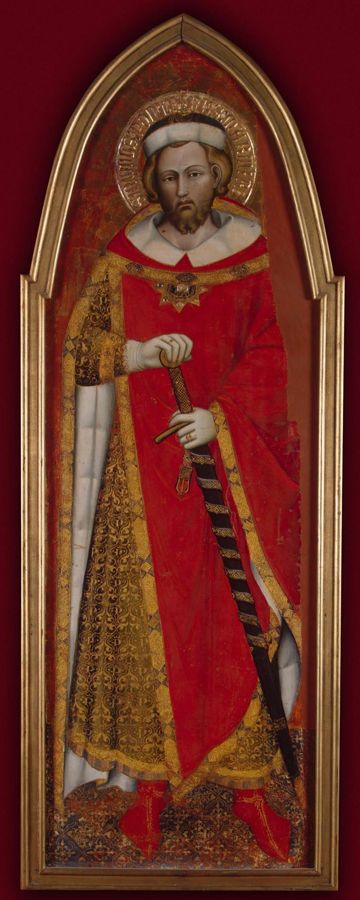
St. Pontianus, Pope

PONTIANUS succeeded Urban on the throne of St. Peter in 230, when the Church was enjoying rest under Alexander Severus.

Read the essentials →
Feast August 13 · Martyr

St. Pontianus, Pope

Current feast

August 13
Verified · General Roman Calendar

Traditional feast

November 19
1914 / pre-1969 calendar, per Baring-Gould (1897)

Represents

Martyr

Feast days

Feast: August 13
Traditional: November 19

This Saint’s Story

Pontian (Latin Pontianus), whose dates of birth and death are unknown, was a Roman and, according to the Liber Pontificalis (the early medieval 'Book of the Popes', not always reliable for the earliest ones), the son of Calpurnius. With him begins the brief third-century chronicle of the Roman bishops used by the Liberian Catalogue. He was made pope on 21 July 230 and reigned until 235. The schism of Hippolytus continued through his episcopate; toward its end the schismatic party and its leader were reconciled with the Roman bishop. After Origen’s condemnation at Alexandria (231–232), Jerome and Rufinus mention a Roman synod that concurred in that decision; without doubt, the Catholic Encyclopedia says, that synod was held by Pontian.

In 235, under Maximinus the Thracian, a persecution aimed chiefly at the heads of the Church struck Pontian among its first victims. He and Hippolytus were banished to the unhealthy island of Sardinia. So that a new election might be held, Pontian resigned on 28 September 235—the Liberian Catalogue says discinctus est—and Anteros was chosen in his place. Shortly before or soon after, Hippolytus was reconciled to the Roman Church, and the schism ended. How long Pontian endured exile and the harsh treatment of the Sardinian mines is unknown. Acts of martyrs no longer extant, used by the author of the Liber Pontificalis, say he died of the privations and inhuman treatment he bore. Baring-Gould adds that he died probably of old age and rough treatment about a year after the exile.

Pope Fabian (236–250) later brought the remains of Pontian and Hippolytus to Rome; Pontian was buried on 13 August in the papal crypt of the Catacomb of Callistus. In 1909 the original epitaph was found in the crypt of St. Cecilia near the papal crypt: PONTIANOS, EPISK. MARTUR (“Pontianus, Bishop, Martyr”), the word martyr added later in ligature. He stands under 13 August in the Depositio martyrum of the chronograph of 354; the Roman Martyrology (the Church's official list of saints for each day) keeps his feast on 19 November. No patronage is clearly assigned to him in the Catholic Encyclopedia.

Struggles & surrender

His struggles

  • Resigned in the mines ·
    Exiled to the Sardinian mines, he resigned the papacy so a successor could be elected, and died from the hardships there.

What he represents

How he teaches us to live

Drawn from themes in the original account

Stay faithful when it costs you. Holding firm under pressure is part of this story.

Celebrate this saint’s feast day. Remember him on August 13 with a short prayer, and ask for his help.

From the Catholic Encyclopedia

1913 · 455 words

Dates of birth and death unknown. The "Liber Pontificalis" (ed. Duchesne, I, 145) gives Rome as his native city and calls his father Calpurnius. With him begins the brief chronicle of the Roman bishops of the third century, of which the author of the Liberian Catalogue of the popes made use in the fourth century and which gives more exact data for the lives of the popes. According to this account Pontian was made pope 21 July, 230, and reigned until 235. The schism of Hippolytus continued during his episcopate; towards the end of his pontificate there was a reconciliation between the schismatic party and its leader with the Roman bishop. After the condemnation of Origen at Alexandria (231-2), a synod was held at Rome, according to Jerome (Epist. XXXII, iv) and Rufinus (Apol. contra Hieron., II, xx), which concurred in the decisions of the Alexandrian synod against Origen; without doubt this synod was held by Pontian (Hefele, Konziliengeschichte, 2nd ed., I, 106 sq.). In 235 in the reign of Maximinus the Thracian began a persecution directed chiefly against the heads of the Church. One of its first victims was Pontian, who with Hippolytus was banished to the unhealthy island of Sardinia. To make the election of a new pope possible, Pontian resigned 28 Sept., 235, the Liberian Catalogue says "discinctus est". Consequently Anteros was elected in his stead. Shortly before this or soon afterwards Hippolytus, who had been banished with Pontian, became reconciled to the Roman Church, and with this the schism he had caused came to an end. How much longer Pontian endured the sufferings of exile and harsh treatment in the Sardinian mines is unknown. According to old and no longer existing Acts of martyrs, used by the author of the "Liber Pontificalis", he died in consequence of the privations and inhuman treatment he had to bear. Pope Fabian (236-50) had the remains of Pontian and Hippolytus brought to Rome at a later date and Pontian was buried on 13 August in the papal crypt of the Catacomb of Callistus. In 1909 the original epitaph was found in the crypt of St. Cecilia, near the papal crypt. The epitaph, agreeing with the other known epitaphs of the papal crypt, reads: PONTIANOS, EPISK. MARTUR (Pontianus, Bishop, Martyr). The word mártur was added later and is written in ligature [cf. Wilpert, "Die Papstgräber und die Cäciliengruft in der Katakombe des hl. Kalixtus" (Freiburg, 1909), 1 sq., 17 sq., Plate III]. He is placed under 13 Aug. in the list of the "Depositiones martyrum" in the chronographia of 354. The Roman Martyrology gives his feast on 19 Nov.

Liber Pontificalis, ed. Duchesne I, Introd., xxiv sq., 145 sq.; DE ROSSI, Roma Sotteranea, ii, 73 sqq.

Read more

The full original · 66 words

Read Baring-Gould’s full account

Baring-Gould’s sources: Roman Martyrology. Usuardus, Ado, &c. Authorities: — Euseb. H. E. vi 29, Chron., Liberian Kalendar.

PONTIANUS succeeded Urban on the throne of S. Peter in 230, when the Church was enjoying rest under Alexander Severus. Maximinus, the successor of Alexander, persecuted, and Pontianus was banished to Sardinia in 235, where he died, probably of old age and rough treatment, about a year after. His body was brought back to Rome by S. Fabian and laid in the cemetery of S. Callixtus.

More about St. Pontianus, Pope

Checked against at least two sources, in our own words

Help us add to this saint's story

Everything is read by a person before anything appears. Facts are checked against trusted sources first.

Facts are welcome; a source link helps (optional).With your permission we may share it on this page.

Nine days · Free

Pray the novena
with us.

One short email a day for nine days. The day's prayer, a line from St. Pontianus's story, and a nudge to keep going.

Also on November 19
M

St. Maximus (November 19)

November 19 · Priest, Martyr
F

St. Faustus the Deacon

November 19 · Martyr
B

St. Barlaam

November 19 · Martyr
← All 1970 saints in the library
Sources & notes

Feast-day sources

Story sources

Sources

Credits

Image: Spinello Aretino 008.jpg · Spinello Aretino · Public domain, via Wikimedia Commons

Image: Spinello Aretino, Wikimedia Commons (Public domain)

From “Catholic Encyclopedia (1913)/Pope St. Pontian,” The Catholic Encyclopedia (New York: Robert Appleton Company, 1907–1914), via Wikisource. Public domain. Matched by name and feast date; text unedited except for our bracketed notes in grey.

From Sabine Baring-Gould, The Lives of the Saints, new edition in 16 vols. (London: John C. Nimmo, 1897–98); text from the Internet Archive scan (OCR, lightly cleaned; errors possible). Public domain in the United States. Reproduced unedited, except for short bracketed notes in grey that we added to explain names and terms (“S.” is the old abbreviation for Saint). Some history and judgments reflect 19th-century scholarship.

Notes

Story retold in our own words from the cited sources.