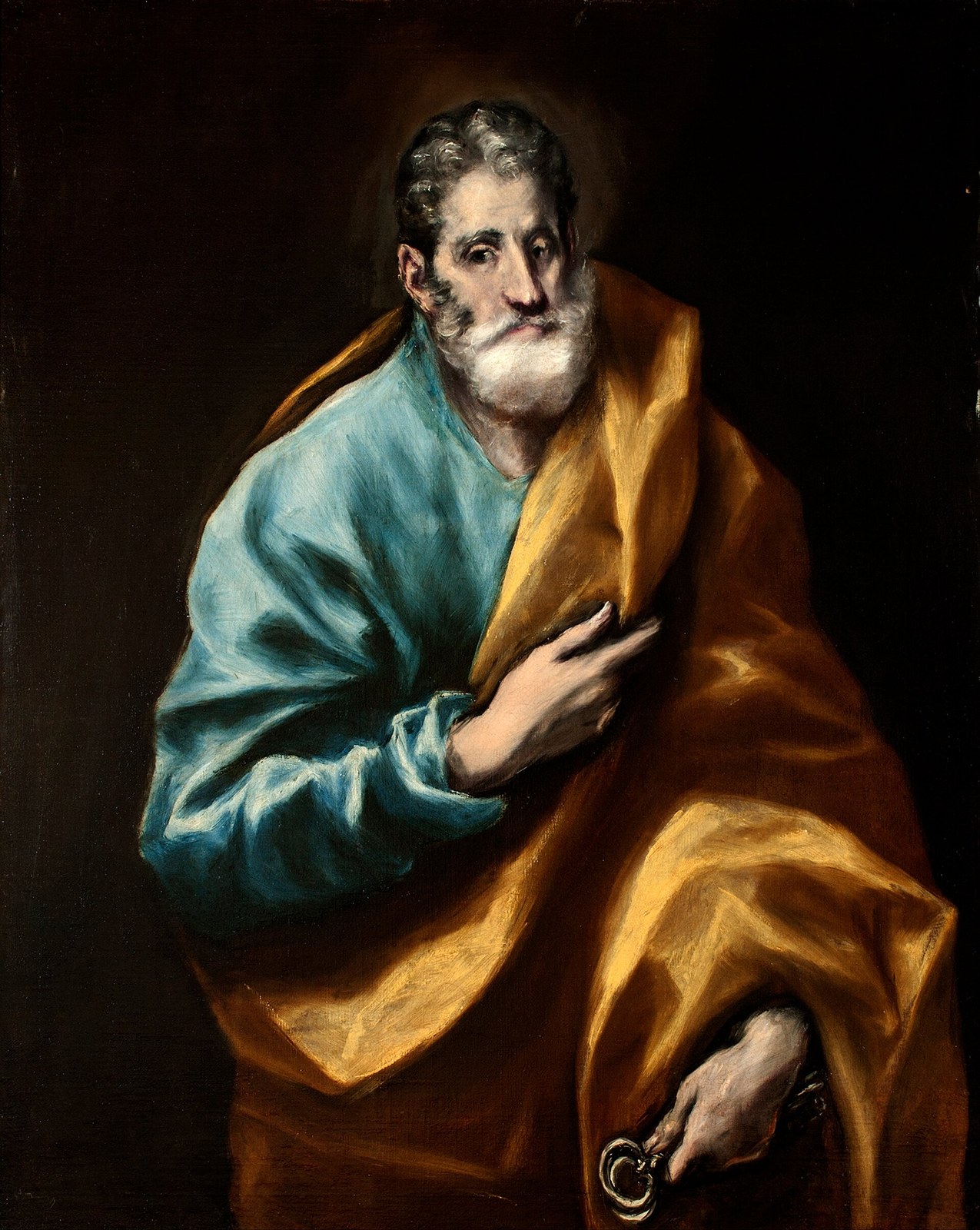
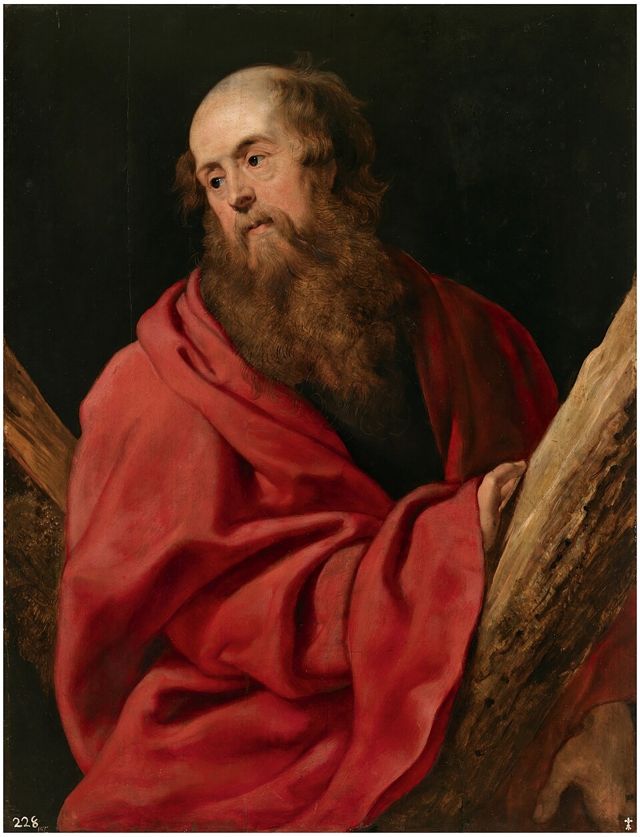
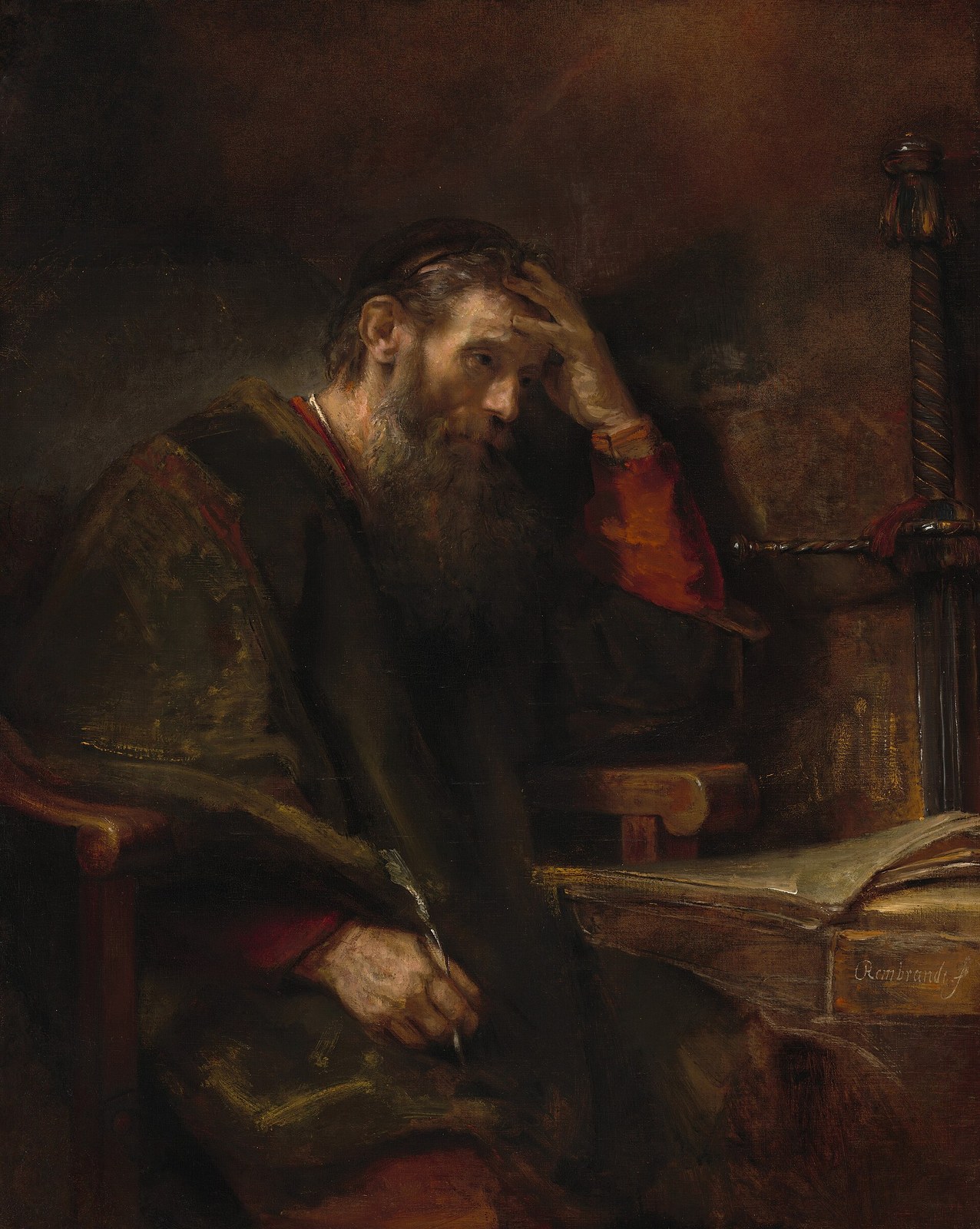
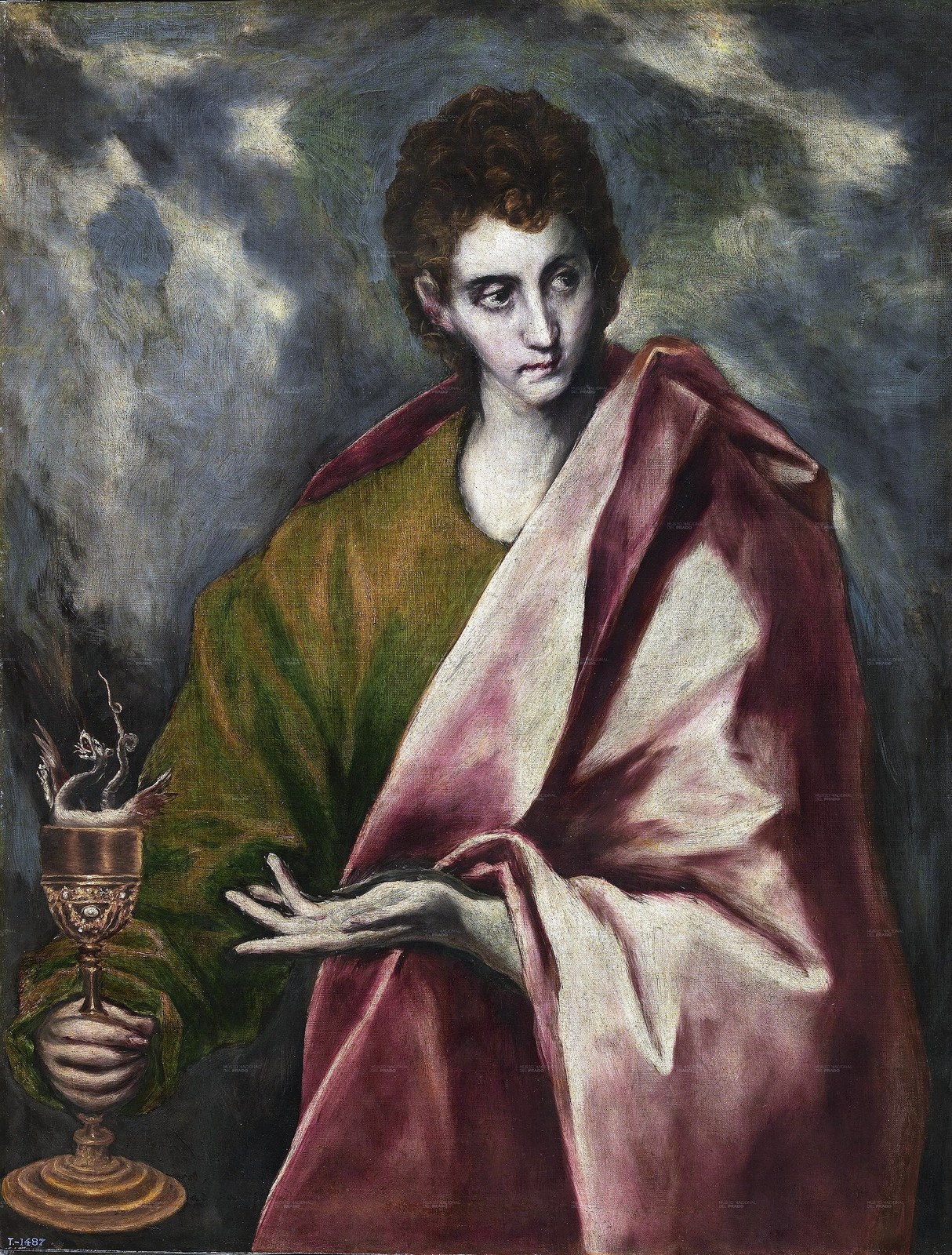
It took place on the Sea of Galilee, near Capernaum, where the four disciples, Saints Peter, Andrew, James, and John, were fishing. Saints Peter and Andrew were the first to be called.
Our Lord then entered Simon Peter’s boat and spoke to the crowd on the shore. Immediately after that call, Our Lord went to the house of Saint Peter, where He performed the miracle of healing the mother-in-law of the apostle, who was lying sick with a fever. Saint Peter then closely followed Christ and was in constant attendance on Him in Galilee, Decapolis (a region east of the Jordan River), Persea, and Judea. The formal designation of Saint Peter and the rest of the apostles occurred some time later. They appear to have first received the official title of Apostles, and from that time on, Simon publicly, and it seems almost exclusively, bore the name Peter, which had previously been used more as a descriptive title than as a proper name. From this time, Saint Peter held the chief position among the twelve. This precedence did not seem to depend on the order of their calling, and it is hardly probable that it was based on seniority. Some special designation by Christ alone satisfactorily explains the facts that he is named first in every list of the apostles, is generally addressed by Our Lord as their representative, and on the most solemn occasions speaks in their name.
The distinction that Saint Peter received seems to have revealed a natural impulsiveness and a tendency toward arrogance, which led to him receiving the strongest rebuke ever given to a disciple by our Lord.
Towards the end of our Lord’s ministry, Saint Peter’s traits became especially noticeable. At the Last Supper, Saint Peter appeared particularly eager to have the traitor identified. After the supper, his words brought out the meaning of the significant, sacramental act of our Lord in washing His disciples’ feet. It was also during this time that he made repeated declarations of unwavering loyalty, which would soon be proven false by his shameful denial.
On the morning of the Resurrection, we see that Saint Peter, although humble, was not defeated by his failure. He and Saint John were the first to visit the tomb; he was the first to enter it. Both Saint Luke and Saint Paul tell us that Christ appeared to him first among the apostles. However, it is noteworthy that on that occasion, he is referred to by his original name, Simon, not Peter; the higher title was not restored until he had been publicly reinstated, so to speak, by his master.
That reinstatement occurred at the Sea of Galilee, an event of great significance. Slower than Saint John to recognize their Lord, Saint Peter was the first to reach Him; he brought the net to shore. The three questions from Christ, which undoubtedly referred to the three declarations and denials, were met with answers filled with love and faith. He then received the formal commission to tend Christ’s sheep, as one who had lost his position and could not reclaim it without such authorization.
Following this, there was a prediction of his martyrdom, in which he would fulfill his request to be allowed to follow the Lord. This event marks the end of the first part of Saint Peter’s story. From then on, he and his fellow apostles were to establish and govern the Church founded by their Lord, without the benefit of His presence.
The first part of the Acts of the Apostles records events in which Saint Peter stands out as the recognized leader of the apostles. He is the most prominent figure in the significant event after the resurrection when, on the day of Pentecost, the Church was first endowed with a full measure of gifts and powers. The first miracle after Pentecost was performed by him. This initial miracle of healing was soon followed by the first miracle of judgment, in which Saint Peter played a key role.
He is not specifically mentioned in connection with the appointment of deacons, an important step in the Church's organization; however, when the Gospel was first preached beyond the borders of Judea, he and Saint John were immediately sent by the apostles to confirm the new believers in Samaria.
Henceforth, he remains a prominent figure, but not the only one, among those spreading the gospel. In Samaria, he faced Simon Magus, the first teacher of heresy. About three years later, we have two accounts of the first meeting between Peter and Paul. This meeting was followed by other events that highlighted Peter’s role, including a general apostolic tour to visit the churches that had been established. During this tour, two great miracles were performed on Aeneas and Tabitha, and he was involved in the most significant event after the day of Pentecost—the baptism of Cornelius. This was the pinnacle and fulfillment of Peter’s ministry.
The establishment of a Church largely composed of Gentiles in Antioch, along with the mission of Barnabas, who had close ties to Peter, confirmed the work that Peter had initiated. Soon after this, Peter was imprisoned. His miraculous escape marked the end of this second significant period of his ministry. He left Jerusalem, but it is not recorded where he went. Six years later, we find him back in Jerusalem, where the apostles and elders gathered to discuss whether converts should be circumcised. Peter led that discussion and compellingly argued the principles established in the case of Cornelius. His arguments, which were supported and reinforced by James, resolved that issue once and for all.
There is debate about whether the meeting between Paul and Peter, described in Galatians (2:1-10), occurred at this time. The vast majority of scholars believe it did, and while this theory has its challenges, it seems more likely than any other proposed explanation. One crucial point was certainly established before the apostles parted ways: the task of converting the Gentiles was specifically assigned to Paul and Barnabas, while the responsibility of preaching to the circumcised was given to the elder apostles, particularly Peter. However, this arrangement was not exclusive. Paul always began his preaching with the Jews in every city. Peter and his fellow apostles also welcomed and sought to convert Gentiles. This arrangement may have been fully in effect only when the old and new apostles were in the same city. This was certainly the case in Antioch, where Peter went shortly after. There, a painful conflict arose between the two apostles.
From this point until the time of his first Epistle, there are no clear mentions in Scripture of Peter’s location or activities. Peter was likely focused on strengthening and organizing Christian communities in Palestine and the surrounding areas. However, there is strong evidence to suggest that he visited Corinth early on. According to early church tradition, Peter's name as a founder or co-founder is only linked to the local Churches of Corinth, Antioch, and Rome. The Church of Alexandria may have been founded by Mark after Peter’s death. The idea that Peter preached the Gospel in the regions of Asia mentioned in his first Epistle seems to be merely a conjecture based on Origen’s words. However, some infer from that Epistle that towards the end of his life, Peter visited or lived for some time in Babylon, which at that time was in Gaul.
and for some hundreds of years afterwards, it was a major center of Jewish culture. Saint Peter is, however, said to have founded the Church in Rome around the second year of the emperor Claudius. Upon his arrival, he focused primarily on the Jews, his fellow countrymen, who had lived in the area beyond the Tiber River since the time of Augustus. However, when he later began to preach to the Gentiles, tradition states that he changed his lodging and moved into the house of a man named Pudens, a senator who had recently converted to the faith. Here, he is said to have met the famous Jew Philo, who had recently come to Rome on his second mission on behalf of his fellow Jews in Alexandria, and they formed a close friendship.
After Saint Peter had spent several years in Rome, the emperor Claudius, taking advantage of some disturbances and riots caused by the Jews, issued a public edict banishing them from Rome. However, the evidence supporting this first visit to Rome is not entirely convincing.
It is said that towards the end of the reign of the emperor Nero, Saint Peter returned to Rome. There, he found that the people were strangely enchanted and resistant to embracing Christianity due to the tricks and magical arts of Simon Magus. Peter had previously confronted Simon in Samaria when that unfortunate man tried to buy the gifts of the Holy Spirit with money, as described in the Acts of the Apostles.
Simon was born in Gitton, a village in Samaria, and was raised in the practices of sorcery and divination. It is claimed that he succeeded in performing many wonders, so much so that the Samaritans regarded him as a great deity who had come down from heaven. However, after being exposed and defeated by Saint Peter in Samaria, he left the East and fled to Rome.
There, according to a tradition preserved by Eusebius, he used witchcraft and sorcery to win the favor of the people. Eventually, he became very popular with the emperors themselves, receiving the highest honors and veneration. Justin Martyr claims that he was worshiped as a god and that a statue was erected to him on the Insula Tiberina (an island in the Tiber River) between two bridges, with the inscription: “Simoni Deo Sancto” — “to Simon the holy God.” The Samaritans and many others from different nations recognized and worshiped him as their main deity. However, this claim does not hold up under scrutiny. The statue was actually of the Sabine god Simo Sancus, so the inscription referred merely to “the god Simo Sancus.” The Sabines, Umbrians, and Romans worshiped this God of Light. He had a temple on the Quirinal Hill and another on the island in the Tiber where the statue was located, which Justin Martyr mistakenly thought was the image of Simon Magus.
The following story about the encounter between Saint Peter and Simon may interest those who enjoy purely apocryphal tales: Simon was said to be favored by Nero, who was a great supporter of magicians and those who claimed to have secret dealings with infernal powers. Therefore, Saint Peter decided to confront him first to reveal the deceptions perpetrated by this miserable man.
At that time, there was a young man of prominence who was a relative of the recently deceased emperor. The reputation of Saint Peter for raising people from the dead persuaded the young man's friends to call for the Apostle. Others arranged for Simon Magus to be summoned as well. Eager to showcase his abilities before the crowd, Simon proposed a challenge to Saint Peter: if he could raise the nobleman to life, then Peter, who had foolishly provoked the “great power of God” (as Simon referred to himself), should lose his life. However, if Peter succeeded, Simon would accept the same fate.
Saint Peter agreed to the terms, and Simon began his spells and incantations. The dead young man appeared to move his hand. The onlookers then shouted that he was alive, claiming he was speaking with Simon, and they began to criticize Peter for opposing such a powerful figure. The Apostle asked for their patience and explained that this was merely an illusion, asserting that if Simon were removed from the bedside, the appearance of revival would vanish. When Simon was taken away, the corpse showed no signs of life.
Then, standing at a distance from the bed, Saint Peter silently prayed to God and commanded the young man to arise in the Name of the Lord Jesus. The young man immediately stood up, spoke, walked, and ate, and was restored to his mother by Saint Peter. Those who witnessed this event quickly changed their minds and turned against the magician, intending to stone him. However, Saint Peter pleaded for Simon's life, telling them that it would be punishment enough for him to live and witness the growth and success of the kingdom of Christ despite all his power and malice.
The magician, enraged by this defeat and frustrated by the Apostle's triumph, gathered his strength and rallied the people, claiming he was offended by the Galileans, whom he had protected. He promised that on a certain day, they would see him fly up to heaven. At the appointed time, he ascended the Capitoline Hill and, throwing himself from the top of the rock, attempted to fly. This spectacle amazed the crowd, and they shouted that it must be the work of God, not man.
But Saint Peter, standing among the crowd, prayed to the Lord that the people might be enlightened and that the impostor's vanity would be revealed in a way that he himself would understand. Immediately, the wings that Simon had fashioned for himself began to fail, and he fell to the ground, badly bruised and injured from the fall. After being taken to a nearby village, he soon died. When the emperor heard of this event, to whom Simon had ingratiated himself through wicked tricks, it led to a hastening of Saint Peter's demise. This is all mere fable.
The fact of the imprisonment and death of Peter has far more reliable sources than mere legend. Eusebius, in his Ecclesiastical History, quotes a writer named Caius, who was born during the time of Zephyrinus, bishop of Rome (202-218). Caius says, “I can show the trophies of the apostle. For if you go to the Vatican, or to the Ostian road, you will find the trophies of those who laid the foundation of this Church.”
We learn from Dionysius, bishop of Corinth (A.D. 178), that both suffered martyrdom around the same time. He provides the following testimony, which Eusebius quotes: “You Romans, through this admonition, have mingled the flourishing seed that was planted by Peter and Paul at Rome and Corinth. For both of these, having planted us at Corinth, also instructed us; and having similarly taught in Italy, they suffered martyrdom around the same time.” Eusebius adds that Peter was crucified, and Paul was beheaded, under the emperor Nero.
The story of Peter's death is, however, recounted in the apocryphal “Acts of Peter,” which is falsely attributed to his disciple, Linus. It goes as follows: Nero ordered Peter and Paul to be confined in the Mamertine prison, where they spent their time in religious activities, especially preaching to the prisoners and those who came to them. To baptize them, Peter caused water to flow from the prison wall by striking it.
When the day of their execution approached, the Christians in Rome urged Peter, most earnestly, to escape. He resisted their pleas for a long time, but at last, moved by their tears, he climbed over the wall of the prison and fled. However, as he approached the city gate, he met our Blessed Lord, who was carrying His cross and just entering the city. “Lord, where are You going?” asked the astonished apostle. “I go to be crucified in Rome again,” was the reply. Peter was deeply affected, and with many tears, he returned and surrendered himself back into the hands of his captors, showing himself from then on most willing and cheerful to accept the Divine Will. The small church of “Domine Quo Vadis?” is believed to stand on the spot made holy by this reported mysterious meeting.
Before his suffering, Peter was likely scourged, as was the usual practice of the Romans in dealing with criminals condemned to death. After greeting his fellow Christians and especially bidding his last farewell to Paul, he was taken out of the prison and led to the top of Vatican Hill, the place designated for his execution. The death he faced was crucifixion, which was considered the most shameful as well as the most severe and terrible form of execution. However, he requested the officers to allow him to be crucified in an unusual way, with his head downwards and his feet up towards heaven, claiming that he was unworthy to die in the same position in which his Lord had suffered before him. “Happy man,” says John Chrysostom, “to be set in the readiest posture of traveling from earth to heaven.” After his body was taken down from the cross, it is said to have been embalmed by Marcellinus the Presbyter, following Jewish customs, and was then buried in the Vatican, near the Triumphal Way. A small church was soon built over his grave, but after it was destroyed by Heliogabalus, his body was moved to the cemetery on the Appian Way, two miles from Rome, where it remained until the time of Cornelius, the bishop of Rome, who returned it to the Vatican. Here it rested somewhat obscurely until the reign of Constantine, who, out of great reverence for the Christian faith, had many churches built in Rome, particularly rebuilding and enlarging the Vatican in honor of Peter. It is said that the emperor himself dug the first spadeful of the foundation and carried away twelve baskets of dirt with his own hands, in honor of the twelve apostles. He enriched the church with many gifts and decorations.
The genuine writings of Peter are his two Epistles, which are part of the Sacred Canon. In addition to these, there were other writings that were anciently attributed to him, but the Church Fathers rejected them as false, although some of these writings are considered edifying in themselves and were publicly read in churches in early times.
The reputed relics of Peter are numerous. The house of Caiaphas (the high priest during Jesus' trial) was turned into a church by Helena (the mother of Emperor Constantine), and it contained a broken pillar on which the rooster stood that crowed and called Peter to repentance. This pillar was removed to Rome and long stood in the Lateran church. However, since this was likely to "produce a smile rather than promote devotion, especially among heretics," it pleased Innocent X, when restoring that basilica in 1650, to remove it from sight, along with certain other items.
The altar on which Peter said Mass, in the house of Pudentiana, is now shown in the church of Peter in Chains (S. Peter ad Vincula) in Rome. Another altar is in the Lateran. In the church of Saints Peter and Paul on the Via Sacra, there is a stone that bears the impression of Peter's knees when he prayed to confound the arts of Simon Magus (a magician mentioned in the New Testament), and there is also the stone on which the sorcerer fell, marked with his blood.
In the small chapel at the spot where Christ met Peter, and Peter asked, "Lord, where are you going?" there are shown the impressions of the Savior’s feet on stone. In the Mamertine prison, there is also the stone on which Peter laid his head, which bears an impression, and there is a chink through which water gushed for the baptism of his converts. There is also the pillar to which the apostles were tied to be scourged, and the one to which Peter was chained. The chains are preserved in the church of Peter in Chains, and links of them can be found in many churches throughout Europe.
The wooden chair of Peter is in the Vatican. A chair, said to have been the Antiochian throne of the apostle, is displayed in Venice, but the learned Assemain discovered an Arabic inscription on it and found that it was made from the tombstone of a Caliph (a leader in Islamic history). The sword of Peter, with which he cut off the ear of Malchus (a servant of the high priest), was once preserved in Constantinople. The cap of Peter, covered with elaborate medieval embroidery, is preserved in Namur (a city in Belgium). Part of the cloak of the prince of the apostles is in Prague, and his staff is in Treves (a city in Germany). The sword with which Paul was decapitated is in Toledo (a city in Spain). The bodies of Saints Peter and Paul are in the great church of Saint Peter in Rome.
Footnotes
- Decapolis: a region of ten cities east of the Jordan River.
- The Sea of Galilee is a significant location in the New Testament.
- The day of Pentecost is celebrated as the day the Holy Spirit descended on the apostles.
- The only point of real importance was certainly determined before the apostles separated, the work of converting the Gentiles being henceforth specially entrusted to S. Paul and S. Barnabas, while the charge of preaching to the circumcision was assigned to the elder apostles, and more particularly to S. Peter.
- Philo was a Hellenistic Jewish philosopher from Alexandria.
- The statue was one of the Sabine god Simo Sancus, so that the inscription meant merely “to the god Simo Sancus.”
- Prelter, lx Dicux de l'Anclenne Rome, anded. Paris, p. 494, et seq.
- Peter was buried on the Vatican hill, Paul beside the Via Ostia.
- John Chrysostom was an early Church Father and archbishop of Constantinople.
- Note by Papebroeck, S.J., the Bollandist.
Baring-Gould’s own footnotes, in modern English.
Retold in plain modern English from Baring-Gould’s public-domain text, sentence by sentence, keeping the same facts and order. Short explanations in parentheses are ours.