St. Paphnutius

Paphnutius was an Egyptian who spent several years in the desert under St Antony before becoming a bishop in the Upper Thebaid.

Read the essentials →
Feast September 11 · Bishop, Confessor

St. Paphnutius

Current feast

September 11
Secondary source · Wikipedia infobox

Traditional feast

September 11
1914 / pre-1969 calendar, per Baring-Gould (1897)

Represents

Bishop
Confessor

Feast days

Feast: September 11

This Saint’s Story

Adapted in modern English from Alban Butler's Lives of the Saints · Baring-Gould original below · little is known

Under Maximin Daia he was one of the confessors who had their right eye put out and were sent to the mines, and he was lamed as well.

He carried these marks all his life and was highly honoured at the Council of Nice. Constantine, Butler says, would kiss the place where his eye had been. Socrates and Sozomen relate that he persuaded the council not to forbid married clergy to live with their wives. Butler notes that some scholars doubt this story.

Struggles & surrender

His struggles

  • Maimed for the faith ·
    Butler: under Maximin Daia he had his right eye put out and was lamed, then sent to the mines, and bore the marks all his life.

What he represents

How he teaches us to live

Drawn from themes in the original account

Make time for silence. Time alone in prayer is part of this story.

Celebrate this saint’s feast day. Remember him on September 11 with a short prayer, and ask for his help.

The full story

Baring-Gould’s account retold in modern English

Read the full story · 635 words · about 3 min

Constantine regarded the venerable confessor with the utmost respect and often spoke with him. Among the rules passed at that famous council was one to prevent scandals that might arise from the association of clergy with religious women. “No bishop, no priest, no deacon, nor anyone holding any clerical office is to have with him a woman of this kind, unless she is his mother, sister, or aunt, or other persons who are certainly above suspicion.” However, connected with this decree was an unsuccessful attempt that reveals one of the most interesting scenes of the council. A proposal was made, requiring all married clergy to separate from their wives. This was essentially the same measure that was later adopted in the Spanish synod of Illiberis, so it is likely that it was proposed by the prominent Hosius. It is also said that it was supported by Eustathius of Antioch. But opposition arose from a most unexpected source. From among the Egyptian bishops stepped forward the old hermit confessor Paphnutius, who looked out from his remaining eye and limped on his paralyzed leg. With a roar of indignation rather than a speech, he interrupted the debate: “Do not impose this heavy burden on the clergy. Marriage is honorable for all, as the apostle said. By enforcing excessive strictness, you will harm the Church more than help it. Not everyone can endure such an ascetic rule. The wives themselves will suffer from it. Marriage itself is a form of continence. It is enough for a man to refrain from marriage after he has been ordained, according to the ancient custom; but do not separate him from the wife he married when he was still a layman.” His speech made a profound impact. His own austere life of unblemished celibacy lent weight to every word he spoke; he demonstrated a rare ability to understand difficulties he did not experience himself and to honor a way of life that was not his own.

Paphnutius was housed in the palace. The Emperor had often summoned him to hear his stories of persecution; something in the simple sincerity and innocence of the desert-bred, grand old man deeply moved Constantine. When about to leave the council, the Emperor embraced Paphnutius, pressed his lips to his eyeless socket, and touched his royal purple robe to his paralyzed limb. In A.D. 335, the famous synod of Tyre was held, where a group of Arians and Meletians attempted to destroy S. Athanasius with false accusations. Paphnutius was present and defended Athanasius, and along with the other Egyptian bishops, wrote an account of the Eusebians' intrigues to Count Flavius Dionysius, who had been sent from Constantinople to preside in place of the Emperor at the council.

Rufinus tells us that when Paphnutius saw Maximus of Jerusalem, who was also a one-eyed confessor, he noticed that Maximus was hamstrung like himself. Maximus was sitting among the enemies of Athanasius. Paphnutius went before him, dragging his paralyzed limb behind him, and said, “What! Maximus, who fought with me in the same battle and witnessed the same confession as I did! I cannot bear to see you sitting in the council of the ungodly and standing in the way of sinners.”

Taking him by the hand, Paphnutius drew the innocent old man away from their midst and led him over to the side where the supporters of Athanasius sat. From that moment on, Maximus clung steadfastly to him. It is likely that Paphnutius was also present at the council of Sardica in 347 AD. A Paphnutius was expelled from his see in Egypt by the Arians in or around 356 AD, but if this was the same Paphnutius, he must have reached an extreme old age. It is more likely that this was another bishop with the same name.

Footnotes

  1. Paphnutius was a hermit and confessor known for his strong defense of marriage.
  2. The synod of Tyre was a significant church council in 335 that addressed controversies surrounding Athanasius.
  3. Paphnutius was expelled from his see in Egypt by the Arians in or around 356 AD.

Baring-Gould’s own footnotes, in modern English.

Read the original 1870s text

Baring-Gould’s sources: Inserted by Baronius in the Modern Roman Martyrology. The Coptie Kalendar on Feb. 9, Authorities: — Mention by Eusebius, Soerates, Sozomen, Theodoret. and Rufinus.] S. Paphnutius, according to Socrates, was a monk from his boyhood. He witnessed a good confession, probably Lives of the Samis, under Firmilian in Egypt, in a.d. 308, having his eye plucked out, and his leg hamstrung, and he was sent thus mutilated to work in the mines, by Maximus, probably in a.d. 311. When released from this work, he retired to the rocky desert to S. Antony, and learned from him the training of a perfect anchorite. He was created bishop, but when is uncertain. As bishop he attended the Council of Nicsea, and there performed many miracles, healing the sick by prayer, and restoring sight to the blind, and vigour to the paralytic.

Constantine regarded the venerable confessor [in old usage, a saint who was not martyred, or who suffered for the faith without being killed] with the utmost reverence, and often spoke with him. Among the canons passed at that famous council was one to guard against the scandals which might arise from the companionship of the clergy with religious ladies. “No bishop, no priest, no deacon, no one holding any clerical office, is to have with him a woman of this sort, unless it be his mother, sister, or aunt, or such persons as are certainly above suspicion.” But connected with this decree was an abortive attempt, which discloses to us one of the most interesting scenes of the council. A proposition was made, enjoining all married clergy to separate from their wives. It was in substance the same measure that was afterwards carried in the Spanish synod of Illiberis, and it is therefore probable that, on this occasion, it was proposed by the great Hosius. It was also, we are told, supported by Eustathius of Antioch. But opposition came from a most unexpected quarter. From amongst the Egyptian bishops stepped out into their midst, looking out of his remaining eye, and halting 011 his paralysed leg, the old hermit confessor Paphnutius. With a roar of indignation rather than with a speech,1 he broke into the debate: — “ Lay not this heavyyoke on the clergy. Marriage is honourable in all, said the apostle. By exaggerated

strictness you will do the Church more harm than good. All cannot bear such an ascetic rule. The wives themselves will suffer from it. Marriage itself is continence. It is enough for a man to be kept from marriage after he has been ordained, according to the ancient custom; but do not separate him from the wife whom once for all he married when he was still a layman/’1 His speech produced a profound sensation. His own austere life of unblemished celibacy gave force to every word he uttered; he showed that rare excellence of appreciating difficulties which he himself did not feel, and of honouring a state of life which was not his own.

Paphnutius was lodged in the palace. The Emperor had often sent for him to hear his stories of the persecution; something in the simple sincerity, the guilelessness of the desert-bred, grand old man touched Constantine to the core, and when about to leave the council, the Emperor threw his arms round Paphnutius, and put his lips to his eyeless socket, and pressed his royal purple to his paralysed limb. In a.d. 335 was held the famous synod of Tyre, in which a caucus of Arians [followers of Arius, who taught that the Son is a created being, not fully God] and Meletians sought to crush S. Athanasius [bishop of Alexandria (d. 373), great defender of the Nicene faith] with calumnies. Paphnutius was present, and defended Athanasius, and with the other Egyptian bishops wrote an account of the intrigues of the Eusebians to the Count Flavius Dionysius, who had been sent from Constantinople to preside in the room of the Emperor at the council.

Rufinus tells us that when Paphnutius saw Maximus of Jerusalem, also a one-eyed confessor, hamstrung like himself, sitting amidst the enemies of Athanasius, he went before him, dragging his paralysed limb after him, and 1 said: — “What ! Maximus, who fought with me in the same fight, and witnessed with me the same confession ! I can1 S. James of Nisibis took the same view. Serai, xviii. g. [Sept. it.

not bear to see thee sitting in the council of the ungodly, and standing in the way of sinners.” And taking him by the hand, he drew the guileless simple old man from their midst, and led him over to the side where sat the adherents ot Athanasius, and to him he clung steadfastly ever after. It is probable that Paphnutius was also present at the council of Sardica in a.d. 347. A Paphnutius was expelled his see in Egypt by the Arians in, or about, a.d. 356, but if it was this Paphnutius, he must have reached an extreme old age. It is more probable that this was another prelate of the same name.
Help us add to this saint's story

Everything is read by a person before anything appears. Facts are checked against trusted sources first.

Facts are welcome; a source link helps (optional).With your permission we may share it on this page.

Nine days · Free

Pray the novena
with us.

One short email a day for nine days. The day's prayer, a line from St. Paphnutius's story, and a nudge to keep going.

Also on September 11
P

Sts. Protus and Hyacinth

September 11 · Martyrs
Sts. Felix and Regula

Sts. Felix and Regula

September 11 · Martyr, Virgin
St. Theodora of Alexandria

St. Theodora of…

September 11 · Feast
← All 1970 saints in the library
Sources & notes

Feast-day sources

Story sources

Sources

Credits

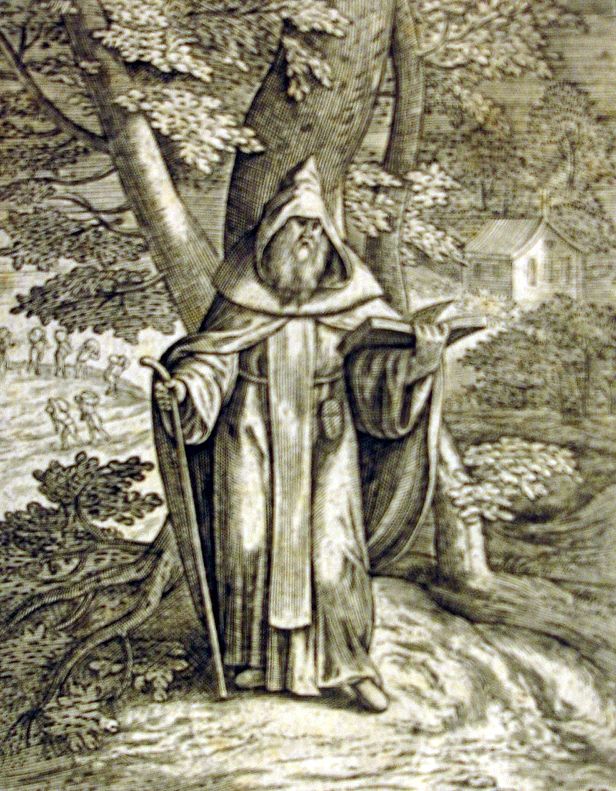
Image: Paphnutius.jpg · Anonymous after Raphael Sadelers' Solitudo Sive Vitae Patrum Eremicolarum (1594-1598) · Public domain, via Wikimedia Commons

Image: Anonymous after Raphael Sadelers' Solitudo Sive Vitae Patrum Eremicolarum (1594-1598), Wikimedia Commons (Public domain)

Retold in plain modern English from Baring-Gould’s public-domain text, sentence by sentence, keeping the same facts and order. Short explanations in parentheses are ours.

From Sabine Baring-Gould, The Lives of the Saints, new edition in 16 vols. (London: John C. Nimmo, 1897–98); text from the Internet Archive scan (OCR, lightly cleaned; errors possible). Public domain in the United States. Reproduced unedited, except for short bracketed notes in grey that we added to explain names and terms (“S.” is the old abbreviation for Saint). Some history and judgments reflect 19th-century scholarship.