This Saint’s Story
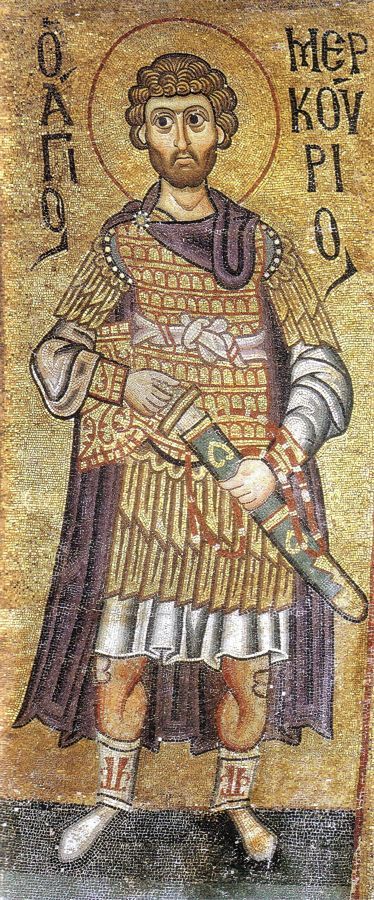
He came from a Christian family; his father, Gordianus, was a Scythian who, along with his wife, converted to Christianity. They raised their son in the faith, and when he was 17, Mercurius enlisted in the Roman army during the reign of Emperor Decius. He quickly gained a reputation as a skilled swordsman and tactician, earning the respect of his fellow soldiers.
During a campaign against barbarian invaders, Mercurius was said to have received a divine sword from the Archangel Michael, which led to his nickname, Abu Sayfain, meaning 'father of two swords.' His bravery helped secure victory for the Romans, and he was honored by the emperor. However, in 249 AD, Decius initiated a persecution against Christians, demanding sacrifices to pagan gods. Mercurius, steadfast in his faith, refused to comply and openly declared himself a Christian.
Despite attempts to persuade him to renounce his beliefs, Mercurius was arrested, stripped of his rank, and tortured. He was eventually executed by beheading on December 4, 250 AD, at the young age of 25. He died a martyr, and Christians came to see him as a model of courage.
After his death, accounts tell of miraculous events surrounding his burial. His body was discovered in Cappadocia, and many came to venerate him. Over time, parts of his relics were transferred to Egypt, where he is still honored today. Tradition holds that he intervened in various situations, including protecting nuns from property confiscation.