On this slender foundation, a marvelous story has been created, which is known as the Acts of the Martyrdom of Saint Catharine. According to this account, she was the daughter of a king and possessed extraordinary beauty and knowledge. Maxentius, the emperor, invites fifty philosophers to debate Catharine in public. She convincingly defeats them all, and as a result, all fifty are burned to death by the furious emperor.
Then the tyrant makes romantic advances toward the saint, and although he has a legitimate wife named Faustina, he offers to share his throne with her. When she refuses this honor, he has her whipped with ox-hide lashes and imprisoned. He then leaves to inspect a castle near the mouth of the Nile. While he is away, Faustina visits Catharine with a loyal attendant named Porphyrius, and both are converted to Christianity.
In the fervor of his newfound faith, Porphyrius converts two hundred soldiers. When the emperor returns, he orders the execution of all of them, along with Porphyrius and his wife. Saint Faustina, the legendary empress, is commemorated on November 23, and the fictional Porphyrius and his converts are remembered on November 24.
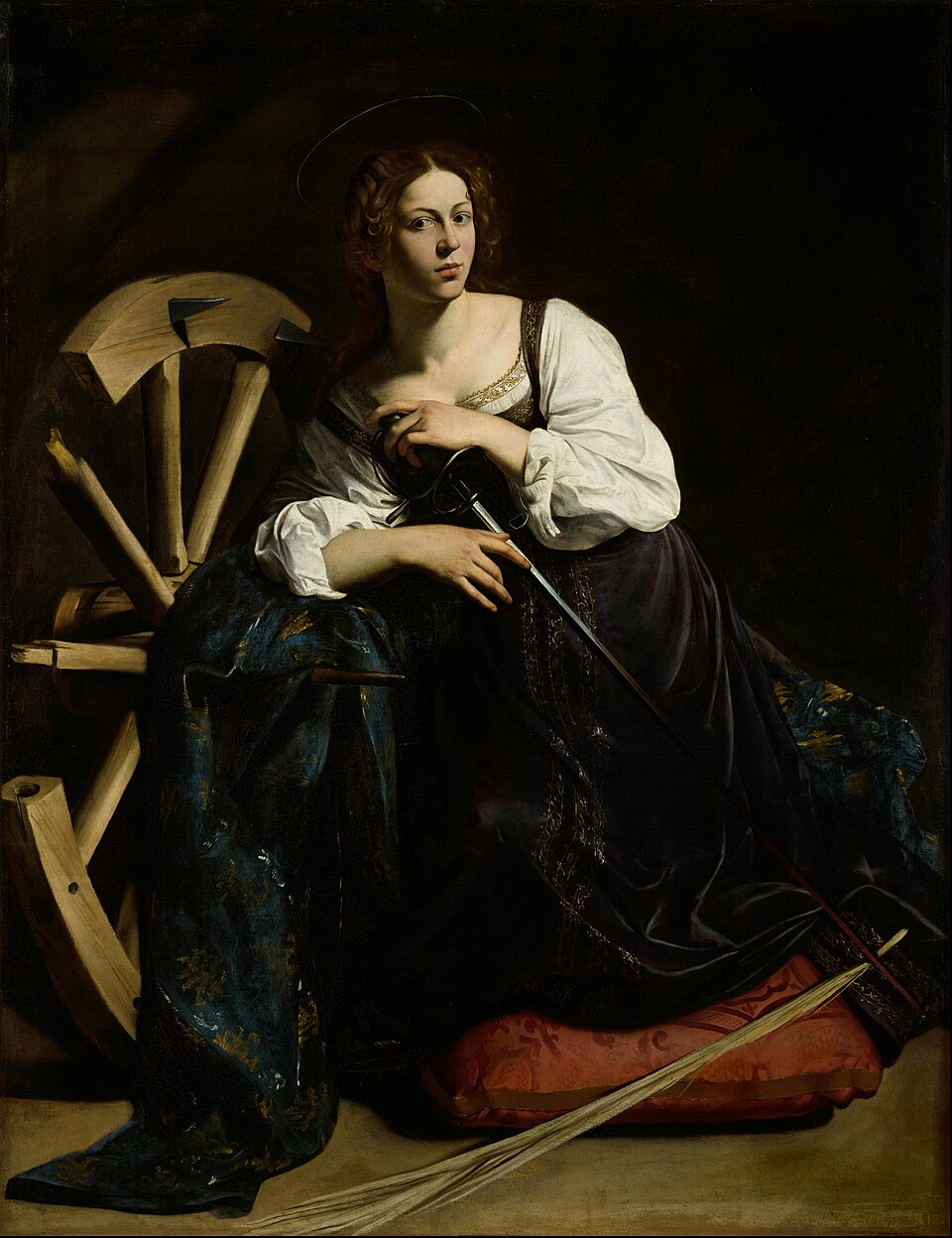
A wheel fitted with razors was prepared for the execution of Saint Catharine, but when she was placed on it, the wheel broke, and the razors flew off, injuring the bystanders. Catharine then prayed to suffer death and asked for two things: that her body would be kept safe from being touched by unholy hands, and that the world might be converted. Her head was then cut off with a sword, and angels came to carry her body to Mount Sinai. Maxentius was later defeated by Constantine, leading to the spread of Christianity.
This, in summary, is the extraordinary tale that serves as the acts of Saint Catharine, who, if we consider Eusebius's account as referring to her, did not die for her faith but was instead exiled. This may have been transformed into the legend of her being taken to Sinai by angels. Her head is displayed in Rome, while her body is kept in the monastery at Mount Sinai. Various relics of her are shown in churches across Europe.
In art, she is depicted with her wheel and wearing a crown.
Footnotes
- Saint Faustina, the apocryphal empress, is commemorated on November 23.
- The fabulous Porphyrius and his converts are remembered on November 24.
Baring-Gould’s own footnotes, in modern English.
Read the original 1870s text
Baring-Gould’s sources: Roman Martyrology. By the Greeks on Nov. 24, 25, and 26. Authority: — Eusebius, II. E. lib. viii. c. 14. The Greek Acts are worthless.] Eusebius says that when Maxentius was at Alexandria he committed shameful abominations by carrying off the wives and daughters of the citizens. “ His unbridled passion was defeated by the heroic firmness of one female only, who was one of the most distinguished and illustrious at Alexandria, and she was a Christian. She was in other respects distinguished both for her wealth, family, and condition, but esteemed all inferior to modesty. Having frequently made attempts to bring her over to his purposes, though she was prepared to die, he could not destroy her, as his passion was stronger than his anger; but punishing her with exile, he took away all her wealth.”
On this slender foundation a marvellous romance has been founded which passes as the Acts of the Martyrdom of S. Catharine. According to this, she was the daughter of a king, and of wondrous beauty and learning. Maxentius [rival emperor at Rome 306–312, defeated by Constantine] invites fifty philosophers to contend with Catharine in public argument. She of course convinces them all, and all fifty are burned to death by the enraged emperor. Then the tyrant makes amorous advances towards the saint, and although he has got a legitimate wife, Faustina, he offers to share his throne with her. As she declines the honour, he has her whipped with ox-hide lashes, and cast into prison, and then goes off to examine a castle near the mouth of the Nile. During his absence Faustina visits Catharine along with a faithful attendant, Porphyrius, and both are converted. Porphyrius, in the ardour of his new faith, converts two hundred soldiers, and the emperor on his return kills them all along with Porphyrius and his wife. S. Faustina, the apocryphal empress, is commemorated on November 23, and the fabulous Porphyrius and his converts on November 24. A wheel set with razors was constructed for the execution of S. Catharine, but when she was placed on it, the wheel broke, and the razors flew about, hacking and cutting the throats of the bystanders. Then Catharine prayed that she might suffer death, and asked only two things — that after her death her body might be preserved from being touched by profane fingers, and that the world might be converted. Then her head was struck off with a sword, and angels came and carried off her body to Mount Sinai. Maxentius was defeated by Constantine, and the world became Christian. Such, condensed, is the wonderful rigmarole which serves as the acts of S. Catharine, who, if we may regard the account of Eusebius as referring to her, did not suffer death for her faith, but transportation, and this perhaps has been converted into the fable of the translation by angels to Sinai. Her head is shown at Rome, her body in the monastery of Mount Sinai. Various relics [the bodily remains of a saint, or objects they used, kept with honor] of her are exhibited in churches throughout Europe.
She is represented in art with her wheel, and crowned.