St. Matrona of Barcelona was early left an orphan and was adopted by her aunt, who went with her to Italy, and settled in the Campagna.
Read the essentials →St. Matrona of Barcelona was early left an orphan and was adopted by her aunt, who went with her to Italy, and settled in the Campagna.
Read the essentials →October 20 (also listed: July 15)
March 15
Virgin
Martyr
Short entry · the summary here is 80 words; Baring-Gould’s fuller original text and its sources are below. We have not filled any gap with invented detail.
Celebrate this saint’s feast day. Remember her on October 20 with a short prayer, and ask for her help.
Saint Matrona of Barcelona was left an orphan at an early age and was adopted by her aunt. Her aunt took her to Italy, where they settled in the Campagna region. The girl was given a crucifix, which she always carried with her. After being denounced as a Christian, she was thrown into prison and starved to death.
Saint Matrona of Thessalonica was a slave to a Jewish woman. When the woman discovered that her servant was a Christian, she beat her to death with a stick.
S. Matrona of Barcelona was early left an orphan and was adopted by her aunt, who went with her to Italy, and settled in the Campagna. The girl was given a crucifix, which she ever carried about with her. Having been denounced as a Christian, she was thrown into prison and starved to death.
S. Matrona of Thessalonica was the slave of a Jewess, who having discovered that her servant was a Christian, beat her to death with a stick.
Feast: October 20
Traditional: March 15
One short email a day for nine days. The day's prayer, a line from St. Matrona's story, and a nudge to keep going.
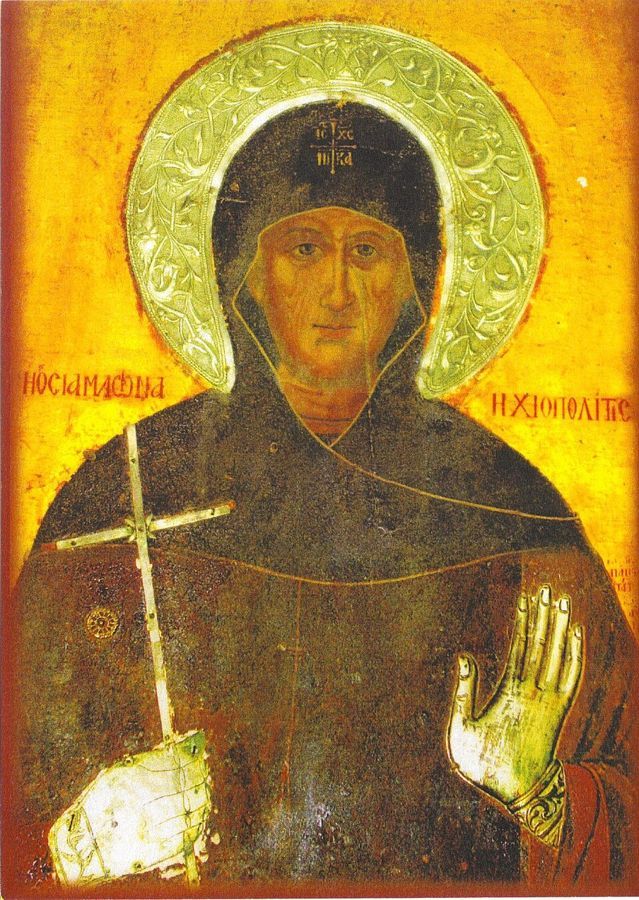
Image: Saint Matrona of Chios.jpg · Wikimedia Commons · Public domain, via Wikimedia Commons
Image: Wikimedia Commons, Wikimedia Commons (Public domain)
Retold in plain modern English from Baring-Gould’s public-domain text, sentence by sentence, keeping the same facts and order. Short explanations in parentheses are ours.
From Sabine Baring-Gould, The Lives of the Saints, new edition in 16 vols. (London: John C. Nimmo, 1897), digitized text from Project Gutenberg. Public domain in the United States. Reproduced unedited, except for short bracketed notes in grey that we added to explain names and terms (“S.” is the old abbreviation for Saint). Some history and judgments reflect 19th-century scholarship.