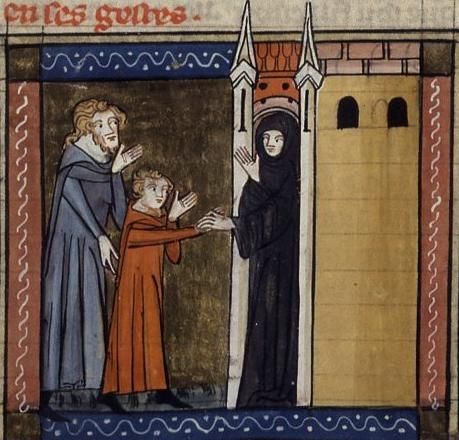
Then she stayed in her father’s cell and followed all the rules of the house. She was gentle and obedient, so everyone loved her. There was a seaport not far from the monastery, and the monks would often go with a cart and a pair of oxen to bring back what they needed for the abbey. When they had a lot to do, they sometimes slept in the tavern at the quay.
One day, the innkeeper’s daughter had been deceived by a soldier. When her parents found out that she was going to have a baby, they demanded to know the name of the man who had deceived her. She accused Marinus, who was often at the tavern with the oxen, of the crime.
When the abbot heard this, he scolded Marinus, who blushed and said, "I have sinned, my father." So the abbot expelled him from the monastery. Marinus then lay down outside the gates and begged for crusts of bread from the monks who came in and out. After she had weaned the child, the tavern keeper’s daughter brought the baby—a boy—and handed him to Marinus, saying, "There, take the brat." Marinus supported herself and the child with the alms given to her by the monks.
After five years had passed, the monks felt sorry for Marinus and pleaded with the abbot to let Brother Marinus back in. He was reluctant but eventually agreed. However, he ordered that as punishment for her fault, she should empty the slops and do all the most unpleasant work of the monastery. She cheerfully accepted this task, with the little boy helping her.
But a few days later, she became ill and died. “See now,” exclaimed the abbot, “I have been too lenient, and God has judged and condemned this wicked one. Now go, wash and bury him.”
However, when Marinus was prepared for burial, it was discovered that she was a woman. The monks cried out and ran to the abbot to tell him. He raised his hands to heaven, fell to the ground, and cried, “Judge me not, O Jesus Christ! because I judged wrongfully.” Marina was buried with great respect.
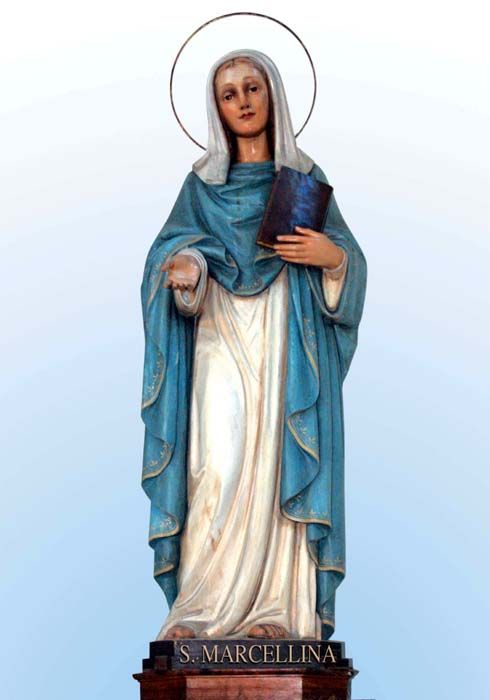
The Acts do not mention when or where Marina lived. The relics are said to have been brought to Venice in 1113 by Jacobus de Borce, “from the Roman provinces,” which means from the suburbs of Constantinople. They were placed in the church of S. Liberalis in Venice, which is now called by her name. The body is intact, with the skin covering the dry flesh and bones. Not a single bone is missing. However, another body is displayed in Pavia as that of S. Marina. “A thorny question between the Pavians and the Venetians,” say the Bollandists, “for it is clearer than the noon-day sun that the same saint cannot rest in two places at the same time.”
But a third body of S. Marina is preserved in the abbey of S. Marina de Flastris, near Tolentino, in the region of Ancona. A fourth body, like the other three, is incorrupt and is located in Spoleto. Additionally, a church in Paris, dedicated in 1228 to S. Marina, claimed, before the Revolution, to also possess the relics of S. Marina. Other portions of a body of S. Marina are found in Tournai and in the church of the abbey of S. Marie Descouvier, in the diocese of Rouen. Peter de Natalibus tells the story of S. Marina but changes her name to Margarita, also called Pelagius, and slightly alters the incidents.
Footnotes
- The tavern keeper’s daughter accused Marinus of deceiving her.
- The abbot expelled Marinus from the monastery for his supposed sin.
- Marinus supported herself and the child with alms from the monks.
- The abbot later regretted his judgment when he discovered Marinus was a woman.
- Jacobus de Borce was from the Roman provinces, meaning the suburbs of Constantinople.
- S. Liberalis is the church in Venice now named after S. Marina.
- S. Marina de Flastris is an abbey near Tolentino in Ancona.
- The church of S. Marie Descouvier is located in the diocese of Rouen.
Baring-Gould’s own footnotes, in modern English.
Read the original 1870s text
Baring-Gould’s sources: By the Greek Mensea on Feb. rzth. Late Latin Martyrologies on June 1 8th. The Bollandists and the Roman Martyrology on the iythjuly, the day on which the translation of her relics is commemorated at Venice. Authority: — A Life on the Vitae Patrum, by an unknown author.] There was a father once, left a widower with a little daughter; and in his desolation he resolved to renounce the world and retire into a monastery. So he committed the little child to a relation, and became a monk. But after a while, he thought about the child alone in the world, with no parent to watch and train her, and his heart became soft. So he wept much. Then the abbot saw his eyes red with tears, and said, “ Why have you been crying, my brother ?” Then he answered, “ I left a little son in the world, and my heart aches for him.” So the abbot said, “ Well, my brother, go and bring him here, and let him dwell with you.” Thereupon the father, whose name was Eugenius, went to his kinsman and reclaimed his child, and he cut her hair, and put on her boy’s clothes, and changed her name from Marina to Marinus, and brought her back to the monastery, and she lived with him for some July jJ.] years, till she grew to the age of seventeen; and then her father died.
Then she remained in her father’s cell, and observed all the rules of the house, and was gentle and obedient, so that all loved her well. Now there was a seaport not far from the monastery, and the monks were wont to go with a cart and a pair of oxen to bring thence what was needed for the abbey. And when they had much to do, they sometimes slept in the tavern at the quay. As it happened, the innkeeper had a daughter who had been deceived by a soldier, and^when her parents found out that she expected to become a mother, they demanded the name of him who had deceived her. Then she charged Marinus, who was often at the tavern with the oxen, with the crime.
Now when the abbot heard this, he rebuked Marinus, who coloured, and said, " I have sinned, my father.” So the abbot drave him from the monastery. Then Marinus lay down outside the gates, and begged crusts of bread of the monks who came in and went out. And. the taverner’s daughter, when she had weaned the child, brought the babe — it was a boy — and gave it to Marinus, and said, u There, take the brat.” So Marinus nourished herself and the child on the alms given her by the monks. And when five years had passed, the monks were grieved, and interceded with the abbot to re-admit Brother Marinus. But he could hardly be persuaded j and when he admitted her, he ordered that in punishment for her fault, she should empty the slops, and do all the most disagreeable work of the monastery. And this she cheerfully undertook, the' little boy assisting her.
But a few days after, she sickened and died. “ See now,” exclaimed the abbot, “ I have been too lenient, and God has judged and condemned this wicked one. And now go, wash and bury him.”
But when Marinus was prepared for burial, it was found that she was a woman. Thereupon the monks gave a cry and ran to the abbot and told him. And he raised his hands to heaven, and fell on the ground, and cried, “ Judge me not, O Jesus Christ ! because I judged wrongfully.” And Marina was buried with great reverence.
The Acts say nothing of when or where Marina lived. The relics [the bodily remains of a saint, or objects they used, kept with honor] are said to have been brought to Venice in ii 13, by Jacobus de Borce “de partibus Romanise,” that is, from the suburbs of Constantinople, and were placed in the church of S. Liberalis at Venice, now called by her name. The body is entire, with the skin covering the dry flesh and bones. Not a single bone is missing. However, another body is shown at Pavia as that of S. Marina. “ A thorny question between the Pavians and the Venetians,” say the Bollandists [Jesuit scholars who since the 1600s have critically studied the lives of the saints]; “for it is clearer than the noon-day sun that the same saint cannot repose in two places at the same time.” But a third body of S. Marina is preserved in the abbey of S. Marina de Flastris, near Tolentini, in the marches of Ancona. A fourth body, like the other three, incorrupt, is at Spoleto. But a church in Paris, dedicated in 1228 to S. Marina, claimed, before the Revolution, also to possess the relics of S. Marina; other portions of a body of S. Marina at Tournai, and in the church of the abbey of S. Marie Descouvier, in the diocese of Rouen. Peter de Natalibus tells the story of S. Marina, but changes her name into Margarita, also called Pelagius, and slightly varies the incidents.