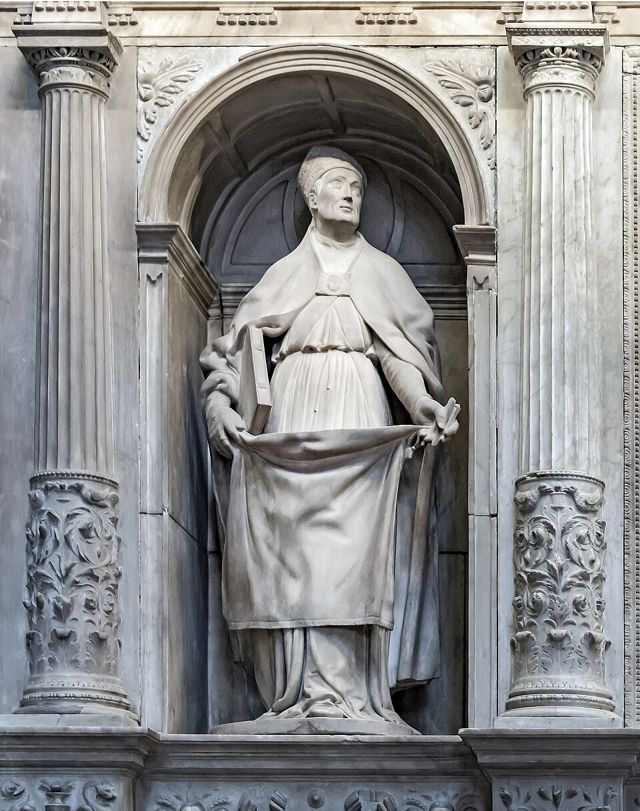
St. Leonard

Leonard, the hermit of Noblac near Limoges, is a saint whose cult is far better known than his life.

Read the essentials →
Feast November 6 · Hermit

St. Leonard

Current feast

November 6
Secondary source · Wikipedia infobox

Traditional feast

November 6
1914 / pre-1969 calendar, per Baring-Gould (1897)

Represents

Hermit

Feast days

Feast: November 6

This Saint’s Story

The Catholic Encyclopedia states plainly that nothing absolutely certain is known of his history, because his earliest Life, written in the eleventh century, has no historical value whatever. What follows is that legend, told as tradition.

According to the Life, Leonard came of a noble Frankish family in the days of King Clovis, who stood sponsor for him, and St. Remigius of Reims guided him. He is said to have won from the king the release of many prisoners and to have refused a bishopric. He became a monk at Micy, near Orleans, under St. Maximinus, and later went into Aquitaine to preach. Settling as a hermit in the forest of Pauvain beside the Vienne, he is said to have obtained by his prayers a safe delivery for a Frankish queen overtaken by labour while the king was hunting. In thanks the king gave him as much of the forest as he could ride round in a night on his ass. Baring-Gould points out that this king cannot have been Clovis, who died in 511 when Leonard was still young, and suggests Theodebert of Austrasia. On the land Leonard founded the monastery of Noblac and ruled it until his death, placed about 559.

His veneration has no trace before the eleventh century, but from then on it spread across Western Europe: France, England, Belgium, Spain, Italy, Switzerland, Germany (above all Bavaria), Bohemia and Poland. Pilgrims, kings and prelates among them, came to Noblac, now the town of Saint-Léonard. Many miracles are credited to him; at Inchenhofen in Bavaria alone some four thousand favours were recorded between the fourteenth and eighteenth centuries. He was invoked for captives, for women in childbirth, for the possessed, and for sick people and beasts, and by the end of the eleventh century his name was known among Crusaders held captive. He is shown holding chains, and his feast is 6 November. The church on the site of old Noblac keeps his skull, an arm and other bones.

What he represents

How he teaches us to live

Drawn from themes in the original account

Build up the community you belong to. Community life is part of this story.

Celebrate this saint’s feast day. Remember him on November 6 with a short prayer, and ask for his help.

The full story

Baring-Gould’s account retold in modern English

Read the full story · 431 words · about 2 min

…the army under that prince. Clovis served as the godfather to Leonard at the baptism, to honor his father. He placed himself under the guidance and teaching of Saint Maximinus at Miscy, and later Saint Mesmin, near Orleans. Before that, he seems to have received advice from Saint Remigius. At Miscy, he had his brother Liefhard as a companion. After some years, Leonard and Liefhard left the monastery. Liefhard retired to Meung-sur-Loire, where he founded a monastery, while Leonard continued towards Limoges and settled in the forest of Pauvain, east of the city, beside the waters of the Vienne River. The king would occasionally go there to hunt wild deer and boars. On one of these occasions, the queen accompanied him and went into labor. The king was very alarmed, but Leonard arrived at the scene, and the queen quickly and safely gave birth to a healthy child. The king was so pleased with this event that he granted Leonard as much of the forest as he could ride around in one night on his donkey. Some hollows in the rock, which fancifully resemble the impression of a hoof, are still called “Les pas de Tine de Saint Leonard” today. The Life of Saint Leonard does not specify who the king was that made this donation; likely the writer lived so long after that he did not know. Saussaye assumes it was Clovis, but this cannot be correct, as Clovis died in 511, when Saint Leonard was still a young man. The Limousin region was part of Austrasia at this time, and the king of Austrasia was Theodebert (534-548). The queen was probably his second wife, Misigard, a Lombard princess, with whom he had a daughter named Bertoara. In gratitude for the generosity of the gift, Leonard named the monastery he founded on that land Noblac. It quickly became a place for those seeking a life apart from the world, and he led a thriving community there until his death.

The Life of Saint Liefhard does not state that they were brothers. It is said that he obtained permission from Clovis to release every prisoner he visited. As a result, he is regarded as the patron of prisoners and is depicted with chains in his hands. He is also said, though not in his Life, to have been ordained as a deacon by Eusebius, the bishop of Orleans. Therefore, artists often portray him dressed as a deacon.

The church of Saint Leonard, where the old abbey of Noblac stood, contains the skull, an arm, and several other bones of the Saint.

Footnotes

  1. The Life of Saint Liefhard does not say that they were brothers.
  2. It is said that he obtained permission from Clovis to release every prisoner whom he visited.
  3. He is also said, but not in his Life, to have been ordained deacon by Eusebius, bishop of Orleans.

Baring-Gould’s own footnotes, in modern English.

Read the original 1870s text

Baring-Gould’s sources: Roman and Gallican Martyrologies. Not Usuardus. Sarum, York, and Hereford Kalendars. Anglican Reformed Kalendar. Authority: — A Life, not by a contemporary, but of what date is uncertain. No MS. of it exists earlier than the nth cent. It has been printed from a MS. in the Limoges Library, collated with eight others by the Abbé Arbellot: “ Vie et Miracles de Saint Leonard,” Paris, 1863.] S. Leonard was bom of noble Frank parents, in the court of Clovis. His father was one of the principal officers of 1 Gallican Martyrologies. See Jan. 6, on which day his name occurs in the Roman Martyrology.

…the army under that prince. Clovis stood sponsor to Leonard at the font, to show honour to his father. He placed himself under the instruction and direction of S. Maximinus at Miscy, afterwards S. Mesmin, near Orleans. Before that he seems to have been advised by S. Remigius [bishop of Reims who baptized Clovis, king of the Franks]. At Miscy he had his brother Liefhard for a companion.1 After some years Leonard and Liefhard left the monastery, Liefhard retired to Meung-sur-Loir, where he founded a monastery, and Leonard pushed on towards Limoges, and settled in the forest of Pauvain on the east of the city, beside the waters of the Vienne. The king went there occasionally to chase the wild deer and boars; on one of these occasions the queen accompanied him, and was overtaken with the pains of maternity. The king was in great alarm, but Leonard came to the spot, and the queen was speedily and satisfactorily delivered of a healthy child. The king was so pleased at the event that he gave Leonard as much of the forest as he could ride round in a night on his ass. Some hollows in the rock, bearing a fanciful resemblance to the impression of a hoof, are called to this day “ Les pas de Tine de Saint Leonard.” The Life of S. Leonard does not state who the king was who made this donation, probably the writer lived so long after that he did not know. Saussaye assumes him to have been Clovis, but this cannot be, as Clovis died in 511, when S. Leonard was a young man. The Limousin formed part of Austrasia at this period; and the Austrasian king was Theodebert (534-548), and the queen was probably his second wife Misigard, a Lombard princess, by whom he had a daughter, Bertoara. In gratitude for the nobility of the gift, Leonard called the monastery he founded on it, Noblac. It soon became the resort of all who desired a life separate from the world, and he was the head of a flourishing community which he ruled till his death.

1 The Life of S. Liefhard does not say that they were brothers. It is said that he obtained permission from Clovis to release every prisoner whom he visited. Consequently he is regarded as the patron of prisoners, and is represented with chains in his hands. He is also said, but not in his Life, to have been ordained deacon by Eusebius, bishop of Orleans. Accordingly he is vested by artists as a deacon.

The church of S. Leonard, where stood the old abbey of Noblac, contains the skull, an arm, and several other bones of the Saint.
From the Catholic Encyclopedia

1913 · 318 words

Nothing absolutely certain is known of his history, as his earliest "Life", written in the eleventh century, has no historical value whatever. According to this extraordinary legend, Leonard belonged to a noble Frankish family of the time of King Clovis, and St. Remy of Reims was his godfather. After having secured from the king the release of a great number of prisoners, and refused episcopal honours which Clovis offered him, he entered a monastery at Micy near Orleans. Later he went to Aquitaine and there preached the Gospel. Having obtained, through prayer, a safe delivery for the Queen of the Franks [the Germanic people who ruled Gaul and gave France its name] in her confinement, he received as a gift from the king a domain at Noblac, near Limoges, where he founded a monastery. The veneration of this saint is as widely known as his history is obscure and uncertain. It is true that there is no trace of it before the eleventh century, but from that time it spread everywhere, and little by little churches were dedicated to him, not only in France, but in all Western Europe, especially in England, Belgium, Spain, Italy, Switzerland, Germany, more particularly in Bavaria, and also in Bohemia, Poland, and other countries. Pilgrims, among them kings, princes, and high dignitaries of the Church, flocked to Noblac (now St. Leonard). Numerous miracles are attributed to him, and in one small town alone, Inchenhofen, Bavaria, from the fourteenth to the eighteenth century, there are records of about 4000 favours granted through his intercession. The saint wrought the delivery of captives, women in confinement, those possessed of an evil spirit, people and beasts afflicted with diseases. At the end of the eleventh century his name had already become renowned among the Crusaders captured by the Mussulmans. He is generally represented holding chains in his hands. His feast day is celebrated on 6 November.

PONCELET in Acta SS., November, III, 139-209; see also CHEVALIER, Bio-Bibl., s.v.

Help us add to this saint's story

Everything is read by a person before anything appears. Facts are checked against trusted sources first.

Facts are welcome; a source link helps (optional).With your permission we may share it on this page.

Nine days · Free

Pray the novena
with us.

One short email a day for nine days. The day's prayer, a line from St. Leonard's story, and a nudge to keep going.

Also on November 6
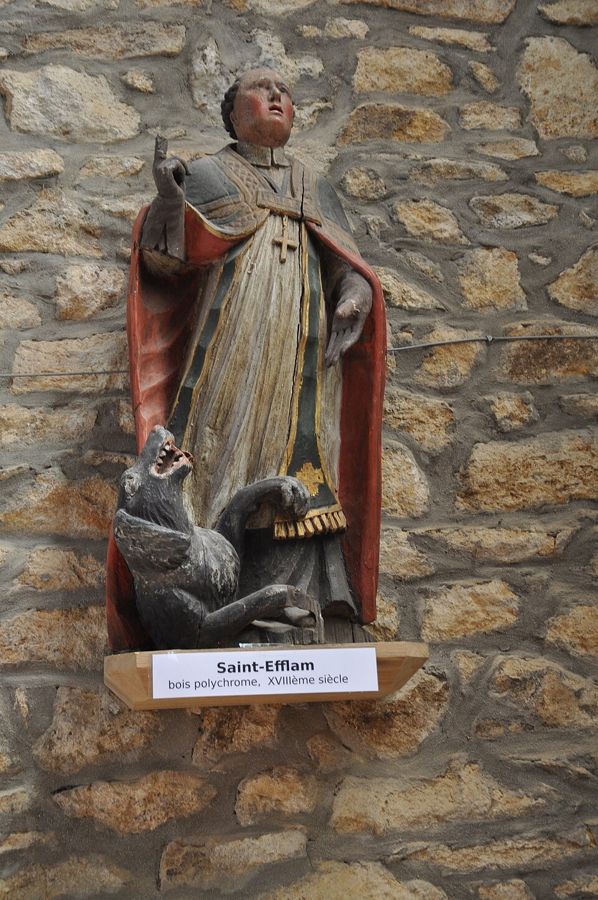
St. Efflam

St. Efflam

November 6 · Confessor
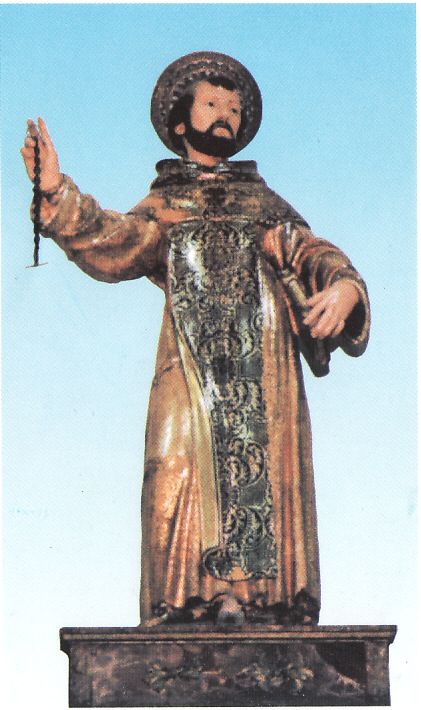
St. Severus

St. Severus

November 6 · Bishop, Martyr
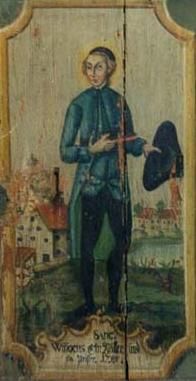
St. Winnoc

St. Winnoc

November 6 · Abbot
← All 1970 saints in the library
Sources & notes

Feast-day sources

Story sources

Sources

Credits

Image: San leonardo abate.jpg · Serse82 · Public domain, via Wikimedia Commons

Image: Serse82, Wikimedia Commons (Public domain)

From “Catholic Encyclopedia (1913)/St. Leonard of Limousin,” The Catholic Encyclopedia (New York: Robert Appleton Company, 1907–1914), via Wikisource. Public domain. Matched by name and feast date; text unedited except for our bracketed notes in grey.

Retold in plain modern English from Baring-Gould’s public-domain text, sentence by sentence, keeping the same facts and order. Short explanations in parentheses are ours.

From Sabine Baring-Gould, The Lives of the Saints, new edition in 16 vols. (London: John C. Nimmo, 1897–98); text from the Internet Archive scan (OCR, lightly cleaned; errors possible). Public domain in the United States. Reproduced unedited, except for short bracketed notes in grey that we added to explain names and terms (“S.” is the old abbreviation for Saint). Some history and judgments reflect 19th-century scholarship.

Notes

Story retold in our own words from the cited sources.