St. Kilian

Kilian (Killena, Cillíne), the Apostle of Franconia, was born about 640 of noble parents, probably in Ireland, and died a martyr on 8 July, probably in 689.

Read the essentials →
Feast July 8 · Bishop, Martyr

St. Kilian

Current feast

July 8
Secondary source · Wikipedia infobox

Traditional feast

July 8
1914 / pre-1969 calendar, per Baring-Gould (1897)

Represents

Bishop
Martyr

Feast days

Feast: July 8

This Saint’s Story

The later Passio (an account of a martyr's sufferings) says he became a monk; Trithemius and later writers placed him at Iona and even made him its abbot, but the Catholic Encyclopedia calls that a supposition that cannot be proved. The older Passio says he was made a bishop before leaving home, and, after the Irish custom, he served as a travelling bishop without a fixed see.

Resolving to be a missionary, he set out with eleven companions through Gaul and across the Rhine to Würzburg, seat of the still-pagan Duke Gozbert. In 686 he went to Rome for missionary faculties, hoping to find Pope John V; John had died, and Kilian received his commission from Pope Conon. Returning with the priest Coloman and the deacon Totnan, he made Würzburg his base, preached through East Franconia and Thuringia, and baptized Gozbert and many of his people.

Gozbert was married to Geilana, his brother's widow. Kilian, Baring-Gould says, waited until the duke was firmer in the faith before raising it, then told him the marriage was unlawful and won his promise to separate. While the duke was away, Geilana had the three missionaries secretly murdered and buried on the spot with their sacred vessels, vestments and books. The early sources add that the murderer went mad, confessed and died miserably, and that Geilana too died insane. Some modern critics doubted these details; the Catholic Encyclopedia holds that his missionary work and martyrdom are accepted by all.

After wonderful cures made their grave famous, St. Burchard, first Bishop of Würzburg, moved the relics in 743, and probably on 8 July 752 they were solemnly translated to the new Cathedral of the Saviour. Kilian's New Testament was kept in the cathedral treasury until 1803 and then went to the university library. He is the patron saint of the Diocese of Würzburg, where his feast on 8 July is kept with great solemnity.

What he represents

How he teaches us to live

Drawn from themes in the original account

Share your faith, in words and by example. Preaching and conversion are part of this story.

Feed your mind with Scripture and good books. Learning and the Scriptures matter in this life.

The full story

Baring-Gould’s account retold in modern English

Read the full story · 684 words · about 3 min

Standing on a red sandstone rock, which may mark the site of his first foundation, Kilian made his way to Wurzburg, still following the Main River as it wound through the vast Spessart forest. He liked the location, as anyone would, and decided to settle there. However, since the people in that area were still pagans, he felt it necessary to seek permission from the Holy See to preach the Gospel to them, hoping that Pope John V would grant it. Upon arriving in Rome, he learned that John had died, but he was warmly welcomed by his successor, Conon. This visit took place either late in the year 686 or early in 687.

Conon, recognizing Kilian's qualifications for the mission due to his pure faith and knowledge, provided him with all the necessary support for his work. Kilian then returned to Wurzburg, accompanied by Coloman and Totnan, who helped him in his apostolic efforts. He was fortunate enough to convert and baptize Gozbert, the duke of that part of Franconia, and this conversion led to many of his subjects following suit.

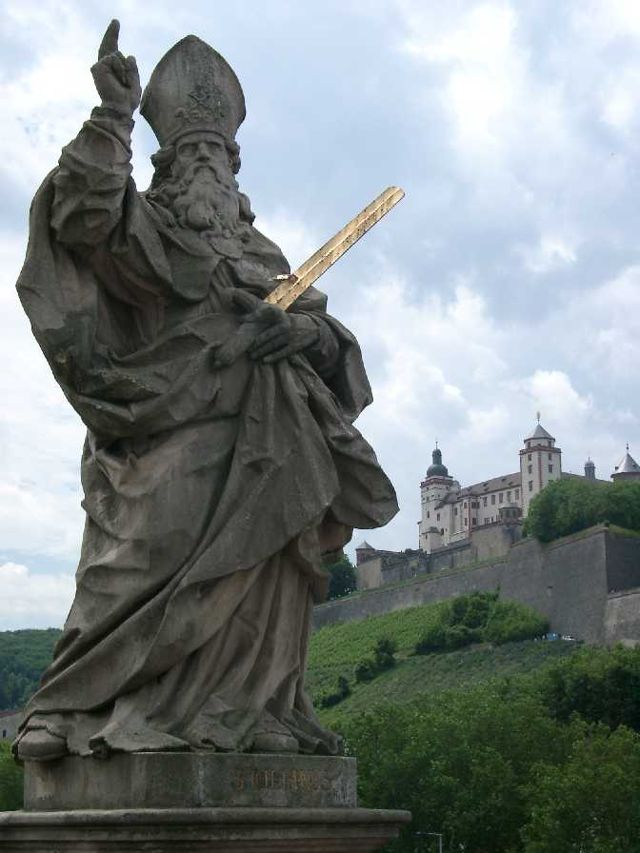
Geilana, to whom Gozbert was married, had previously been the wife of his brother. Kilian did not think it wise to press the objections against this union with his new convert until Gozbert was more firmly established in the Christian faith. Instead, he continued his missionary work among the Franconians of the Main valley and the Spessart. Wurzburg is situated in a broad valley, with the hills to the east where the Steinberg vines grow, and the lofty heights to the west now crowned by the Episcopal Castle and the Pilgrimage Chapel on the Koppele. Nothing is more picturesque than Wurzburg today. The bridge that crosses the Main River features statues of S. Kilian and his faithful companions, Coloman and Totnan. The tall, slender spires of the cathedral mark the spot where the body of the Apostle rests, awaiting the resurrection of the just.

When Kilian believed that Gozbert was sufficiently instructed to handle the issue of his marriage, he spoke up and told him to separate from his wife Geilana, as their marriage was unlawful in the eyes of God. Gozbert replied that this was a difficult thing for him to do, but since he had already made sacrifices for the love of God, he would make this one as well. However, he requested a delay because he was about to go on a military expedition.

When Gozbert was gone, Geilana, furious at the thought of their marriage ending, decided to murder Saint Kilian. One night, she sent two assassins who found the Saint and his companions while they were singing praises to God. The three missionaries did not resist, and their heads were cut off. Their bodies were quickly buried along with their clothes, vestments, sacred books, and crosses.

When Gozbert returned to Wurzburg, he asked about the servants of God. Geilana claimed she did not know what had happened to them. However, the truth soon came out. A woman named Burgunda had witnessed the martyrdom and the burial; and women, as a rule, do not keep quiet. One of the murderers, shortly after, suffering from a fever, confessed to what he had done. Gozbert gathered his Christian subjects and asked how they should deal with the assassin. Someone present, influenced by Geilana, suggested that he should be set free to see if the God of the Christians would avenge the martyr's death. This proposal was accepted, and the murderer, who had been in a raging fever, became delirious and soon died.

The relics of the martyrs were discovered in 752 by Saint Burkhardt, the bishop of Wurzburg, and he placed them in the crypt of the great church that he built in that city. The feast of the translation is celebrated on February 14th. This is the story as told by writers from the 10th or 11th century. It is interesting that Hrabanus and Notker, contrary to this account, attribute the order to murder Kilian to Gozbert; and it is quite possible that he was involved in the crime.

Footnotes

  1. In the large interpolated life, it is said that Kilian was ordained bishop by the Pope. According to the other accounts, he was a bishop before he left Ireland.
  2. The feast of the translation is celebrated on February 14th.
  3. This is the story as told by writers from the 10th or 11th century.
  4. It is interesting that Hrabanus and Notker, contrary to this account, attribute the order to murder Kilian to Gozbert.

Baring-Gould’s own footnotes, in modern English.

Read the original 1870s text

Baring-Gould’s sources: Roman and German Martyrologies. The most ancient martyrologiit to mention him is Wandelbert, "Octavo ante Idus nhllian wm Proconi, umque.” Notker, and all later Martyrologists. Authorities: — A Life beginning "Fait vir vitae venerabilis," written in the 10th or xxth cent., often attributed, but without the smallest evidence, to Egilward, author of the life of S. Burkhardt, a writer of the 12th cent. Another Life, beginning "Beatus Kilianus," a re-edition of the former, with interpolations. Another life, a metrical one, by Johann of Luterbach, monk of Wurzburg, (circ. 1450.) Of these the first is the only reliable authority. Also mention in the Chronicle of Marianus Scotus.1 The celebrated bishop and martyr, S. Kilian, the apostle of Franconia, was a native of Ireland, but we have no account of the part of the island to which he belonged. He was of an illustrious family, and having embraced the monastic life, is said to have governed some monastery, of which, however, the name is not given. Having distinguished himself by his sanctity and great ecclesiastical learning, he was raised to the priesthood, and afterwards to the episcopate. Notwithstanding his being very much beloved by his clergy and people, a wish for travel, that overpowering longing which, in the 6th and 7th centuries, carried the Irish missionaries into every part of France and Germany, come upon Kilian also, and accordingly, taking with him some companions, among whom are named Coloman, a priest, and Totnan, a deacon, he crossed the sea and journeyed through Germany, till he arrived at Wurzburg in Franconia. Probably his boat bore him up the Rhine to the junction of the Maine with its stream, and then he turned up the Maine. Ascaffensburg standing on a rock above the river, with woods feathering down to the broad stream, seems to have been the place of his landing. The picturesque church there, S. Kilian.

1 standing on a red sandstone rock, marks, maybe, the site of his first foundation. From thence he made his way to Wurzburg, still following the Maine, winding through the vast Spessart forest. Liking the situation, as who would not, he determined on fixing his abode there; but being anxious to preach the Gospel to the people of that country, who were still pagans, he thought it necessary to apply to the Holy See for permission to do so, hoping that Pope John V. would not refuse it to him. On his arrival at Rome, he found that John was dead, but was very kindly received by his successor, Conon. This occurred either late in the year 686, or early in 687. 1 Conon finding him well qualified for the mission, both by the purity of his faith and his learning, gave him every requisite facility for that purpose. Kilian then returned to Wurzburg, accompanied by Coloman and Totnan, who assisted him in his apostolic labours. He was fortunate enough to convert and baptize Gozbert, duke of that part of Franconia, and this conversion was followed by that of a great number of his subjects.

Geilana, to whom Gozbert was married, had been the wife of his brother. Kilian did not deem it advisable to press the objections against the union upon his new convert, until Gozbert was more fully confirmed in the Christian faith, but continued his missionary work among the Franconians of the Main valley and the Spessart. Wurzburg lies in a broad valley, with the hills on which grow the Steinberg vines on the east, and the lofty heights now crowned by the Episcopal Castle, and the Pilgrimage Chapel on the Koppele, rising to the west. Nothing can be more picturesque than Würzburg at the 1 In the large interpolated life, it is said that Kilian was ordained bishop by the Pope. According to the other accounts he was a bishop before he left Ireland.

present day. The bridge that crosses the Main supports statues of S. Kilian and his faithful companions, Coloman and Totnan. The tall slim spires of the Dom mark the spot where rests the body of the Apostle, awaiting the resurrection of the just.

When Kilian thought that Gozbert was sufficiently instructed to bear the denunciation of his marriage, he spoke out, and bade him separate from his wife Geilana, as the marriage was unlawful in the sight of God. Gozbert answered that this was a hard thing for him to do, but that as he had already made sacrifices for the love of God, he would make this one as well; but he requested delay, as he was about to proceed on a military expedition.

When Gozbert was gone, Geilana, furious at the thought of the rupture of their marriage, resolved on the murder of S. Kilian. One night she sent two assassins, who came upon the Saint and his companions as they were singing the praises of God. The three missionaries made no resistance, and their heads were struck off. Their remains were hastily thrown into the ground, together with their clothes, vestments, sacred books and crosses.

When Gozbert returned to Wurzburg, he inquired for the servants of God. Geilana said she did not know what had become of them. But the matter soon came out. A woman named Burgunda had seen the martyrdom and the burial; and women, as a rule, are not silent. One of the murderers, shortly after, afflicted with fever, confessed what he had done. Gozbert, calling together his Christian subjects, asked how the assassin should be dealt with. A person present, suborned by Geilana, proposed that he should be set at liberty, for the purpose of trying whether the S. Landrada.

God of the Christians would avenge the death of the martyr. The proposal was agreed to, and the murderer, who was in a raging fever before, became delirious and shortly after died.

The relics [the bodily remains of a saint, or objects they used, kept with honor] of the martyrs were found in 752 by S. Burkhardt, bishop of Wurzburg, and placed by him in the crypt of the great church, which he erected in that city. The feast of the translation is celebrated on Feb. 14th. Such is the story as told by the writers of the 10th or nth century. It is curious that Hrabanus and Notker, in opposition to this account, attribute the order for murdering Kilian to Gozbert; and it is not improbable that he was privy to the crime.

From the Catholic Encyclopedia

1913 · 1131 words

Apostle of Franconia and martyr, born about 640 of noble parents probably in Ireland (according to others in Scotland though Scottica tellus, as it is called by the elder "Passio", may also in medieval times have meant Ireland. The later "Passio" says: "Scotia quæ et Hibernia dicitur"); died 8 July, probably in 689. He was distinguished from his youth for his piety and love of study, and, according to the later "Passio", embraced the monastic life. Trithemius and later writers say that he was a monk in the celebrated monastery of Hy: that he was later the abbot of this monastery is also held by Trithemius; however, that, a supposition, cannot be proved. The statement in the older "Passio" that Kilian was raised to the purple before leaving his native land may be accepted as trustworthy, although the later "Passio" refers this event to his sojourn in Rome. In accordance with the custom then prevailing in the Irish Church, he was assigned to no particular diocese, but was district bishop or travelling bishop. One day he made up his mind to be a missionary, left his native country with eleven companions, travelled through Gaul [roughly modern France and Belgium], thence across the Rhine, and finally reached the castle of Würzburg, inhabited by the Thuringian (Frankish) Duke Gozbert, who was, like his people, still pagan. Kilian resolved to preach the Gospel here, but first journeyed with his companions to Rome to receive missionary faculties from the pope. John V, whom he expected to find, had died meanwhile (2 August, 686), and was succeeded by Conon from whom Kilian obtained his faculties. From the sources already cited, we learn that the arrival of St. Kilian and his companions at Würzburg and the journey to Rome occurred in the summer of 686, that they arrived in the latter city in the late autumn, and that their labours at Würzburg continued during 687 and the following years. The original group separated on the return journey — some departing to seek other fields of missionary work, while St. Kilian with two companions, the priest Coloman and the deacon Totnan, came back to Würzburg. He took this town as the base of his activity, which extended over an ever-increasing area in East Franconia and Thuringia, and converted Duke Gozbert with a large part of his subjects to Christianity. Concerning the cause of the martyrdom of the three missionaries, the early documents supply the following information: After Duke Gozbert had become a Christian, St. Kilian explained to him that his marriage with Geilana, his brother's widow, was unlawful under the Christian dispensation, and secured the duke's promise to separate from her. In consequence of this action, Geilana plotted vengeance against the saint, and caused him and his two companions to be secretly murdered in the absence of the duke, their corpses being immediately buried at the scene of the crime together with the sacred vessels, vestments, and holy writings. This is generally held to have happened on 8 July, 689, although opinions vary as to the exact year. The early documents relate further that, after the duke's return, Geilana at first denied any knowledge of what had become of the missionaries; the murderer, however, went mad, confessed his crime, and died miserably, Geilana also dying insane. Recent critics, especially Hauck and Riezler (see bibliography), question without sufficient grounds the authenticity of these statements in the matter of detail, especially as regards the cause and the immediate circumstances of the martyrdom of the three missionaries. Through prejudice against the Irish Church the Protestant party has also disputed the absolutely reliable information about the journey to Rome undertaken by St. Kilian and his assistants. His missionary labours through Eastern Franconia and his martyrdom are, however, accepted without question by everyone. Although Kilian's work was not continued after his death, St. Boniface on his arrival in Thuringia found at least evidence of his predecessor's influence. The relics [the bodily remains of a saint, or objects they used, kept with honor] of the three martyrs, after wonderful cures had brought renown to their burial place, were transferred in 743 by Saint Burchard, first Bishop of Würzburg, to the Church of Our Lady, where they were temporarily interred. Later, when Burchard had obtained Pope Zachary's permission for their public veneration, they were solemnly transferred — probably on 8 July, 752 — to the newly finished Cathedral of the Saviour. Still later they were buried in St. Kilian's vault in the new cathedral erected on the spot where tradition affirms the martyrdom to have taken place. The New Testament belonging to St. Kilian was preserved among the treasures of Würzburg Cathedral until 1803, and since then has been in the university library. Kilian is the patron saint of the diocese, and his feast is celebrated in Würzburg on 8 July with great solemnity.

The chief source of information is the older and shorter "Passio" (which begins "Fuit vir vitæ venerabilis Killena nomine"), formerly considered to date from the tenth or ninth century. Emmerich (after the example of the "Histoire littéraire de la France", IV, Paris, 1738, p. 86), and Hefner (see below) on very good grounds now connect the appearance of this chronicle with the solemn translation [the solemn moving of a saint’s relics to a new shrine] of the relics in 752, which raises its historic value beyond the reach of attack. The later and more voluminous "Passio" is an amplified and embellished version of the earlier one and cannot be relied upon when the accounts differ. Both have been published by H. Canisius, "Antiquae lectiones", IV, pt. ii (Ingolstadt, 1603), pp. 625-47; by Mabillon, "Acta Sanctorum [the Bollandists’ huge collection of saints’ lives] O.S.B.", II (Paris, 1669), p. 991-3; in the "Acta Sanctorum" for 8 July (see below), and finally, with a collection of later sources and with the office of St. Kilian of the Würzburg Church, by Emmerich (see below).

Acta SS., II, July (Paris and Rome, 1867), 599-619; Eckhart, Commentarii de rebus Franciæ orientalis, I (Würzburg, 1729), 270-83, 451 sqq.; Gropp, Lebensbeschreibung des hl. Kiliani und dessen Gesellen (Würzburg, 1738); Stamminger, Franconia sancta, I (Würzburg, 1881), 58-133; Emmerich, Der heilige Kilian, Regionarbischof u. Martyrer (Würzburg, 1896; Göpfert, St. Kilianus-Büchlein (Würzburg, 1877; 2nd ed., 1902); Bellesheim, Gesch. der kath. Kirche in Irland, I (Mainz, 1890), 168-71; Schrödl in Kirchenlex., s.v.; O'Hanlon, Lives of the Irish Saints, VII (Dublin, s.d.), 122-43; Moore in Dict. Nat. Biog., s.v. Cilian. The authenticity of the older "Passio" is combated by: Hauck, Kirchengesch. Deutschlands, I (3rd and 4th ed.), 386 sq.; Riezler, Die Vita Kiliani in Neues Archiv der Gesellschaft für ältere deutsche Geschichtskunde, XXVIII (1903), 232-4. In opposition to the views put forward in these works, the authenticity of the document is upheld in Hefner, Das Leben des hl. Burchard in Archiv des historischen Vereins von Unterfranken u. Aschaffenburg, XLV — published separately (Würzburg, 1904), pp. 33, 57; cf. also Hagiographischer Jahresbericht für die Jahre 1904-1906 (Kempten and Munich, 1908), 110.
Patron saint of

  • Diocese of Würzburg
    The Catholic Encyclopedia states that Kilian is the patron saint of the diocese, where his feast on 8 July is celebrated with great solemnity.

More about St. Kilian

Checked against at least two sources, in our own words

Help us add to this saint's story

Everything is read by a person before anything appears. Facts are checked against trusted sources first.

Facts are welcome; a source link helps (optional).With your permission we may share it on this page.

Nine days · Free

Pray the novena
with us.

One short email a day for nine days. The day's prayer, a line from St. Kilian's story, and a nudge to keep going.

Also on July 8
A

Sts. Aquila and Priscilla

July 8 · Feast
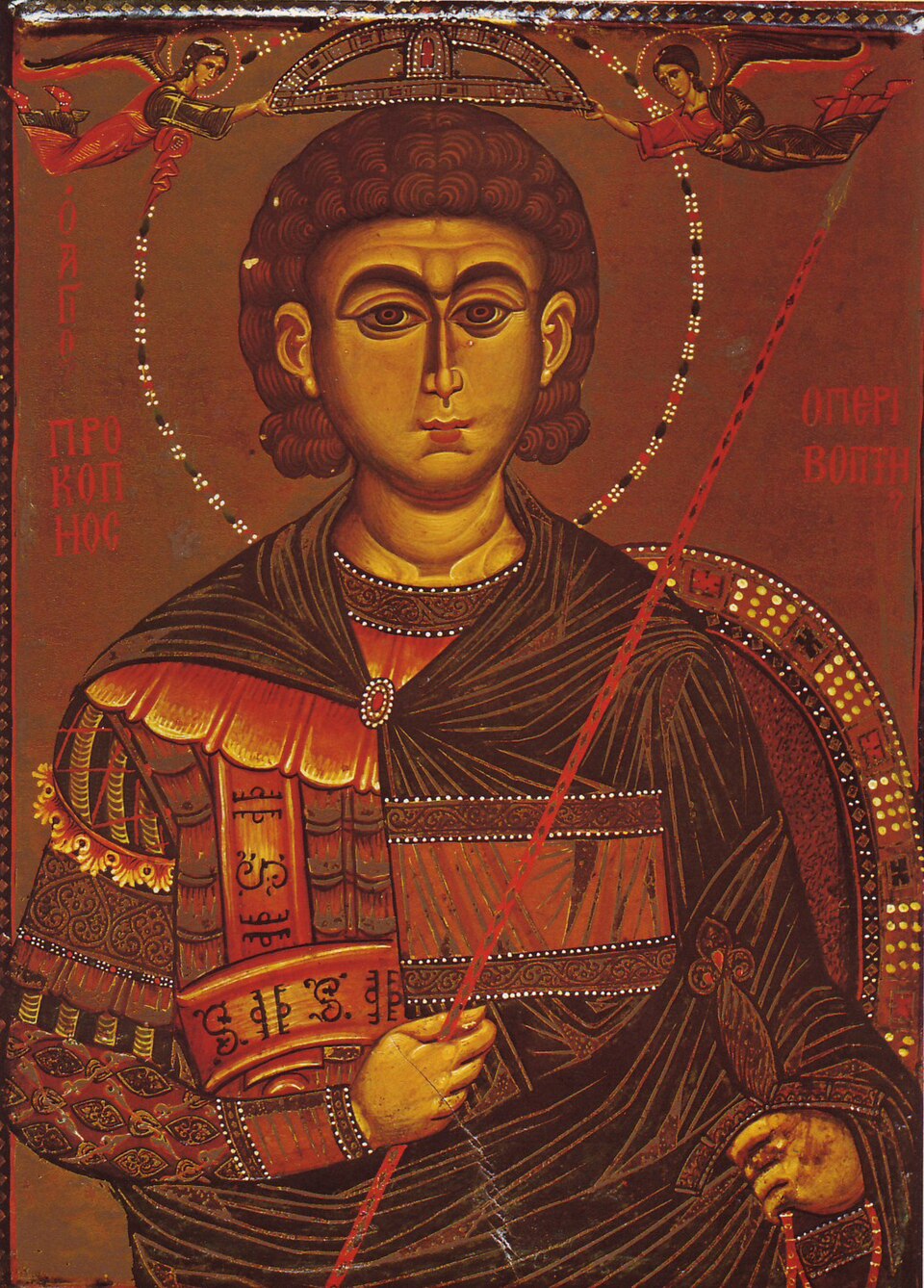
St. Procopius of Scythopolis

St. Procopius of…

July 8 · Martyr
D

St. Disibod

July 8 · Bishop, Confessor
← All 1970 saints in the library
Sources & notes

Feast-day sources

Story sources

Sources

Credits

Image: San Kilian.jpg · Lutz.marten at English Wikipedia · CC BY-SA 3.0, via Wikimedia Commons

Image: Lutz.marten at English Wikipedia, Wikimedia Commons (CC BY-SA 3.0)

From “Catholic Encyclopedia (1913)/St. Kilian,” The Catholic Encyclopedia (New York: Robert Appleton Company, 1907–1914), via Wikisource. Public domain. Matched by name and feast date; text unedited except for our bracketed notes in grey.

Retold in plain modern English from Baring-Gould’s public-domain text, sentence by sentence, keeping the same facts and order. Short explanations in parentheses are ours.

From Sabine Baring-Gould, The Lives of the Saints, new edition in 16 vols. (London: John C. Nimmo, 1897–98); text from the Internet Archive scan (OCR, lightly cleaned; errors possible). Public domain in the United States. Reproduced unedited, except for short bracketed notes in grey that we added to explain names and terms (“S.” is the old abbreviation for Saint). Some history and judgments reflect 19th-century scholarship.

Notes

Story retold in our own words from the cited sources.