This Saint’s Story
After his father's death in 1477, his mother remarried, and John received his early education at a local collegiate church school. His academic promise led him to the University of Cambridge at a young age, where he excelled in his studies, earning degrees in arts and theology. He became a fellow at Michaelhouse and was later appointed as the university's chancellor, where he played a crucial role in promoting learning and establishing new colleges.
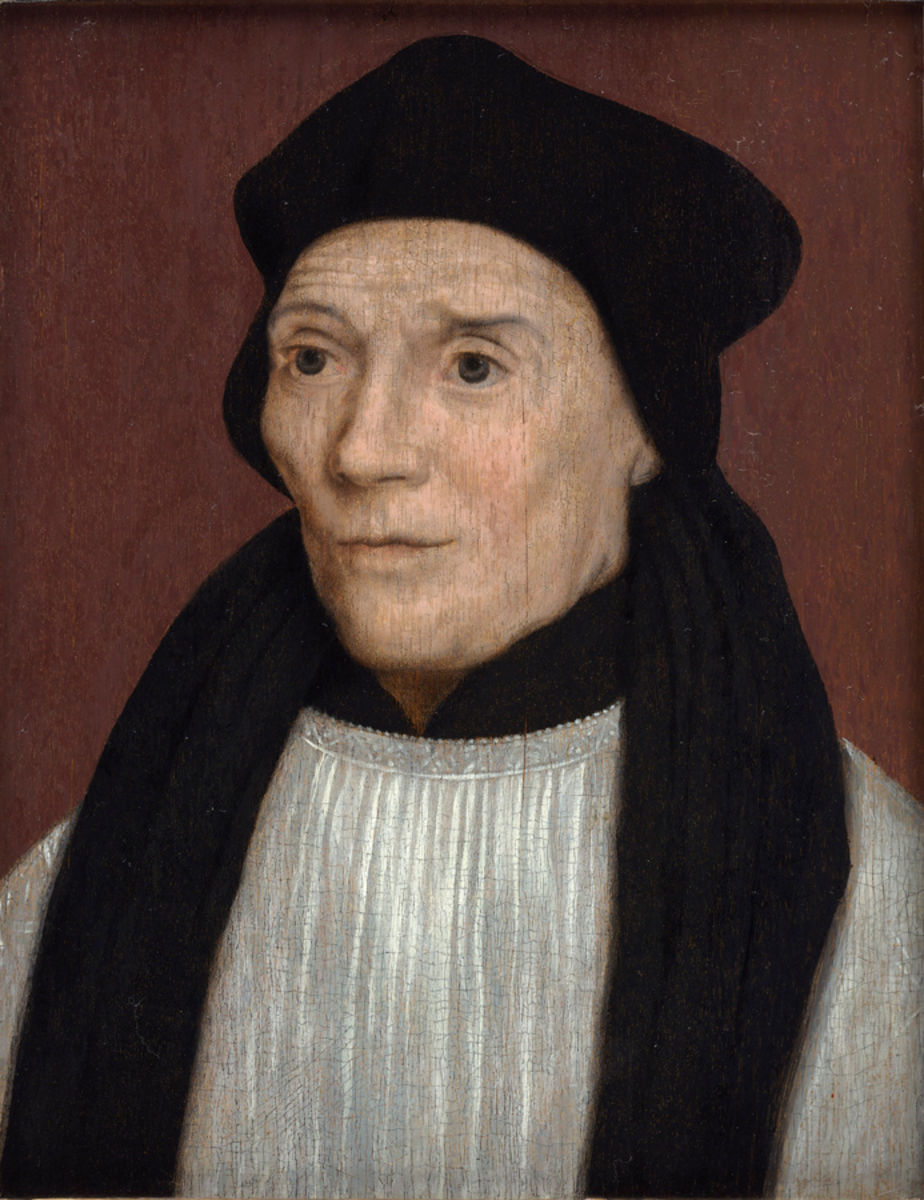
Fisher was appointed Bishop of Rochester in 1504, a position he held for over three decades. He was known for his dedication to education, helping to found St John's and Christ's Colleges at Cambridge. His commitment to the Church was evident in his pastoral work and his opposition to abuses within it. As a scholar, he engaged with contemporary theological debates, particularly against the rising influence of Lutheranism, and he authored several works defending Catholic doctrine.
His relationship with King Henry VIII soured when the king sought to end his marriage to Catherine of Aragon. Fisher, as her confessor, became a staunch defender of the queen and papal authority. He openly opposed the king's actions, famously stating that he would rather die than betray his faith. This defiance led to his arrest in 1534 after he refused to acknowledge Henry as the Supreme Head of the Church in England, a position established by the Act of Supremacy.
Imprisoned in the Tower of London, Fisher remained resolute in his beliefs despite the harsh conditions he faced. He was eventually tried for treason, found guilty, and executed by beheading on June 22, 1535. His final words reaffirmed his loyalty to the Catholic Church and his refusal to submit to the king's authority. Fisher's martyrdom, alongside that of Thomas More, highlighted the struggle for religious integrity during the English Reformation.
Fisher was beatified (declared 'Blessed', the step before sainthood) by Pope Leo XIII on December 29, 1886, and canonized (officially declared a saint by the pope) by Pope Pius XI on May 19, 1935, as a testament to his unwavering faith and sacrifice for the Church.