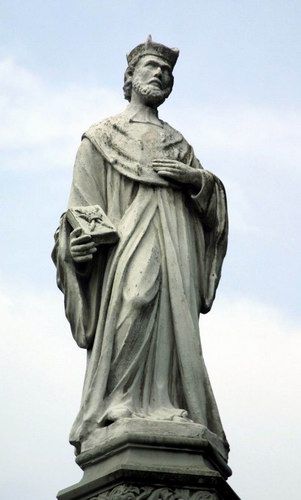
He made the pilgrimage to Rome four times, each time on foot, carrying his bundle on his back. On one occasion, he was robbed of everything except for some pieces of gold he had sewn into a fold of his dress. The robbers, before letting him go, asked him if he had given up all his money, and he answered that he had. However, his conscience troubled him after they released him, and he ran back to them to surrender the coins he had hidden. This act of honesty so surprised the bandits that they returned his money and bundle.
One winter's day during Mass, a poor little swallow fluttered around him at the altar, twittering in his ear and greatly distracting him. As soon as he took off his chasuble, he went after the bird and caught it in his hand as it was trying to fly out. He would have broken its neck had not the people begged him to spare the tiny creature. “At your request,” said John, “I will let the little devil go, for a devil it is, and not a swallow.” And he let it fly away. He led a miserable life in his parish; the parishioners did not like him, bothered him, mocked him, and followed him in his walks with curses. He had one word that he always repeated to himself when troubled by any of these annoyances: “Above.” He meant that the Saviour’s sufferings were greater than any he was called to endure, and that the martyrs had gone through worse tribulations.
He died in Cracow and was buried in the church of Saint Anne. Authors disagree about the date of his death. His purple doctor's mantle was long used at the university to dress every new candidate for the degree.
October 1: Saint Asterius, martyr at Ostia; A.D. 303. Saints Dasius, Zoticus, and Caius, martyrs at Nicomedia; A.D. 303. Saint Hilarion, hermit in Palestine; A.D. 371. Saint Malchus, martyr at Maronia, near Antioch, in Syria; end of the 4th century.
Saint Ursula and Eleven Thousand Virgins, martyrs at Cologne; Saint Cilinia, mother of Saint Remigius, at Loon; after A.D. 458. Saint Cilinia, virgin at Meaux, in France; before A.D. 530. Saint Fintan Munnu, abbot of Taghmon, in Ireland; A.D. 635. Saint Wendelin, hermit near Trivet; 7th century.
Saint Gregory, John, Julian, and others, martyrs at Jerusalem; Saint Maurontius, bishop of Marseilles; around A.D. 786. Saint Unni, archbishop of Hamburg; A.D. 936.
Saint Gebizo, martyr at Monte Cassino, in Italy; around A.D. 208. Saint Berthold, confessor at Parma; 13th century.
Footnotes
- Saint Asterius, martyr at Ostia; A.D. 303.
- Saints Dasius, Zoticus, and Caius, martyrs at Nicomedia; A.D. 303.
- Saint Hilarion, hermit in Palestine; A.D. 371.
- Saint Malchus, martyr at Maronia, near Antioch, in Syria; end of the 4th century.
- Saint Ursula and Eleven Thousand Virgins, martyrs at Cologne; Saint Cilinia, mother of Saint Remigius, at Loon; after A.D. 458.
- Saint Cilinia, virgin at Meaux, in France; before A.D. 530.
- Saint Fintan Munnu, abbot of Taghmon, in Ireland; A.D. 635.
- Saint Wendelin, hermit near Trivet; 7th century.
- Saint Gregory, John, Julian, and others, martyrs at Jerusalem; Saint Maurontius, bishop of Marseilles; around A.D. 786.
- Saint Unni, archbishop of Hamburg; A.D. 936.
- Saint Gebizo, martyr at Monte Cassino, in Italy; around A.D. 208.
- Saint Berthold, confessor at Parma; 13th century.
Baring-Gould’s own footnotes, in modern English.
Read the original 1870s text
Baring-Gould’s sources: Roman Martyrology. Canonized by Clement XIII. in 1757. Authorities:— A Life by Adam Opatoff, in Polish, 1632; in Latin, 1628. Another Life by Peter Skarga, who died 1612.] S. John Cantius was born, in 1397, at Kenty, in Silesia, on the Soln, within view of the picturesque, needle-like peaks of the granite Jablunka mountains. He was born of parents of honourable degree, who brought up their son in the exercises of religion. He was educated in Cracow, and became in course of time one of the professors in that university. He was afterwards ordained, and given the cure of Ilkutsi; but did not retain it long, having a distaste for pastoral work in an obscure village. He gave up his charge, and returned to the university, to prosecute his higher mission as an instructor of youth. During his pastoral charge of the parish he exhibited great charity to the poor, divesting himself of his shoes, and even of his cassock, to supply their necessities.
He made four times the pilgrimage to Rome, each time on foot, carrying his bundle on his back. On one occasion he was robbed of everything, save some pieces of gold he had sewn up in a fold of his dress. The robbers, before dismissing him, asked him if he had given up all his money, and he answered that he had; but his conscience smote him when they had released him, and he ran back to them, to surrender the coins he had concealed. This act of truthfulness so astonished the bandits, that they returned him his money and bundle.
One winter's day at mass, a poor little swallow fluttered around him at the altar, twittering in his ear, and greatly distracting him. As soon as he had taken off his chasuble, he went after the bird, and caught it in his hand as it was attempting to fly out, and would have wrung its neck had not the people implored him to spare the tiny creature. “At your request,” said S. John, “ I will let the little devil go, for a devil it is, and no swallow.” And he let it fly away. He led a wretched life in his cure; the parishioners did not like him, worried him, turned his ways into ridicule, and pursued him in his walks with curses. He had one word which he always repeated to himself when afflicted by any of these annoyances, “ Above.” He meant thereby that the Saviour’s sufferings were above any that he was called on to endure, that the martyrs had gone through greater tribulations.
He died at Cracow, and was buried in the church of S. Anne. Authors differ as to the date of his death. His purple doctor’s mantle was long used in the university, wherewith to vest every new candidate for the degree.
October ax. S. Asterius, P.M. at Ostia; a.d. aaa. SS. Dasius, Zoticus, and Caius, MM. at Nicomedia; A.D. 303. S. Hilarion, H. in Palestsn e; a.d. 371. S. Malchus, Mk. at Maronia, near Antioch, in Syria; end of 4th cent.
SS. Ursula and Eleven Thousand Virgins, MM. at Cologne; S. Cilinia, Mother of S. Remigius [bishop of Reims who baptized Clovis, king of the Franks], at Loon; after a.d. 458. S. Cilinia, V. at Meaux, in France; before a.d. 530. S. Fintan Munnu, Ab. 0/ Taghmon, tn Ireland: A.D. 635. S. Wbndrlin, H. near Trivet; 7th cent.
SS. Gregory, John, Julian, and Others, MM. at Jerusalem; S. Maurontius, B. of Marseilles; circ. a.d. 786. S. Unni, A bp. of Hamburg; a.d. 936.
S. Gebizo, Mk. at Monte Cassisto, in Italy; circ. a.d. zo8a S. Berthold, C. at Parma; \%th cent.