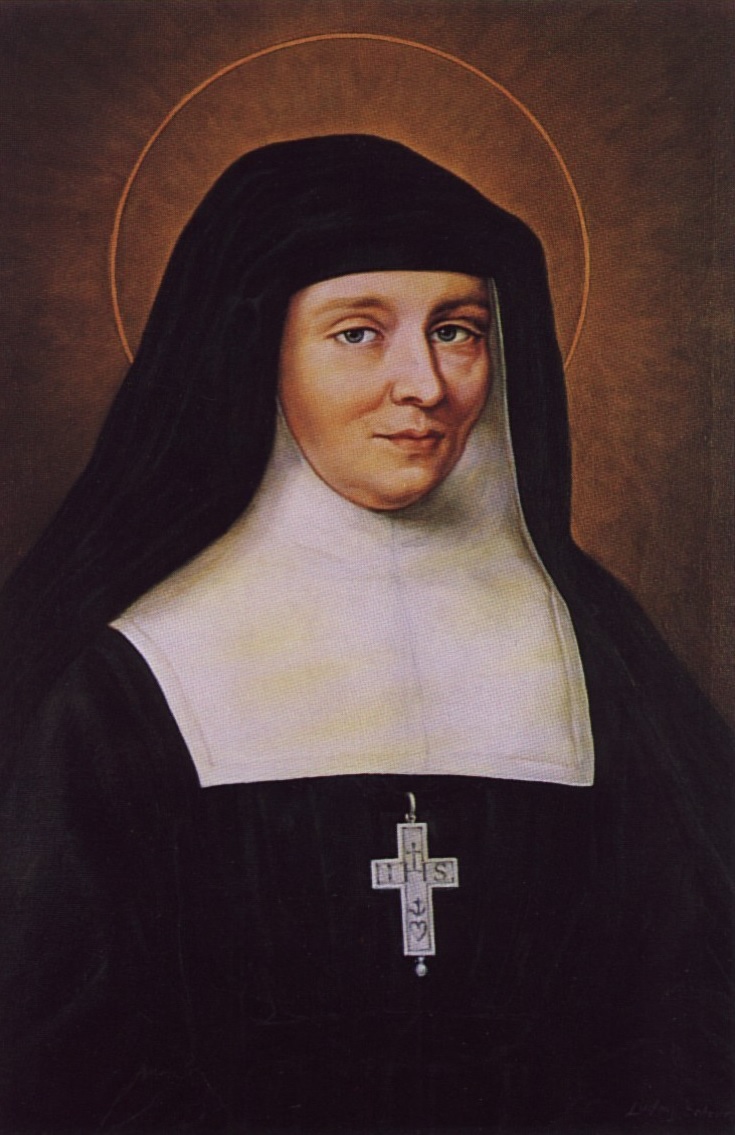
St. Jane Frances de Chantal

Jane Frances de Chantal is remembered for founding the Order of the Visitation, which welcomed women rejected by other religious communities. She was the daughter of Bénigne Frémyot, a prominent royalist leader, and Margaret de Berbisey.

Read the story →
August 12 · Nun, Founder

St. Jane Frances de Chantal

Feast

August 12
Secondary source · Wikipedia

Status

Saint
Canonized 16 July 1767 by Pope Clement XIII

Represents

Nun
Founder

Feast days

Feast: August 12

This Saint’s Story

Written for this site from Wikipedia and Catholic Encyclopedia (1913), New Advent and Franciscan Media, Saint of the Day

Jane Frances de Chantal, originally named Jeanne-Françoise Frémyot, was born on January 28, 1572, in Dijon, France. After losing her mother at a young age, Jane was raised by her father, who significantly influenced her education and character, shaping her into a refined and compassionate woman.

At the age of 20, Jane married Baron de Chantal and managed their estate while raising their six children, three of whom sadly died in infancy. Following her husband's accidental death in a hunting accident in 1601, Jane took a vow of chastity and dedicated herself to her children and her faith. She faced significant challenges, including pressure from her demanding father-in-law, but she remained steadfast and continued her charitable works.

In 1604, Jane attended a Lenten sermon by Francis de Sales, who would later guide her spiritually. Their relationship blossomed, and he encouraged her to pursue a life of faith and service, leading her to consider founding a religious community. In 1610, with his support, she established the Congregation of the Visitation of Holy Mary in Annecy. This order was unique in its acceptance of women who were older or in poor health, providing them with a chance to serve God without the strict cloistered life typical of other religious orders.

Despite facing opposition and personal trials, including the deaths of her son and daughter-in-law and the ravages of plague, Jane remained dedicated to her mission. She actively supported those affected by the plague and continued to expand her order, which grew from three members to 164 houses by the time of her death on December 13, 1641, at the Visitation Convent in Moulins.

Jane Frances de Chantal was beatified (declared 'Blessed', the step before sainthood) by Pope Benedict XIV on November 21, 1751, and canonized (officially declared a saint by the pope) by Pope Clement XIII on July 16, 1767. Her feast day is December 12.

What she represents

How she teaches us to live

Drawn from their life story

Embrace those in need. Jane welcomed women rejected by other orders, showing that compassion and inclusion are vital in faith.

Persevere through trials. Despite personal losses and challenges, Jane remained steadfast in her mission, inspiring others with her resilience.

Seek spiritual guidance. Jane's relationship with Francis de Sales highlights the importance of mentorship and spiritual direction in one's faith journey.

The full story

Baring-Gould’s account retold in modern English

Read the full story · 834 words · about 4 min

…in the chapel of her castle, but on Sundays and festivals, she went to the parish church, even though it was located some distance away, to set an example for the peasants. During a famine, she was very charitable, giving soup and bread to the poor at her gates. Some of the poor made a circuit of the castle and returned as beggars. She noticed this, but did not refuse them a second portion. “Have I not to beg and beg of my God repeatedly?” she said. Her husband was accidentally shot while out hunting, leaving her a widow at the age of twenty-eight, with three children. They had had six children, but three had died.

She went to live with her father-in-law, the old Baron de Chantal, at Monthelm. He was seventy-two years old, and not only was he ill-tempered, but he had brought into the castle a lady of questionable reputation, who had gained complete control over him and ruled the entire household. This woman treated the young widow with deliberate disrespect. In 1604, she met Saint Francis of Sales, and then began a long and tender friendship that lasted throughout the life of the saintly bishop of Geneva. This relationship led to a beautiful correspondence that continues to delight pious readers. She chose him as her spiritual director and made her vow of submission to him on September 2, 1604, at Notre Dame de l'Etang, a popular pilgrimage site in Burgundy. She attended Mass every morning and then focused on the education of her children. She made her own bed and cleaned her own room daily, and she did not use a lady's maid to help her dress her hair.

One day, Saint Francis asked her if she wanted to marry again. She replied that she had no such intention. “Then,” he said, looking at her elaborately styled hair, “down with the pilot signal.”

She took the hint, cut her hair shorter, and dressed it more modestly. She continued her charitable acts as much as her means allowed. One day, three tramps asked her for alms. Since she had no money in her house, she took off and gave them a valuable ring that had belonged to her husband. The moment her back was turned, the tramps, knowing the ring's value, ran away quickly, suspecting that the Baron de Chantal would send someone after them to reclaim his son’s ring. He apparently did, but the tramps had hidden themselves, so they could not be found. Miracle-seekers have concluded that they were the Three Persons of the Trinity visiting Jeanne, similar to how the three angels visited Abraham. However, there is very little doubt that the circumstances of the three strangers were simply as described.

Francis de Sales had planned an Order of ladies living together to actively engage in charitable works, without any very distinctive dress or formal commitment to asceticism, which would be modified in the next generation. He decided to call this Order the Visitation and persuaded Baroness de Chantal to become its first superior. The first congregation was formed in Annecy, under the direct supervision of Francis de Sales, and the sisters dedicated themselves to nursing the sick in their homes. The Society thrived, and it was decided to establish a second house in Lyons.

The king had granted letters patent for the foundation of a house of “Sisters of the Presentation” in Lyons, and since this foundation had failed, the archbishop decided to use these letters to authorize the new Society. To do this, the words “of the Presentation” were carefully erased from the parchment containing the royal signature, and “of the Visitation” was substituted.

This substitution was, of course, fraudulent, though well-intentioned, and made the person who committed it liable to imprisonment in the Bastille if discovered. Therefore, it was decided to protect the individual who made the clever but dishonest alteration by claiming it was miraculous, and experts concluded that the handwriting was undeniably that of the Almighty. Madame de Chantal experienced the sorrow of learning about the death of her son, who was killed on the island of Rhd while opposing the landing of the English, and of her daughter, Madame de Thorens, who was married to the brother of Francis. Her father also passed away; however, perhaps her greatest loss was that of her dear friend and guide, Francis. She saw her Society established as an acknowledged Order, but unlike most Orders, it was not under one superior; instead, each house was subject to the bishop of the diocese in which it was located. This was the specific stipulation of Francis.

She became acquainted with Vincent de Paul, and the two saints recognized the great gifts each possessed. On December 8, 1641, she was struck by inflammation of the lungs while traveling from Paris, in Moulins, and died on December 13, at eight o'clock in the morning, at the age of seventy.

Her body rests in the church of the Visitation in Annecy.

Footnotes

  1. Saint Francis of Sales was a bishop known for his spiritual writings and guidance.
  2. Notre Dame de l'Etang is a site of pilgrimage in Burgundy, France.
  3. Rhd: an island in the English Channel.

Baring-Gould’s own footnotes, in modern English.

Read the original 1890s text

…the chapel of her castle, but on Sundays and festivals went to the parish church, though situated at some distance, in order to set an example to the peasants. In a famine she was very charitable, giving soup and bread to the poor at her gates. Some of the poor made the circuit of the castle and reappeared as beggars. She noticed this, but did not refuse them a second portion. “Have* I not to beg and beg of my God repeatedly ? ” she said. Her husband was accidentally shot whilst out hunting, and left her a widow, aged twenty-eight, with three children. They had had six, but three were dead.

She went to live with her father-in-law, the old Baron de Chantal, at Monthelm. He was seventy-two, and not only was he ill-tempered, but he had introduced into the castle a lady of doubtful reputation, who had gained complete sway over him, and ruled the entire household. This woman treated the young widow with studied discourtesy. In 1604 she met S. Francis of Sales, and then began that long and tender intimacy which lasted during the life of the saintly bishop of Geneva, and which was the means of drawing forth a beautiful correspondence which is an unfailing source of delight to pious readers. She chose him as her director, and made her vow of submission to him on September 2, 1604, at Notre Dame de l'Etang, a favourite place of Burgundian pilgrimage. She heard Mass every morning, then directed the education of her children. She made her own bed, and cleaned her own room daily, and dispensed with the assistance of a lady's maid for dressing her hair.

One day S. Francis asked her if she wanted to be married again. She answered that she had no such intention. “Then,” said he, looking at her piled-up hair, done elaborately according to the fashion of the day, “ down with the pilot signal.”

VOL. xv. She took the hint, cut her hair shorter, and dressed it more quietly. She continued her charities as far as her means permitted. One day three tramps asked alms of her. As she had no money in her house, she took off and gave them a valuable ring which had belonged to her husband. The moment her back was turned, the tramps, knowing the value of the ring, decamped as fast as they could, shrewdly suspecting that the Baron de Chantal, if he heard of what had been done, would send after them, and reclaim his son’s ring. This he apparently did, but the tramps had concealed themselves, so that they could not be discovered. Miracle-mongers have thereupon concluded that they were the Three Persons of the Trinity, visiting Jeanne as the three angels visited Abraham. There can, however, be very little question that the circumstances of the three strangers were simply as described.

S. Francis of Sales had planned an Order of ladies living together in the practice of active works of charity, without any very distinctive dress, or making profession of asceticism which would be modified in the next generation. This Order he resolved to call that of the Visitation, and he persuaded the Baroness de Chantal to become its first superior. The first congregation was formed at Annecy, under the direct supervision of S. Francis of Sales; and the sisters devoted themselves to nursing the sick in their cottages. The Society throve, and it was resolved to establish a second house at Lyons.

The king had granted letters patent for the foundation of a house of “ Sisters of the Presentation ” at Lyons, and as this foundation had proved a failure, the archbishop resolved to make use of these letters for the authorization of this new Society. For this purpose the words “ of the Presentation” were carefully erased from the parchment conDec. *3.] Jeanne Franpoise de Chantal. 1 79 taining the royal signature, and “ of the Visitation” was substituted.

The substitution was, of course, fraudulent, if well intentioned, and rendered the perpetrator of it, should he be discovered, liable to imprisonment in the Bastille. Consequently it was determined to screen the person who had committed the ingenious, but dishonest alteration, by announcing it to be miraculous, and experts decided that the handwriting was indisputably that of the Almighty. Madame de Chantal had the grief of learning the death of her son, killed on the island of Rhd in opposing the landing of the English, and of her daughter, Madame de Thorens, married to the brother of S. Francis. Her father also died; but perhaps her greatest loss was that of her dear friend and guide, S. Francis. She saw her Society erected into an acknowledged Order, not, however, like most Orders, under one superior, but with each house subject to the bishop of the diocese in which it was situated. This was the express stipulation of S. Francis.

She made the acquaintance of S. Vincent of Paul, and the two saints recognized the high gifts possessed by each other. On the 8th December, 1641, she was attacked by inflammation of the lungs, on her way from Paris, at Moulins, and died on December 13, at eight o'clock in the morning, at the age of seventy.

Her body reposes in the church of the Visitation at Annecy.
Help us add to this saint's story

Everything is read by a person before anything appears. Facts are checked against trusted sources first.

Facts are welcome; a source link helps (optional).With your permission we may share it on this page.

Nine days · Free

Pray the novena
with us.

One short email a day for nine days. The day's prayer, a line from St. Jane Frances de…'s story, and a nudge to keep going.

Also on August 12
A

Sts. Anicetus and Photius

August 12 · Martyr
St. Euplius

St. Euplius

August 12 · Deacon, Martyr
M

St. Muredach of Killala

August 12 · Bishop
← All 1970 saints in the library
Sources & notes

Feast-day sources

Story sources

Sources

Credits

Image: Sainte Jeanne-Françoise Frémyot de Chantal.jpg · Wikimedia Commons · Public domain, via Wikimedia Commons

Retold in plain modern English from Baring-Gould’s public-domain text, sentence by sentence, keeping the same facts and order. Short explanations in parentheses are ours. Some history and judgments reflect 19th-century scholarship; the feast date above is the current one.

From Sabine Baring-Gould, The Lives of the Saints, new edition in 16 vols. (London: John C. Nimmo, 1897–98); text from the Internet Archive scan (OCR, lightly cleaned; errors possible). Public domain in the United States. Reproduced unedited.