This saint was born in Maizières, on the river Oise, in the region once known as Upper Picardy. His parents were noble, and the virtue of his father Everard earned him the title of Benedictus, or the Blessed, after his death. From a young age, the child showed great joy in practicing religion, and his parents took him to a monastery in Laon, where he received the clerical tonsure (a haircut that signifies entry into the clergy). He was educated and ordained as a priest in the monastery and remained there until his parents died, which required him to leave in order to manage his considerable inheritance. He departed from the city of Laon with the blessing of the bishop and the approval of his superiors, returning to Maizières, where he lived in great seclusion.
After some time, he welcomed S. Amandus, who had just stepped down from his role as bishop of Maestricht, and was traveling to Rome with S. Nicasius, a monk from Elno. He accompanied them to Italy. One night, while they were camping during their journey, a bear attacked their pack horse and killed it. The next morning, when Humbert went to find the horse to load it with their baggage, he discovered it lying dead on the grass, with the bear tearing at it. Humbert immediately commanded the wild animal to come to him, and when it obeyed, he placed the pack-saddle and the baggage on it, making the bear carry their supplies until they reached the gates of Rome. He then dismissed the bear, which left, occasionally looking back as if expecting to be called back.
He later made a second pilgrimage to Rome, and on his way back, he visited S. Amandus at his monastery in Elno, located on the Scarpe River. After discussing a suitable place for a retreat with S. Amandus, he withdrew to the monastery of Marolles, or Maroilles, in Hainault, by the small river Hespres, which flows into the Sambre River. This monastery had been built shortly before by Count Rodobert, or Chonebert, in his territory of Famart. Humbert decided to spend the rest of his life there and donated all his lands at Maizières to the new monastery in 671. At that time, it was a small, poor cell hidden in a forest, but this donation made it quite wealthy. A story is told about Humbert at Marolles that resembles many found in the lives of other saints, illustrating that the old hermits and monks were protectors of wild animals.
One day, while Humbert was busy clearing the brambles and thistles that covered the land he wanted to reclaim, he took off his cloak because of the heat. The horns of the hunters announced that a large group was engaged in a hunt near the monastery. Shortly after, he saw a frightened animal being chased by dogs. The animal darted across the open ground and collapsed, panting and exhausted, on his cloak. The dogs surrounded the cloak, barking, but did not dare to attack the wild creature, and the hunters' arrows fell short of their target. Observing this remarkable intervention on behalf of the poor animal, the hunters withdrew, praising the virtue of the holy man who could protect a beast from harm with his mantle.
Humbert rarely left his monastery, except to meet S. Aldegunda, the abbess of Maubeuge, with whom he had formed a close bond of charity and prayer. He is sometimes referred to as the abbot or superior of Marolles; in any case, he had disciples who were with him when he died around the year 680, on March 25th.
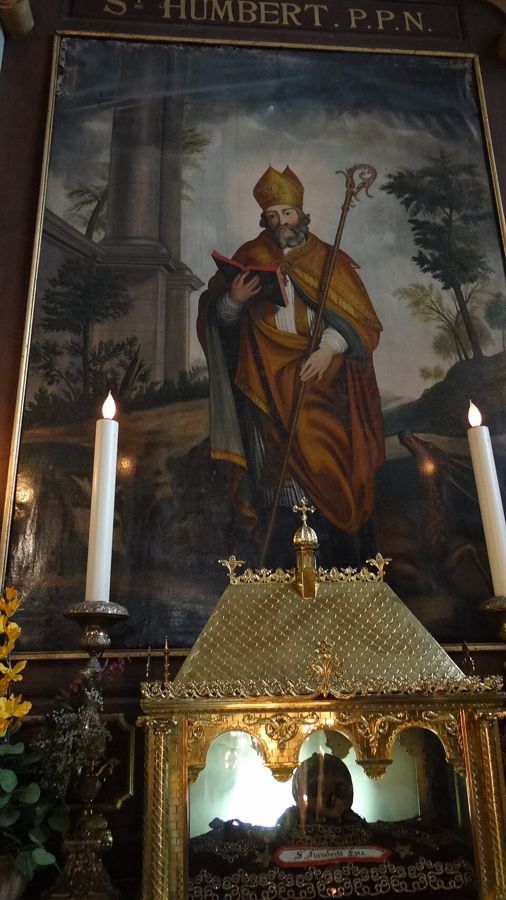
In art, he is depicted with a bear by his side and a cross marked on his shaven head, which, according to the legend, was miraculously impressed.
Footnotes
- The clerical tonsure is a haircut that signifies entry into the clergy.
Baring-Gould’s own footnotes, in modern English.
Read the original 1870s text
Baring-Gould’s sources: Belgian, French, and German Martyrologies. Authority:—A life of S. Humbert by a monk of Marolles, in the 13th cent., based apparently on older documents.
This saint was born at Maizières, on the river Oise, in the province anciently called Upper Picardy; his parents were noble, and the virtue of his father Everard obtained for him, after his death, the title of Benedictus, or the Blessed. The child from infancy showed the utmost delight in the practice of religion, and his parents took him to a monastery in Laon, where he received the clerical tonsure [shaving part of the head as a sign of entering the clergy or monastic life]. He was educated and ordained priest in the monastery, and remained in it till the death of his parents, when he was obliged to leave it that he might take possession and dispose of his inheritance, which was considerable. He left the city of Laon with the blessing of the bishop, and the sanction of his superiors, and returned to Maizières, where he lived in great retirement. After a while he received S. Amandus, who had just laid aside his bishopric of Maestricht, and was on his way to Rome with S. Nicasius, monk of Elno. He accompanied them to Italy. One night as they were camping on their journey a bear attacked their sumpter horse, and killed it. When Humbert went in quest of the horse next morning to lay on it the baggage, he found it lying dead on the grass, and the bear mangling it. Humbert at once ordered the wild beast to come to him, and when it obeyed he laid on it the pack-saddle and the baggage, and made the bear carry for them all they needed till they reached the gates of Rome, when he dismissed Bruin, who retired, looking every now and then behind him, as if expecting a recall.
He afterwards made a second pilgrimage to Rome, and on his return from it, he went to visit S. Amandus in his monastery of Elno, on the Scarpe; and after having deliberated with him on a suitable place for a retreat, he retired into the monastery of Marolles, or Maroilles, in Hainault, on the little river Hespres, which flows into the Sambre. This house had been built shortly before by count Rodobert, or Chonebert, in his territory of Famart. Humbert having resolved to spend the rest of his days there, gave to the new monastery all his lands at Maizières, in 671. It was then a poor little cell lost in a forest, but this donation made it very wealthy. A story is told of Humbert at Marolles which resembles many recorded in the lives of other saints, and which shows that the old hermits and monks were the protectors of wild animals.
One day as Humbert was busy tearing up the brambles and thistles which covered the land which he was desirous of reclaiming, and had cast off his cloak on account of the heat, the horns of the hunters proclaimed that a large party was engaged in the chase near the monastery, and shortly after he saw a frightened beast which the dogs pursued dart over the open ground and fall panting and wearied out on his cloak. The dogs surrounded the mantle, yelping, but did not venture to fall on the wild creature, and the arrows of the hunters fell short of the mark. Seeing this remarkable interposition in behalf of the poor animal, the sportsmen withdrew, highly extolling the virtue of the holy man who by his mantle could protect a beast from injury.
Humbert seldom left his monastery, except to meet S. Aldegunda, abbess of Maubeuge, with whom he had contracted an intimate union of charity and prayers. He is sometimes called abbot or superior of Marolles; at all events he had disciples, in whose arms he died, about the year 680, on March 25th.
In art he is represented with a bear by his side, and a cross marked on his shaven crown, which, according to the legend, was miraculously impressed.