The Blessed Virgin Mary

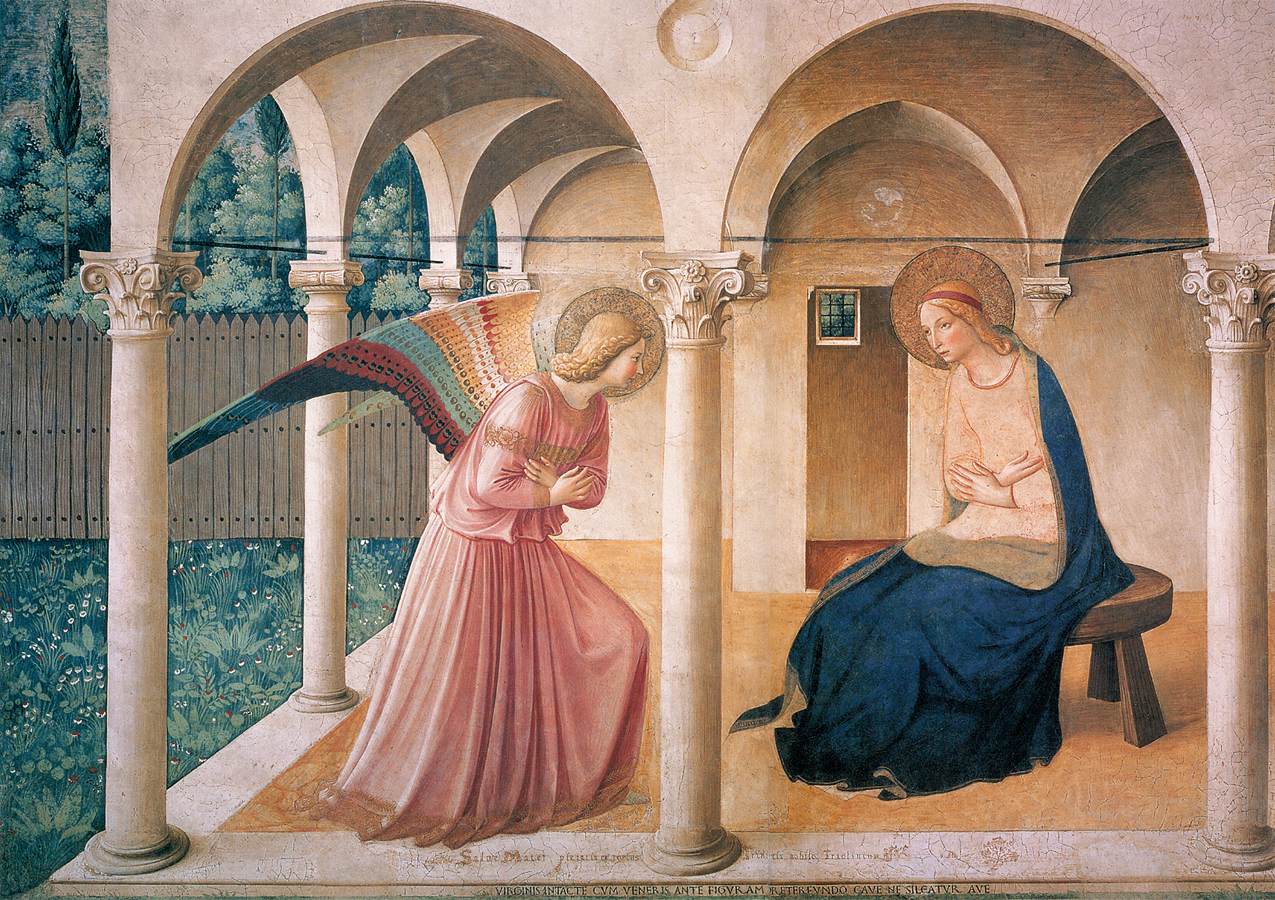
The Gospel tells that in the sixth month the angel Gabriel was sent from God to Nazareth in Galilee, to a virgin engaged to Joseph, of the house of David, and her name was Mary.

Read the essentials →
Feast March 25 · Feast

The Blessed Virgin Mary

Current feast

March 25
Verified · General Roman Calendar (Wikipedia list)

Traditional feast

March 25
1914 / pre-1969 calendar, per Baring-Gould (1897)

Represents

Feast

The Story

Adapted in modern English from Baring-Gould (1897) · original text below

The angel greeted her: "Hail, full of Grace, the Lord is with thee: Blessed art thou among women." Baring-Gould explains the traditional reading: the angel did not use her name but gave her a title, so that, as Solomon is called "the Wise" and Paul "the Apostle of the Gentiles," the Church calls her "Full of Grace" and "Blessed among women."

The feast is at least as old as the Council in Trullo (680) and is thought, from a sermon attributed to St. Cyril, to have been kept in the 5th century. It was highly honoured in England; the Synod of Worcester in 1240 forbade servile work on it, later confirmed by councils except for farm labour. Because 25 March falls in Lent and sometimes in Holy Week, the tenth council of Toledo (656) moved it to 18 December, eight days before Christmas, but it has generally been kept on its proper day, and in the West it is moved to after Easter when it falls in Holy Week or on Easter Day. The church of Notre Dame du Puy is said to have the privilege of keeping it even on Good Friday, with great indulgences. The Council in Trullo allowed the full Mass in Lent only on Saturdays, Sundays and this feast.

Pope Urban II, at the council of Clermont in 1095, ordered church bells rung morning, noon and evening, with the faithful reciting the angel's greeting each time, to thank God for the Incarnation. This is the Angelus, and several later popes attached indulgences to it.

The Greeks keep the same day. The calendar of the Emperor Basil the Younger says that God, seeing humanity enslaved by Satan, willed to send His Son, and entrusted the secret, hidden even from the heavenly powers, to the archangel Gabriel, who was sent to a pure virgin in Nazareth. When Mary asked how this could be, he answered that the Holy Spirit would come upon her, and she replied, "Behold the handmaid of the Lord, be it unto me according to thy word." The Greek Menæa calls Gabriel the captain of the heavenly armies, and a hymn by St. Joseph the hymnographer has him greet Mary as "the living book of Christ, sealed with the Holy Ghost."

The feast was also kept by the ancient Arabic-speaking church of Egypt, whose martyrology calls it the first-fruits of salvation, and by the Copts, and it appears in Syriac, Chaldee and Russian calendars. The sacramentary of St. Gregory the Great gives a preface saying that what the angel announced, the Virgin believed, and God performed. In Milan's Ambrosian rite, where no saint's feast is kept in Lent, the Annunciation is celebrated on the last Sunday of Advent.

What this feast celebrates

How this feast teaches us to live

Drawn from themes in the original account

Celebrate this saint’s feast day. Remember this saint on March 25 with a short prayer, and ask for this saint’s help.

From the homilies

Preached on Scripture

John Henry Newman · Anglican preacher, later Catholic cardinal, 1801–1890
“The Reverence Due to the Virgin Mary” (Sermon 12)

What he’s saying: Today we honor the Annunciation of the Virgin Mary, when the Angel Gabriel announced to her that she would become the Mother of our Lord, and through this moment, all generations recognize her as blessed.

“Today we celebrate the Annunciation of the Virgin Mary; when the Angel Gabriel was sent to tell her that she was to be the Mother of our Lord, and when the Holy Ghost came upon her, and overshadowed her with the power of the Highest. In that great event was fulfilled her anticipation as expressed in the text. All generations have called her blessed .”

Text: “From henceforth all generations shall call me blessed.”

The full story

Baring-Gould’s account retold in modern English

Read the full story · 1,169 words · about 5 min

In the sixth month, the angel Gabriel was sent from God to a city in Galilee called Nazareth. He was sent to a virgin who was engaged to a man named Joseph, from the house of David, and the virgin's name was Mary. The angel went to her and said, "Hail, full of Grace, the Lord is with you: Blessed are you among women."

The angel, to show his respect and love, greeted the holy virgin with an "Ave," or Hail, and he did not use her proper name, Mary, but instead called her "Full of Grace." He did this so we could understand that just as Almighty God gave the Messiah names like "Wonderful, Counsellor, the mighty God, the everlasting Father, the Prince of Peace," He also gave the Virgin a new and glorious title. This title is to be honored in the Church, so that as we refer to Solomon as "the Wise" and St. Paul as "the Apostle of the Gentiles," we should also call the Blessed Virgin "Full of Grace" and "Blessed among women."

"The angel Gabriel was sent from God to a city in Galilee called Nazareth, to a virgin engaged to a man named Joseph, from the house of David; and the virgin's name was Mary."

March 25.

The festival of the Annunciation is at least as old as the Council in Trullo (A.D. 680) and is believed, based on a sermon attributed to St. Cyril, to have been celebrated in the 5th century. It has always been observed with great importance in England. The Synod of Worcester in A.D. 1240, through one of its canons, prohibited all servile work on this day, and this was later confirmed by various provincial and diocesan councils, except for agricultural labor.

The tenth council of Toledo in 656 ordered that this festival should be celebrated on December 18th, eight days before Christmas, because its proper day sometimes falls during Lent or Holy Week. However, it has been celebrated on its proper day, but in the Western Church, it is moved to after Easter whenever it occurs during Holy Week or on Easter Sunday.

It is said that in the church of Notre Dame du Puy en Velay, there is the privilege of overriding Good Friday when it falls on that day. On that day, there are great indulgences as a jubilee in that church. The Council of Constantinople, in "Trullo," which has already been mentioned, ordered that the Mass of the Pre-Sanctified should be said on all days in Lent except for the Sabbath, the Lord's Day, and the Feast of the Annunciation. Pope Urban II, in a council held at Clermont in 1095, ordered that the church bell should be rung every day, morning, noon, and evening. Each time it was rung, the faithful were to recite the Angelic Salutation. This is called the Angelus. The purpose of the Holy Father was to encourage the faithful to thank God for the benefit of the Incarnation. Popes John XXII, Calixtus III, Paul III, Alexander VII, and Clement X have recommended this practice and attached indulgences to it. These were confirmed by Benedict XIII.

The Greeks observe the same day as the Latins. In the Menologium of Emperor Basil the Younger, it is described as follows: "On the 25th day of March, the Annunciation of the most holy Mother of God. Our God, most loving and merciful to human salvation, who always cares for the sons of men, when He saw man, the work of His hands, brought under the bondage of Satan, willed to send His only begotten Son, Jesus Christ, our Lord, into the world, to rescue man from the power of the devil. But not wanting Satan, nor the celestial powers, to know about this, He entrusted this secret to one of the archangels, Gabriel the Glorious. And having arranged by His providence that a pure and immaculate Virgin should be born, worthy of such a high honor, Gabriel was sent to her in the city called Nazareth and said to her, 'Hail, Full of Grace, the Lord is with you!' But she asked, 'How shall these things be?' To whom he replied, 'The Holy Spirit will come upon you, and the power of the Most High will overshadow you.' And she said, 'Behold the handmaid of the Lord; let it be to me according to your word.' And having said this, she conceived, beyond nature, a son, the Word of God; and thereafter were fulfilled all the mysteries of the Word of God incarnate pertaining to our salvation."

In the Greek Menæa, it is said, "March 25th is the commemoration of the Annunciation of the most holy Mother of God, our Lady. On this day, the archangel Gabriel, the leader of the heavenly armies, was sent to the pure Mary, who was free from any sin, in the city of Nazareth. He was instructed in the eternal secret, unknown to angels, about the mystery of the divine incarnation of the Son of God. He came to declare to her the will of God the Father and the favor and effective help of the life-giving Spirit for the salvation of humanity. He said to her, 'Hail, Full of Grace, the Lord is with you.'"

March 25.

This is the beginning of a Greek hymn about the Annunciation, written by S. Joseph, the hymnographer: "When Gabriel, the great archangel, saw you, O pure one! the living book of Christ, sealed with the Holy Spirit, he cried to you, 'Rejoice, O house of joy! through whom the curse pronounced on our first parents is abolished.'"

The ancient Arabian-Egyptian church also celebrated this festival. In an Arabic martyrology, the entry for March 25th states, "The memorial of the Annunciation of the Mother of God and the Incarnation of the Son of God. This day marks the first-fruits of our salvation and the revelation of a mystery kept hidden from all ages. The Son of God came forth as the Son of the Virgin, and Gabriel announced the favor. And now we join him in exclaiming, 'Rejoice, O Full of Grace, the Lord is with you!'" The same festival is observed by the Copts and is found in the Syriac, Chaldean, and Russian calendars.

In the sacramentary of S. Gregory the Great, the proper preface for this day reads: "... through Christ our Lord, whom Gabriel, the archangel, announced was to be born for the salvation of humanity. The Virgin Mary, with the cooperation of the Holy Spirit, conceived; so that what was announced by angelic sublimity might be believed by virginal purity, and ineffable Deity might accomplish. And thus we hope, with Your assistance, to see His face without confusion, in the solemnity of whose Incarnation we now rejoice."

In the Church of Milan, according to the Ambrosian rite, "throughout the entire Lent, no festival of any saint is observed, and the office for the Annunciation of S. Mary is celebrated on the last Sunday in Advent."
Footnotes

  1. The Council in Trullo was a gathering of bishops in 680 to address church matters.
  2. St. Cyril refers to Cyril of Alexandria, an early Church Father known for his theological writings.
  3. The Council of Constantinople, in "Trullo," refers to a specific church council held in 692.
  4. The Menologium is a liturgical calendar of saints and feasts.
  5. The entry on March 25th in the Arabic martyrology.

Baring-Gould’s own footnotes, in modern English.

Read the original 1870s text

In the sixth month, the angel Gabriel was sent from God unto a city of Galilee, named Nazareth, to a virgin espoused to a man whose name was Joseph, of the house of David, and the virgin's name was Mary. And the angel came in unto her, and said, "Hail, full of Grace, the Lord is with thee: Blessed art thou among women."

The angel, to manifest his reverence and love, saluted the holy virgin with an "Ave," or Hail, and he named not her proper name, Mary, but gave her the title "Full of Grace." This he did that we might understand, that as Almighty God gave to the Messiah the names of "Wonderful, Counsellor, the mighty God, the everlasting Father, the Prince of Peace," so also He gave to the Virgin a new and most glorious name, which, for excellency, is to be attributed to her in the Church; so that as we call Solomon "the Wise," and S. Paul "the Apostle of the Gentiles," so we should call the Blessed Virgin the "Full of Grace," and the "Blessed among women."

"The angel Gabriel was sent from God unto a city of Galilee, named Nazareth, to a virgin espoused to a man whose name was Joseph, of the house of David; and the virgin's name was Mary."

March 25.

The festival of the Annunciation is at least as ancient as the Council in Trullo ( A.D. 680), and is supposed, on the authority of a sermon attributed to S. Cyril, to have been kept in the 5th century. It has always been very highly observed in England. The Synod of Worcester, A.D. 1240, by one of its canons, forbade all servile work upon it, and this was afterwards confirmed by various provincial and diocesan councils in all respects except agricultural labour.

The tenth council of Toledo, in 656, ordered that this festival should be solemnized on December 18th, eight days before Christmas, because of its proper day arriving in Lent [the forty days of fasting before Easter], and sometimes in Holy Week. Nevertheless, it has been observed on its proper day, but is transferred in the Western Church to after Easter, whenever it occurs in Holy Week or on Easter-day.

It is said that in the church of Notre Dame du Puy en Valey has the privilege of making it over-ride Good Friday, when it occurs on that day; and that on that day there are great indulgences as a jubilee in that church. The Council of Constantinople, in "Trullo," already mentioned, ordered that the mass of the pre-sanctified should be said on all days in Lent except the Sabbath, the Lord's day, and the Feast of the Annunciation. Pope Urban II., in a council held at Clermont, in 1095, ordered that every day the church bell should be rung, morning, noon, and evening, and that each time it was rung the faithful should recite the Angelic Salutation. This is called the Angelus. The object of the Holy Father was to stir up the faithful to thank God for the benefit of the Incarnation. Popes John XXII., Calixtus III., Paul III., Alexander VII., and Clement X., have recommended this practice and attached indulgences to it. These were confirmed by Benedict XIII.

The Greeks observe the same day as the Latins. In the Menologium of the emperor Basil the younger, it is thus described: "On the 25th day of March, the Annunciation of the most holy Mother of God. Our God, most loving and merciful to human salvation, who ever careth for the sons of men, when He beheld man, the work of His hands, brought under the bondage of Satan, willed to send His only begotten Son, Jesus Christ, our Lord, into the world, to pluck man out of the power of the devil. But willing not that Satan, nay, nor the celestial powers should know thereof, he committed this secret to one of the archangels, Gabriel the Glorious. And having made by His providence that a Virgin pure and immaculate should be born meet for so high an honour, to her was Gabriel sent, and he came to the city called Nazareth, and said to her, 'Hail, Full of Grace, the Lord is with thee!' But she asked, 'How shall these things be?' To whom he made reply, 'The Holy Ghost shall descend on thee, and the power of the Most High shall overshadow thee.' And she said, 'Behold the handmaid of the Lord, be it unto me according to thy word.' And having thus spoken, she conceived above nature a son, the Word of God; and thereafter were fulfilled all the mysteries of the Word of God incarnate pertaining to our salvation."

In the Greek Menæa also, it is said, "March 25th, the commemoration of the Annunciation of the most holy Mother of God, our Lady, when the arch-warrior, Gabriel, captain of the celestial armies, being instructed in the secret from eternity and unknown to angels, the mystery hidden of the divine incarnation of the Son of God, was sent to the most pure Mary, unstained with any spot of sin, in the city of Nazareth, that he might declare to her the will of God the Father, and the favour and efficacious help of the life-giving Spirit for the salvation of man. And he said to her, 'Hail, Full of Grace, the Lord is with thee.'"

March 25.

This is the exordium of a Greek hymn on the Annunciation, by S. Joseph, the hymnographer:—"When Gabriel, the great archangel, saw thee, O pure one! the living book of Christ, sealed with the Holy Ghost, he cried to thee, 'Rejoice, oh house of joy! through whom is abolished the malediction pronounced on our first parents.'"

The ancient Arabian-Egyptian church also observed this festival. In an Arabic martyrology, the entry on March 25th is as follows, "The memorial of the Annunciation of the Mother of God, and the Incarnation of the Son of God, this day the first-fruits of our salvation and the manifestation of a mystery kept hidden from all ages. The Son of God issued forth Son of the Virgin, and Gabriel announced the favour. And now we with him exclaim, 'Rejoice, O Full of Grace, the Lord is with thee!'" The same festival is observed by the Copts, and found in the Syriac and Chaldee, and Russian Kalendars.

In the sacramentary of S. Gregory the Great, the proper preface for this day runs thus: "... through Christ our Lord, whom Gabriel, the archangel, announced was to be born for man's salvation, the Virgin Mary, by the co-operation of the Holy Ghost, conceived; that what angelic sublimity announced, virginal purity might believe, and ineffable Deity might perform. And thus we hope, by Thy assistance, to behold His face without confusion, in the solemnity of whose Incarnation we now rejoice."

In the Church of Milan, according to the Ambrosian rite, "throughout the whole of Lent, no festival of any saint is observed, and the office for the Annunciation of S. Mary is celebrated on the last Sunday in Advent."

Feast days

Feast: March 25

Nine days · Free

Pray the novena
with us.

One short email a day for nine days. The day's prayer, a line from The Blessed Virgin Mary's story, and a nudge to keep going.

Also on March 25
M

Memorial of the…

March 25 · Feast
P

The Penitent Thief

March 25 · Feast
Q

St. Quirinus (March 25)

March 25 · Martyr
← All 1970 saints in the library
Sources & notes

Feast-day sources

Story sources

Sources

Credits

Image: Fra Angelico - The Annunciation - WGA00555.jpg · Fra Angelico · Public domain, via Wikimedia Commons

Image: Fra Angelico, Wikimedia Commons (Public domain)

Scripture: Luke i. 43; 1 Pet. iii. 7; 1 Tim. ii. 15; 2 Cor. v. 16
John Henry Newman, Parochial and Plain Sermons, vol. 2 (London: Rivington, 1835). Written in English; public domain. Published 1835 (before 1931): public domain in the U.S. Read the full text →

Retold in plain modern English from Baring-Gould’s public-domain text, sentence by sentence, keeping the same facts and order. Short explanations in parentheses are ours.

From Sabine Baring-Gould, The Lives of the Saints, new edition in 16 vols. (London: John C. Nimmo, 1897), digitized text from Project Gutenberg. Public domain in the United States. Reproduced unedited, except for short bracketed notes in grey that we added to explain names and terms (“S.” is the old abbreviation for Saint). Some history and judgments reflect 19th-century scholarship.