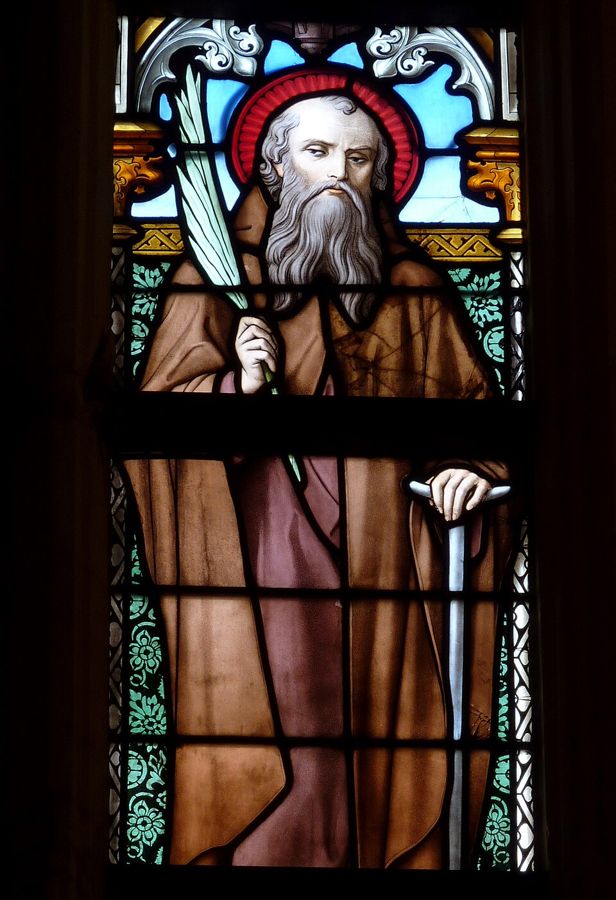
Sigebard, a pagan noble living in Tongern, which is in modern Belgium, was married to a Swabian woman named Lusegarde. For seven years, they had no children. A Christian priest named Cunibert, who lived nearby, promised them a son if they would allow him to raise the child in a Christian way after it was born. They happily agreed; however, when a son was finally born to them, they refused to give the little boy to the rough hermit-priest. When the child fell seriously ill, Sigebard became alarmed and reluctantly handed the boy over to the priest. The priest named the child Helier, but he was not baptized.
Helier grew up under Cunibert's guidance, learned the alphabet, and memorized some of the psalms. The lessons from the venerable man deeply influenced him, and they developed a mutual affection for each other. However, Sigebard was displeased to see his son living like a monk, eating only roots and drinking water, instead of learning to use a boar-spear and studying the psalter. In a crude pagan manner, he thought that the best way to sever the bond between the tutor and his pupil would be to kill the tutor. One night, while the old man was reciting his psalter, the deed was done. When Helier, alarmed by the noise, rushed into the church, he found his friend and tutor dead, with the old man's bloody finger resting on the last line he had sung, “When shall I come to appear before the presence of God?”
Horrified by this murder, Helier fled from home and went to the land of the Morini. Arriving in Therouanne, he spent several years in fasting and prayer. After that, he went to Saint Markulf, who advised him to settle in Jersey. He followed this advice and took up residence in a cave in the rock that rises in the middle of the bay that still bears his name and is now topped with a castle. He spent a few years there, sleeping on the bare rock. Eventually, some pirates landed on the island and discovered his hiding place due to the screaming of the sea-gulls around the cave's entrance. One of the pirates struck off his head.
A companion who had managed to hide himself, after the pirates sailed away, placed the body in a boat. He then entrusted himself to the winds and waves and was carried to Hexvarde, where the body was laid to rest at Stonenarlevse.
Footnotes
- Saint Markulf: a Christian saint and advisor.
Baring-Gould’s own footnotes, in modern English.
Read the original 1870s text
Baring-Gould’s sources: Venerated in Jersey, and in the dioceses of Coutances and Rennes. Saus s aye in his Gallican Martyrology. Authority: — The Acts of the Saint written after the gth cent.],.
Sigebard, a heathen noble living at Tongern, in the modern kingdom of Belgium, was married to a Swabian lady named Lusegarde, and for seven years they were childless. A Christian priest, living near, named Cunibert, then promised them a son, if they would give the child to him after it was born, to be by him educated in a Christian life. They gladly consented; but when in due course a son was born to them, they refused to surrender the little boy to the rough hermit-priest. A sickness which threatened the child’s life alarmed Sigebard, and he reluctantly gave the little boy into the arms of the priest. The child was named by him Helier, but was not baptized.
Helier grew up under the tuition of Cunibert, learnt the alphabet, and acquired some of the psalms by heart. The lessons of the venerable man sank deep into his soul; and a mutual love attached them to each other. But Sigebard was ill-pleased to see his son and heir living like a monk on roots and water, and instead of learning to use the boar-spear, acquire a knowledge of the psalter. And in rude pagan fashion, he thought that the best way to break the connexion between the tutor and his pupil would be to kill the former. The deed was done one night, whilst the old man was reciting his psalter, and when Helier, alarmed by the noise, rushed into the church, he found his friend and tutor dead, with his bloody finger resting on the last line he had sung, “ When shall I come to appear before the presence of God ?”
Helier, horrified at this murder, fled from home, and went to the land of the Morini, and coming to Therouanne, spent some years in fasting and prayer. After which he went to S. Markulf, who advised him to settle in Jersey. He accordingly went to that island, and took up his abode in a cave in the rock that rises in the midst of the bay which still bears his name, and is now crowned with a castle. There he spent a few years, sleeping on the bare rock. Some pirates landed in the island, and discovered his retreat by the screaming of the sea-gulls round the mouth of the cave. One of them smote off his head.
A companion, who had managed to secrete himself, when the pirates had sailed away, laid the body in a boat, and committing himself to the winds and waves, was carried to Hexvarde; and the body was laid at Stonenarlevse.