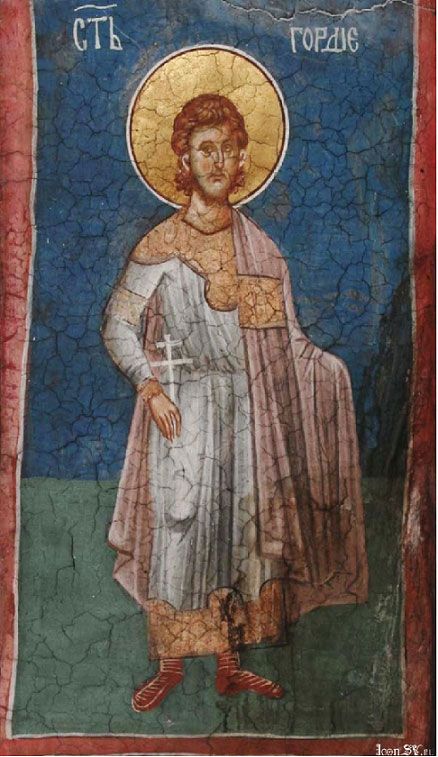
Saint Gordius was originally from Cæsarea, in Cappadocia, and served as a centurion in the army. When Galerius issued his edicts against the Church in the East in 303, Gordius gave up his position and withdrew into the desert. There, he lived a life of fasting and prayer among the wild animals. He spent many years in the desert, but his passion for Christ would not let him rest. The churches in Cæsarea had been destroyed, the clergy were scattered, and many Christians had conformed to avoid losing their lives. The city had become pagan once again, and the remaining faithful had lost their influence.
The spirit of the Lord stirred in Gordius's soul and urged him to return to his hometown, where so many had turned away from the faith, and to stand up for Christ. "One day when the amphitheater was crowded to watch horse and chariot races in honor of Mars, the god of war, when the benches were filled with Jews, Gentiles, and many Christians," says Saint Basil, "and all the slaves were free to attend the event, and the boys had been given a holiday from school for the same purpose, suddenly, in the racecourse, a man appeared in rags, with a long beard and tangled hair. His face and arms were burned from sun exposure and shriveled from long fasting; and he cried out, 'I am found by those who sought me not, and to those who did not ask for me, I have revealed myself openly.'"
Every eye turned to this wild-looking man, and when they realized who he was, a shout arose from both Gentiles and Christians. The Christians shouted with joy to see the faithful centurion among them again, while the Gentiles shouted in anger because they hated the truth and were upset by the disruption of the games.
"Then," continues Saint Basil, "the noise and chaos increased, filling the entire amphitheater; horses, chariots, and drivers were forgotten. The sound of the wheels rushing through the air was in vain; no one had eyes for anything but Gordius; no one had ears to hear anything but the words of Gordius. The roar of the theater, like a wind rushing through the air, drowned out the noise of the racing horses. When the crier had restored silence, and all the pipes, trumpets, and other musical instruments were quiet, Gordius was brought before the governor, who was present, and was asked politely who he was and where he came from. He then explained, in order, his country, his family, the rank he had held, and why he had abandoned his office and fled. 'I have returned,' he said, 'to show openly that I care nothing for your edicts, but that I place my hope and confidence in Jesus Christ alone.'"
The governor, being extremely angry at the disruption of the games and the open defiance shown to him by a deserter in front of the whole city, ordered him to be tortured immediately. "Then," Saint Basil continues to describe in his vivid style, "the entire crowd poured out of the theater toward the place of judgment, and all those who had stayed behind in the city rushed to see the spectacle. The city was deserted. Like a great river, the inhabitants flowed to the place of martyrdom; mothers, both noble and common, pushed their way there; houses were left unguarded, shops were abandoned by customers, and in the marketplace, goods lay scattered and neglected. Servants abandoned their work and ran off to see the event, and all the common people were there to witness this man. Maidens forgot their shyness and shame of appearing before men, and sick people and old men crawled outside the walls so that they, too, might share in the sight." The relatives of Gordius, in vain, urged him to yield and apologize for his defiance of the state religion; making the sign of the cross, he cheerfully endured the tortures of leaded scourges, the little horse, fire, and knife, and was finally beheaded.
Footnotes
- Saint Basil is a prominent early Christian bishop and theologian.
Baring-Gould’s own footnotes, in modern English.
Read the original 1870s text
Baring-Gould’s sources: Commemorated by the Roman Martyrology and the Greek Menæa on the same day. The account of his passion is given by S. Basil the Great in a panegyric at Cæsarea, on the anniversary of his martyrdom, which he says was then recent. This account, given on the scene of his suffering, within the memory of man, so that some of those who heard the discourse of S. Basil, had seen the conflict of the martyr, is unquestionably trustworthy.
Saint Gordius was a native of Cæsarea, in Cappadocia [a region of central Turkey], and was a centurion in the army. When Galerius [Diocletian’s co-emperor in the East and driving force of the Great Persecution] issued his edicts against the Church in the East (303,) Gordius laid aside his office, and retired into the desert, where he lived in fasting and prayer amongst the wild beasts. In the desert he spent many years, but his zeal for Christ gave him no rest. The churches in Cæsarea had been destroyed, the clergy scattered, and many Christians had conformed, rather than lose their lives. It was a heathen city once more, and such salt as had remained had lost its savour. The spirit of the Lord stirred in the soul of Gordius, and urged him to return to his native city, and there play the man for Christ, where so many had fallen away from the faith. "One day that the amphitheatre was crowded to see horse and chariot races in honour of Mars, the god of war, when the benches were thronged, and Jew and Gentile, and many a Christian also," says S. Basil, "was present at the spectacle, and all the slaves were free to see the sight, and the boys had been given holiday from school for the same purpose, suddenly, in the race-course, appeared a man in rags, with long beard and matted locks; his face and arms burned with exposure to the sun, and shrivelled with long fasting; and he cried aloud, "I am found of them who sought me not, and to them who asked not after me, have I manifested myself openly."
Every eye was directed upon this wild-looking man, and when it was discovered who he was, there rose a shout from Gentile and Christian; the latter cried because they rejoiced to see the faithful centurion in the midst of them again; the former, because they hated the truth, and were wrath at the disturbance of the sports.
"Then," continues S. Basil, "the clamour and tumult became more, and filled the whole amphitheatre; horses, chariots, and drivers were forgotten. In vain did the rush of wheels fill the air; none had eyes for anything but Gordius; none had ears to hear anything but the words of Gordius. The roar of the theatre, like a wind rushing through the air, drowned the noise of the racing horses. When the crier had made silence, and all the pipes and trumpets, and other musical instruments were hushed, Gordius was led before the seat of the governor, who was present, and was asked, blandly, who he was and whence he came. Then he related, in order, what was his country, and family, and the rank he had held, and why he had thrown up his office and fled away. 'I am returned,' said he, 'to shew openly that I care naught for your edicts, but that I place my hope and confidence in Jesus Christ alone.'" The governor, being exceedingly exasperated at the interruption in the sports, and the open defiance cast in his face by a deserter, before the whole city, ordered him at once to be tortured. "Then," S. Basil proceeds to relate in his graphic style, "the whole crowd poured from the theatre towards the place of judgment, and all those who had remained behind in the city ran to see the sight. The city was deserted. Like a great river, the inhabitants rolled to the place of martyrdom; mothers of families, noble and ignoble, pushed there; houses were left unprotected, shops were deserted by the customers, and in the market-place goods lay here and there neglected. Servants threw up their occupations, and ran off to see the spectacle, and all the rabble was there to see this man. Maidens forgot their bashfulness and shame of appearing before men, and sick people and old men crawled without the walls, that they, too, might share the sight." The relations of Gordius, in vain, urged him to yield and apologise for his defiance of the state religion; signing himself with the cross, he cheerfully underwent the torments of leaded scourges, of the little horse, fire, and knife, and was finally beheaded.