This Saint’s Story
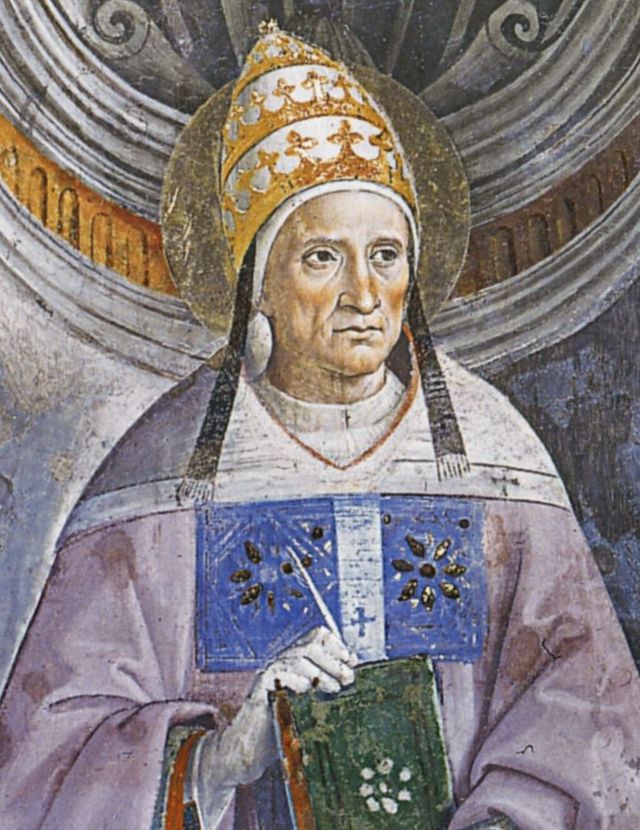
Anterus, also spelled Anteros, was bishop of Rome from 21 November 235 until his death on 3 January 236. He followed Pontian, who had been sent to the mines of Sardinia together with the rival bishop Hippolytus. The Catholic Encyclopedia says that only two facts are certain. He reigned about forty days, and he was buried in the papal crypt of the cemetery of St Callixtus, on the Appian Way. In 1854 Giovanni Battista de Rossi found the tomb, with broken pieces of the Greek epitaph cut on the narrow slab that closed it. Only the Greek word for bishop could still be read. The fragment shows how Greek the Roman Church still was, and it may be a clue to Anterus's own background.
The Book of the Popes says he was martyred because he had notaries gather the acts of the martyrs and store them in the Church's archives. The Encyclopedia calls that report old and respectable, and still too weakly supported to be sure, because that book was compiled late and is here the only voucher. Later notices add a birth at Petilia Policastro in Calabria, as son of Romulus, a name that may mark a former slave, and one bishop appointed for Fondi. Some think he was killed under Maximinus the Thracian. Others think he simply died in that persecution. His remains were moved to St Sylvester in the Campus Martius and found again on 17 November 1595, when Clement VIII rebuilt the church. A letter under his name is a False Decretal, not his.
This page keeps 3 January.
For today: If you only have a short time in a job, leave the record a little clearer than you found it, and do not pretend it is better than it is.