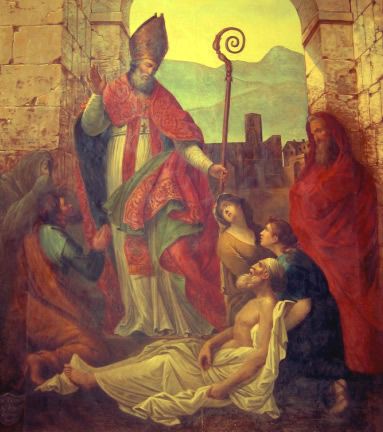
St. Fulcran

Fulcran, Bishop of Lodève, came of a distinguished family in southern France and from childhood gave himself to the Church. Fulcran was a native of Lodève, in the archdiocese of Narbonne in France, and was noticeably devout from childhood.

Read the essentials →
Feast February 13 · Bishop, Confessor

St. Fulcran

Current feast

February 13
Secondary source · Wikipedia infobox

Traditional feast

February 13
1914 / pre-1969 calendar, per Baring-Gould (1897)

Represents

Bishop
Confessor

Feast days

Feast: February 13

This Saint’s Story

Theodoric (Theoderich), Bishop of Lodève, educated and ordained him. When Theodoric died in 949, the city chose Fulcran despite his unwillingness; he was consecrated by the Archbishop of Narbonne—Baring-Gould names him Imerick—on 4 February of that year. The Catholic Encyclopedia, following the later biography by Bernard Guidonis, Bishop of Lodève (d. 1331), stresses his care for morals among clergy and religious, his rebuilding of churches and convents including the cathedral of St Genesius and the church of the Holy Redeemer with its Benedictine (monks following the Rule of St. Benedict) monastery, and his founding and endowment of hospitals for the poor and sick. Baring-Gould likewise marks his zeal, humility, and charity in time of famine.

Told that a neighbouring bishop had fallen from the Faith—the Encyclopedia says into Jewish teachings; Baring-Gould says into heresy—Fulcran exclaimed in unguarded zeal that the man deserved to be burned. Soon afterwards that prelate was seized by his flock and burned alive. Fulcran was filled with remorse, fearing his rash words had encouraged the crime. After severe penance he went to Rome for absolution. Baring-Gould relates that he entered the city, tore the clothes from his back, and had companions beat him with thorn branches as far as St Peter's, where he confessed in tears; when remorse returned he made the pilgrimage a second and a third time.

When his end drew near he said so, and crowds came to Lodève for his last blessing. Though burning with fever, he said Mass in the cathedral before them all, prayed for his flock in tears, blessed the tomb he had prepared, and died peacefully on 13 February 1006. Buried in the cathedral and honoured as a saint, his body, long preserved intact, was burned by the Huguenots in 1572; only a few particles were saved. The Encyclopedia names him second patron of the Diocese of Lodève; his feast falls on 13 February.
Struggles & surrender

His struggles

  • A rash word and lasting remorse ·
    Hearing that a neighbouring bishop had fallen into heresy, Fulcran exclaimed without thinking, 'The man deserves to be burnt!' When he learned that the people had then burned the bishop alive, he feared his words had encouraged the crime. Unable to find peace of conscience, he went to Rome three times to do penance, the first time having himself beaten through the streets with thorn branches to St Peter's.

What he represents

How he teaches us to live

Drawn from themes in the original account

Give to people in need. The account records care for the poor.

Pray a little every day. Prayer is part of this story.

Choose humility over status. The account singles out humility.

The full story

Baring-Gould’s account retold in modern English

Read the full story · 283 words · about 1 min

The blessed Fulcran was from Lodeve, in the archdiocese of Narbonne, France, and showed strong piety from a young age. He was educated by Theodoric, the Bishop of Lodeve, who also ordained him. After Theodoric's death, the city chose Fulcran to be his successor, and he was consecrated at Narbonne by Archbishop Imerick on February 4, 949. His zeal and humility made him beloved by his congregation, as did his generous charity during times of famine.

When he learned about a neighboring bishop who had fallen into heresy, Fulcran, in a moment of anger, without thinking carefully, exclaimed, "The man deserves to be burnt!" Soon after, he heard that the people had burned the bishop alive. He was immediately filled with remorse, fearing that his rash and unkind words had been reported and had encouraged the people to commit this crime. Unable to find peace of mind, he went to Rome. Upon entering the city, he tore the clothes off his back and asked his companions to beat him through the streets with thorn branches until he reached the Church of Saint Peter, where he confessed with many tears.

After this, he returned to his diocese, but still feeling intense remorse, he visited Rome again, and for a third time, subjected himself to various penances. As his end approached, he informed his friends, and the news spread, causing many people to come to Lodeve to see him one last time and receive his final blessing. Although he was suffering from fever, he celebrated Mass in the Cathedral before everyone and, weeping, prayed for his flock. Then he blessed the tomb he had instructed to be prepared for himself and died peacefully shortly after.

Read the original 1870s text

Baring-Gould’s sources: Gallican Martyrology, Authority:—A Life by Bishop Bernard Guido, compiled from ancient notices and lives of this saint, published by Bollandus.

The blessed Fulcran was a native of Lodeve, in the archdiocese of Narbonne, in France; and from his childhood exhibited marked piety. He was educated by Theodoric, Bishop of Lodeve, who also ordained him. On the death of Theodoric, the city elected Fulcran to be his successor; and he was consecrated at Narbonne by Archbishop Imerick, on the 4th February, 949. His zeal and humility endeared him to his flock, as did also his abundant charity in time of famine. Having been told of a certain neighbouring bishop that had fallen into heresy, Fulcran, in a moment of indignation, without weighing his words, exclaimed, "The man deserves to be burnt!" Shortly after he heard that the people had burnt the bishop alive. He was at once filled with remorse, fearing lest his rash and uncharitable speech should have been reported, and encouraged the people to commit this crime. Unable to find rest of conscience, he went to Rome, and entering the city, tore the clothes off his back, and bade his companions beat him through the streets with thorn branches, till he reached the Church of S. Peter, where he made his confession with many tears. After this, he returned to his diocese, but again feeling agonies of remorse, revisited Rome, and again a third time, subjecting himself to various penances. When his end drew near, he announced it to his friends, and the rumour spreading, multitudes poured to Lodeve to see him for the last time, and receive his parting benediction. Though consumed with fever, he said Mass in the Cathedral before all, and weeping, prayed for his flock; then he blessed the tomb he had ordered to be prepared for himself, and died peacefully shortly after.

From the Catholic Encyclopedia

1913 · 318 words

Bishop of Lodève; d. 13 February, 1006. According to the biography which Bernard Guidonis, Bishop of Lodève (d. 1331), has left us his saintly predecessor, Fulcran came of a distinguished family, consecrated himself at an early age to the service of the Church, became a priest, and from his youth led a pure and holy life. When in 949 Theoderich, Bishop of Lodève, died, Fulcran, notwithstanding his unwillingness, was chosen as his successor and was consecrated by the Archbishop of Narbonne on 4 February of the same year. He was untiring in his efforts to conserve the moral life within his diocese, especially among the clergy and the religious orders; he rebuilt many churches and convents, among them the cathedral dedicated to St. Genesius and the church of the Holy Redeemer with the Benedictine [monks following the Rule of St. Benedict] monastery attached to it. The poor and the sick were the objects of his special care; for their support he founded hospitals and endowed others already existing. The following anecdote from his life is worthy of mention. A bishop of Gaul [roughly modern France and Belgium] had fallen away from the Faith and had accepted Jewish teachings. When the news reached Fulcran, he exclaimed in an excess of zeal: "This bishop should be burned!" Shortly afterwards the renegade prelate was actually seized by his incensed flock and delivered up to death by fire. Fulcran was then filled with remorse that by his utterance he should have been the cause of the apostate's death, and after doing severe penance, he made a pilgrimage to Rome, there to receive absolution for his supposed guilt. After his death he was buried in the cathedral of Lodève and honoured as a saint. His body, which had been preserved intact, was burned by the Huguenots in 1572, and only a few particles of his remains were saved. He is the second patron of the Diocese of Lodève, and his feast falls on 13th February.

Patron saint of

  • Diocese of Lodève Catholic Encyclopedia (1913)
    The Catholic Encyclopedia names him the diocese's second patron.

Help us add to this saint's story

Everything is read by a person before anything appears. Facts are checked against trusted sources first.

Facts are welcome; a source link helps (optional).With your permission we may share it on this page.

Nine days · Free

Pray the novena
with us.

One short email a day for nine days. The day's prayer, a line from St. Fulcran's story, and a nudge to keep going.

Also on February 13
F

Sts. Fusca and Maura

February 13 · Martyrs
St. Polyeuctus

St. Polyeuctus

February 13 · Martyr
C

St. Castor

February 13 · Priest, Confessor
← All 1970 saints in the library
Sources & notes

Feast-day sources

Story sources

Sources

Credits

Image: Miraclefulcran.jpg · François Matet · Public domain, via Wikimedia Commons

Image: François Matet, Wikimedia Commons (Public domain)

From “Catholic Encyclopedia (1913)/St. Fulcran,” The Catholic Encyclopedia (New York: Robert Appleton Company, 1907–1914), via Wikisource. Public domain. Matched by name and feast date; text unedited except for our bracketed notes in grey.

Retold in plain modern English from Baring-Gould’s public-domain text, sentence by sentence, keeping the same facts and order. Short explanations in parentheses are ours.

From Sabine Baring-Gould, The Lives of the Saints, new edition in 16 vols. (London: John C. Nimmo, 1897), digitized text from Project Gutenberg. Public domain in the United States. Reproduced unedited, except for short bracketed notes in grey that we added to explain names and terms (“S.” is the old abbreviation for Saint). Some history and judgments reflect 19th-century scholarship.

Notes

Story retold in our own words from the cited sources.