St. Polyeuctus

When Decius and Valerian were persecuting the Christians, there were two close friends, Polyeuctus and Nearchus.

Read the essentials →
Feast January 9 · Martyr

St. Polyeuctus

Current feast

January 9 (also listed: January 7)
Secondary source · Wikipedia infobox

Traditional feast

February 13
1914 / pre-1969 calendar, per Baring-Gould (1897)

Represents

Martyr

Feast days

Feast: January 9
Traditional: February 13

This Saint’s Story

Adapted in modern English from Baring-Gould (1897) · original text below

Nearchus was a Christian and Polyeuctus a heathen. An imperial edict promised favour to Christians who sacrificed and cruel punishment to those who refused. Nearchus was ready to die for Christ, but he grieved that his friend, whom he loved as a second self, would be left in danger of damnation. He told Polyeuctus their friendship must end the next day. Polyeuctus replied that only death could end it, and Nearchus answered, 'You speak the truth; we are about to be separated by death.'

Then Polyeuctus told him of a vision. Christ had taken off his dirty clothes and military harness, dressed him in a splendid silk robe fastened with a golden brooch, and set him on a winged horse. Nearchus was glad. He explained the vision and taught him the faith more fully, and Polyeuctus believed completely and began to long for martyrdom.

He declared himself a Christian openly and denounced idolatry. He was scourged until the torturers grew tired, coaxed with promises, and beaten harder when he mocked them. His wife came with their only son, weeping, holding out the child and pleading their marriage, his wealth and his friends. He could not be parted from Christ and instead urged her to leave her idols and believe.

Seeing him unshakeable, the governors sentenced him to death. He gave thanks and went to execution encouraging the faithful, and a number of unbelievers were converted. He told Nearchus that he would go first, as they had agreed, said farewell, and died a glorious death.

What he represents

How he teaches us to live

Drawn from themes in the original account

Stay faithful when it costs you. Holding firm under pressure is part of this story.

Celebrate this saint’s feast day. Remember him on January 9 with a short prayer, and ask for his help.

The full story

Baring-Gould’s account retold in modern English

Read the full story · 460 words · about 2 min

While the Christians, especially those in the East, were suffering persecution under the Emperors Decius and Valerian, there were two men who were very close friends, named Polyeuctus and Nearchus. Nearchus was a Christian, but Polyeuctus was a pagan. When Decius and Valerian could not be satisfied with the blood of the saints, they issued an edict stating that Christians who would sacrifice to the gods would be favored by the empire, while those who refused would face cruel punishment. Upon hearing this, Nearchus, who longed to be free and with Christ, lamented because his friend, whom he loved like a brother, would be left in danger of eternal damnation. Therefore, he went to his friend Polyeuctus and told him that their friendship must end the next day. When Polyeuctus replied that only death could separate them, Nearchus said, "You are right; we are about to be separated by death." He then showed him the imperial edict. Polyeuctus then told Nearchus how Christ had appeared to him in a vision, had removed his dirty clothing and military gear, and had dressed him in a beautiful silk robe, fastening it at his shoulder with a golden brooch, and had placed him on a winged horse. Hearing this, Nearchus was filled with joy, and after explaining the vision and teaching Polyeuctus more about the faith, his friend fully believed and began to desire martyrdom.

When Polyeuctus openly declared himself a Christian and condemned idolatry, he was put on trial by the persecutors and endured a long period of torture. After being scourged for a long time, the torturers grew weary and tried to persuade him with flattering words and promises to return to the worship of the gods. However, he remained steadfast in his confession of the Lord and mocked them, which only led to him being beaten more fiercely.

Then his wife and only son came to him, and she filled the place with her cries, holding out their son to him. She appealed to him with tears and sighs, trying to persuade him to abandon martyrdom by reminding him of his family, wealth, and friends. But he, inspired by God, could not be swayed from Christ by any temptations and instead urged his wife to abandon her idols and believe in Christ.

When the governors saw that the martyr's resolve could not be shaken, they sentenced him to death. Upon hearing this, the martyr gave thanks and praised God as he was led to the execution site, encouraging the faithful with his holy words, which led to the conversion of some unbelievers. Then, turning to the Blessed Nearchus, he told him that he should follow him as they had agreed, and after bidding him farewell, he died a glorious death.

Footnotes

  1. Blessed Nearchus refers to Nearchus, who was a Christian and friend of Polyeuctus.

Baring-Gould’s own footnotes, in modern English.

Read the original 1870s text

Baring-Gould’s sources: Commemorated by Greeks, Armenians, and Latins. The ancient Roman Martyrology, called that of S. Jerome, on Jan. 7th, as also the Armenians; another on Feb. 13th; another on Feb. 14th; by the Greeks on Jan. 9th. Usuardus, Ado, and the modern Roman Martyrology on Feb. 13th; some ancient ones on Jan. 10th. There are two editions of the Acts of S. Polyeuctus, one in Latin, the other in Greek, based on the original by Nearchus, who took his body to burial after his death. The following account is a literal translation of the later Acts.

Whilst the Christians, especially those in the East, were suffering persecution under the Emperors Decius [Roman emperor 249–251, who ordered everyone to sacrifice to the gods] and Valerian [Roman emperor 253–260, who persecuted bishops and clergy], there were two men very friendly, Polyeuctus and Nearchus by name. Now Nearchus was a Christian, but Polyeuctus was a heathen. But when Decius and Valerian could not be satiated with the blood of the saints, they issued an edict that those Christians who would sacrifice to the gods, should be favoured by the majesty of the empire, but that those who refused should be cruelly punished. Which things being heard, Nearchus, who desired to be dissolved, and to be with Christ, lamented because his comrade, whom he loved as a second self, would be left in peril of eternal damnation. Going therefore to his friend, Polyeuctus, he announced to him that on the morrow their friendship must come to an end. And when he answered that death alone could terminate this, Nearchus said, "You speak the truth, we are about to be separated by death." And he showed him the imperial edict. Then Polyeuctus narrated to Nearchus how Christ had appeared to him in vision, and had taken off his dirty vestment, together with his military harness, and had thrown over him a gorgeous silk robe, linking it at his shoulder with a golden brooch, and had mounted him on a winged horse. Hearing this, Nearchus was glad, and having expounded the vision, and instructed Polyeuctus more fully in the faith, his friend believed perfectly, and began to thirst for martyrdom.

Now when Polyeuctus declared himself openly to be a Christian, and rebuked idolatry, being tried by the persecutors, he was for a long time tortured. And when he had been a long while scourged with rods, the tormentors were weary, and endeavoured to persuade him with bland speeches and promises, to return to the worship of the gods. But he, remaining immoveable in the confession of the Lord, and deriding them, was more furiously beaten.

Then came his wife and only son, and she filled the place with her cries, and held out to him his son, alleging his marriage ties, with many tears and sighs, and laboured to call the saint from martyrdom, by the thoughts of his son, of his wealth, and of his friends. But he, divinely inspired, could not be separated from Christ by any temptations, but all the more exhorted his wife to desert her idols and believe in Christ.

Now when the governors saw that the constancy of the martyr was not to be shaken, they pronounced capital sentence against him. And when the martyr heard this, he gave thanks, and praising God, was led to the place of execution, confirming the faithful with his holy exhortations, so that not a few of the unbelievers were converted. Then, turning to the Blessed Nearchus, he announced to him that he should follow him according to mutual agreement; and bidding him farewell, died a glorious death.
Help us add to this saint's story

Everything is read by a person before anything appears. Facts are checked against trusted sources first.

Facts are welcome; a source link helps (optional).With your permission we may share it on this page.

Nine days · Free

Pray the novena
with us.

One short email a day for nine days. The day's prayer, a line from St. Polyeuctus's story, and a nudge to keep going.

Also on February 13
F

Sts. Fusca and Maura

February 13 · Martyrs
C

St. Castor

February 13 · Priest, Confessor
M

St. Martian

February 13 · Hermit
← All 1970 saints in the library
Sources & notes

Feast-day sources

Story sources

Sources

Credits

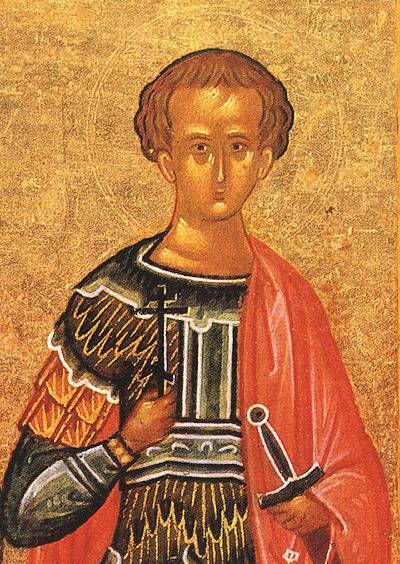
Image: Polyeuctus.jpg · Wikimedia Commons · Public domain, via Wikimedia Commons

Image: Wikimedia Commons, Wikimedia Commons (Public domain)

Retold in plain modern English from Baring-Gould’s public-domain text, sentence by sentence, keeping the same facts and order. Short explanations in parentheses are ours.

From Sabine Baring-Gould, The Lives of the Saints, new edition in 16 vols. (London: John C. Nimmo, 1897), digitized text from Project Gutenberg. Public domain in the United States. Reproduced unedited, except for short bracketed notes in grey that we added to explain names and terms (“S.” is the old abbreviation for Saint). Some history and judgments reflect 19th-century scholarship.