This Saint’s Story
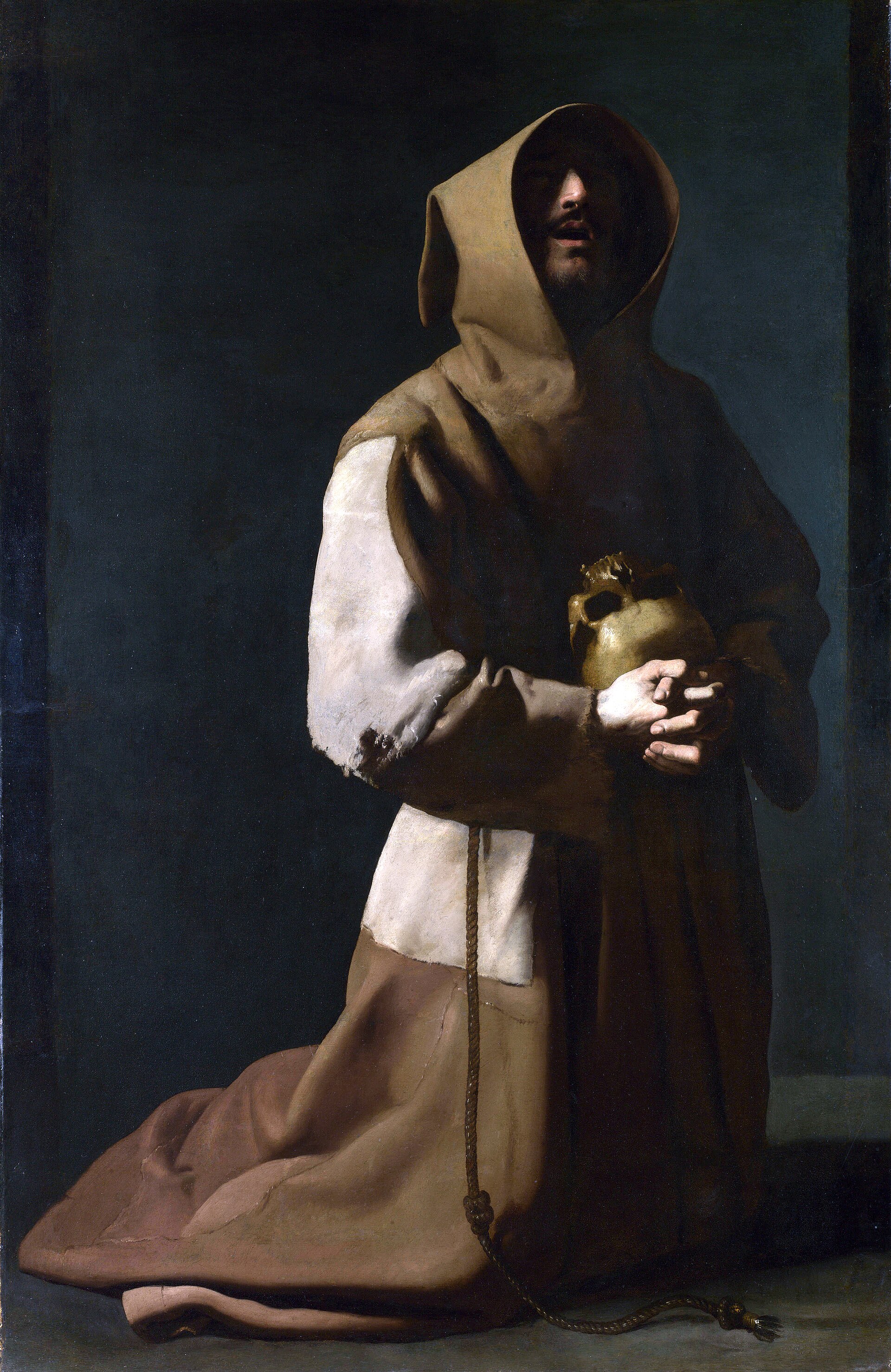
Giovanni di Pietro Bernardone, nicknamed Francesco, was born in Assisi at the end of 1181 or the start of 1182 to a rich cloth merchant. He spent a carefree youth and dreamed of knighthood. Around age 20 he was captured in a war with Perugia and spent about a year as a prisoner, then fell seriously ill. Afterward the old life no longer satisfied him. He met a leper on the road and, against his own disgust, dismounted and kissed him.
Praying in the crumbling chapel of San Damiano, probably in 1205, he heard the crucifix say: “Francis, go, rebuild my house, which as you see is falling into ruin.” He took it literally, sold his father's cloth to pay for repairs, and was brought before the bishop by his furious father. In front of the town he stripped off his clothes, handed them back, and said that from now on he would say only “Our Father who art in heaven.” In 1208, hearing the Gospel passage where Jesus sends the apostles out with nothing, he resolved to live in poverty and preach. Followers gathered; Pope Innocent III approved their simple rule in 1209 or 1210. Clare of Assisi soon followed him, the beginning of the Poor Clares.
He went to Egypt during the Fifth Crusade (1217–1221, a failed Christian campaign against Egypt) in 1219 and met Sultan al-Kamil peacefully; Benedict XVI held up that meeting as a model of dialogue. He set up a living Nativity scene at Greccio in 1223. In 1224 on Mount La Verna he received the stigmata, the wounds of Christ. Nearly blind and ill, he composed the Canticle of the Creatures, praising God for Brother Sun and Sister Moon.
He died on the evening of October 3, 1226, at the Portiuncula, lying on the bare ground, and Gregory IX canonized (officially declared a saint by the pope) him two years later.