This Saint’s Story
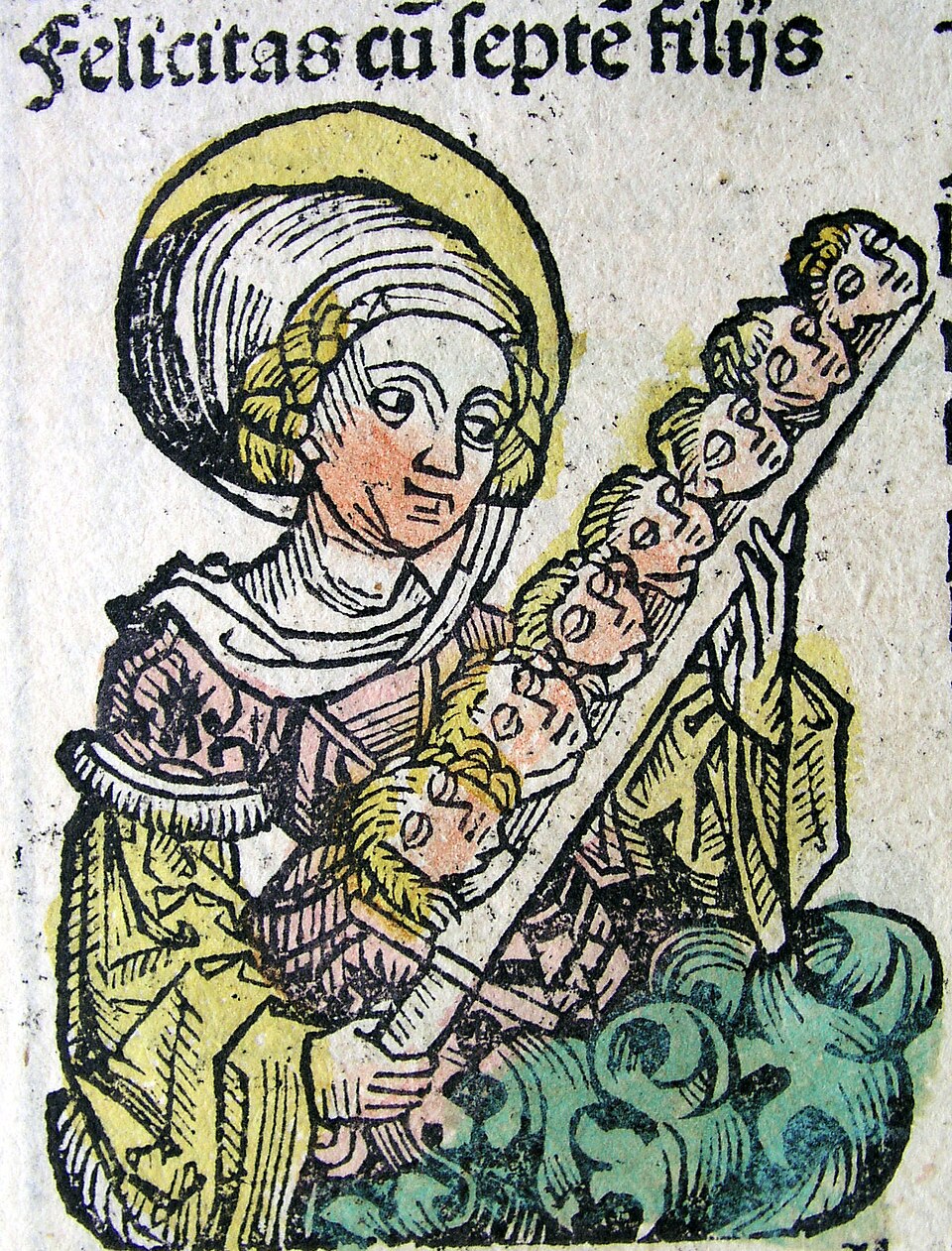
Felicitas of Rome, also known as Felicity, was born around 101 AD. She was a wealthy and devout Christian widow who dedicated her life to charitable works and the conversion of others to Christianity. Her piety and influence drew the ire of local pagan priests, who accused her of inciting discontent among the populace by promoting the Christian faith.
During the reign of Emperor Marcus Aurelius, Felicitas was summoned before the Prefect of Rome, Publius. Despite his threats and pleas, she remained resolute in her faith. Her steadfastness inspired her seven sons, who also refused to renounce Christianity, leading to their collective imprisonment and subsequent trials.
The sons were subjected to various tortures and executions, each condemned by different judges. Felicitas, determined to support her children, prayed that she would not die before witnessing their martyrdom. According to tradition, she watched each of her sons die and kept her faith through that grief. After their executions, she too was martyred, reportedly refusing to betray her beliefs even when given the chance to save herself.
Felicitas was laid to rest in a burial site known for its significance to early Christians, where her tomb became a place of veneration. Her feast day was noted in early Church records, celebrated on November 23. The early Church recognized her martyrdom, and her legacy continued to be honored throughout the centuries.
Although the details of her life and martyrdom are mixed with legend, the Church has honored Felicitas from early times. She is venerated as a saint, with her feast day celebrated in various Christian traditions.