St. Euthymius the Great

Paul and Dionysia of Melitene in Armenia were devout Christians who had no children.

Read the essentials →
Feast January 20 · Abbot

St. Euthymius the Great

Current feast

January 20
Secondary source · Wikipedia infobox

Traditional feast

January 20
1914 / pre-1969 calendar, per Baring-Gould (1914)

Represents

Abbot

Feast days

Feast: January 20

This Saint’s Story

Adapted in modern English from Baring-Gould (1914) · original text below

They spent many days praying in the church of the martyr Polyeuctus. In a dream, the account says, the martyr told them their prayer was heard and that the boy should be named Euthymius, 'the well-disposed'. Paul died soon after the birth. Dionysia, like Hannah with Samuel, gave the child to her brother Eudoxius, a priest serving the bishop, and she herself became a deaconess. Euthymius grew up to be ordained priest and was put in charge of all the monasteries of the diocese.

He loved solitude and spent whole nights praying on a mountain. At twenty-nine he slipped away to Jerusalem and then settled in a cell in the desert near the Laura of Pharan. There he formed a deep friendship with the monk Theoctistus, so close that 'each was, as it were, planted in the heart of the other.' After five years the two moved to a cave in a ravine in the barren hills near the Dead Sea, living on vegetables and water from the stream. Shepherds who looked in were frightened by two haggard, long-bearded men, but they spread the word, disciples came, and a monastery grew. Euthymius put Theoctistus in charge and withdrew further, coming out only on Saturdays and Sundays.

He healed Terebon, the paralysed son of the Arab chief Aspebetes. Aspebetes was baptized as Peter, many of his people followed, and he became bishop of the wandering tribes. He built Euthymius a laura on the road from Jerusalem to Jericho. Euthymius told his monks to keep their hands busy: if people in the world work to feed their families, 'how much rather we, who have the poor depending upon us.' He warned them, 'Do not suppose that you come into the desert to leave temptation behind you.' He told of a hot-tempered hermit who fled every human company, then smashed his water bowl in a rage when he kept spilling it. 'If I have not men to be angry with I rage against an earthen pot!' When a monk named Auxentius refused to look after the mules, Euthymius said sadly, 'Go thy way, and see if self-will will make thee happy.' Auxentius fell ill, repented and took on the mules.

Euthymius opposed the Nestorian and Eutychian heresies. On St. Simeon Stylites' advice, the Empress Eudocia put herself under his direction and gave up Eutychianism. When she offered to endow his laura, he answered that she need not, and that she should prepare for death. She died soon after. Among his last disciples was the young St. Sabas, whom he dearly loved. In January 473 he told visiting monks that he would leave them on the coming Saturday. He named Elias as his successor and died on Saturday, January 20, aged ninety-five, sixty-eight years of it spent in the desert.

What he represents

How he teaches us to live

Drawn from themes in the original account

Make time for silence. Time alone in prayer is part of this story.

Build up the community you belong to. Community life is part of this story.

Pray a little every day. Prayer is part of this story.

The full story

Baring-Gould’s account retold in modern English

Read the full story · 1,333 words · about 6 min

There was a man named Paul, and his wife Dionysia, living in Melitene in Armenia. They were good Christians who loved one another, but they were childless. Together, they decided to enter the church of the Martyr Polyeuctus and spent many days devoted to prayer, asking for a son.

After some time had passed, they had a vision one night in which the martyr appeared to them. He said, "Your prayer is heard, so now depart in peace; and when the child is born, let him be named Euthymius, which means 'Well disposed.'"

Shortly after the child's birth, Paul died. Dionysia, now a widow, took her baby and went to her brother Eudoxius, who was the chaplain or confessor to the Bishop of Melitene. She entrusted the little boy to him, just as Hannah had presented Samuel to Eli, so that he could serve before the Lord.

Later, Dionysia was ordained as a deaconess. In due time, Euthymius received the sacred orders of lector, then sub-deacon, and finally became a priest. He was appointed to oversee all the monasteries in the diocese.

Euthymius often visited the church of S. Polyeuctus. He loved solitude and would spend entire nights in prayer on a nearby mountain. His desire to be alone with God grew stronger, and at the age of twenty-nine, he secretly left his hometown and went to Jerusalem. There, he visited the holy places and then retreated into the desert near the Laura of Paran. He found a cell that was suitable for him and settled there.

Nearby, there was a monk named Theoctistus, whom Euthymius greatly loved because he was a good man filled with the Holy Spirit. His biographer notes, "The love of the same things and their shared labor united them closely in a bond of charity. Their spirits were so intertwined in affection that each was, in a sense, planted in the heart of the other."

After five years spent in Paran, Euthymius decided, along with his friend Theoctistus, to seek a more remote solitude. They traveled to the barren mountains near the Dead Sea. While searching for a place to live, they found a ravine where a torrent flowed, and there was a cave in the rock face. They entered the cave and settled there, living on vegetables and drinking from the brook.

One day, some shepherds passed by and climbed up to the cave. They were frightened when they saw two very haggard men with long beards. However, Euthymius reassured them, saying they were hermits living there because of their sins. The shepherds spread the news, and many disciples came to them. They built a monastery, and Euthymius appointed Theoctistus to lead it. Euthymius then withdrew to a remote hermitage, where he only came out on the Sabbath (Saturday) and Sunday. He instructed the monks to work diligently and never let their hands be idle. "For," he said, "if people in the world work to support themselves, their wives, families, and children, how much more should we, who have the poor depending on us?"

After curing Terebon, the son of Aspebetes, of paralysis that affected one side of his body, Aspebetes, the chief of the Arabs in Palestine, desired baptism and took the name Peter. So many Arabs followed his example that Juvenal, the patriarch of Jerusalem, ordained him as bishop of the wandering tribes. He participated in the council of Ephesus against Nestorius in 431.

In the year 420, he built a Laura (a type of monastic settlement) for S. Euthymius on the right side of the road from Jerusalem to Jericho. Euthymius could never be persuaded to leave his strict solitude, but he governed his monks through superiors to whom he gave instructions on Sundays.

"Do not think," he told his monks, "that you come into the desert to escape temptation." He then shared the following story with them. There was a man in Egypt who had a very violent temper. He ran away from home to a monastery, thinking he would be free from things that made him angry. However, he was often irritated by the other monks, who unintentionally annoyed him. He decided to completely escape from human society, thinking that he would not be tempted. So he took only an earthenware bowl to drink from and hid himself in a remote desert.

Now, one day, he was fetching water from the spring, and he accidentally tipped the bowl, causing the water to spill. Then he dipped the vessel again, but as he was walking, he tripped and spilled the water once more. He dipped it again, but his hand shook, and he overturned the basin a third time. In a fit of rage, he threw the bowl against a stone, shattering it into pieces. When his anger subsided, he looked at the broken bowl and said, "Oh, how foolish I am! How can I escape the temptation that is in my nature? If I have no one to be angry with, I rage against an earthen pot!"

There was a man in the Laura named Auxentius, whom the steward instructed to take care of the mules because "he was skilled at grooming mules." However, Auxentius indignantly refused, stating that he came to the monastery to be a monk, not a stable worker. When he continued to refuse, on the next Lord's Day, the steward complained to Euthymius, who called for Auxentius. Euthymius then said, "My son, it is necessary for someone among the brethren to attend to the stables. Why shouldn't you do this?"

"Because," Auxentius replied, "I don't like it."

"Alas," the abbot exclaimed, "I see you are not imitating Him who said, 'I came not to do my own will, I came not to be ministered to, but to minister.'"

When the monk still refused, Euthymius said sadly, "Well, go your way, and see if your self-will will make you happy."

Soon after, the man fell ill, and during his sickness, his conscience troubled him. He sent for the abbot and said, "I was wrong; I will take care of the mules."

Then Euthymius healed him, and Auxentius did as he was required to do.

Euthymius showed great zeal against the Nestorian and Eutychian heretics. The turbulent Empress Eudocia, after the death of her husband, Theodosius, retired to Palestine and continued to support them with her protection. Distressed by personal troubles, including the captivity of her daughter and granddaughters and the plunder of Rome, she sent to ask for advice from Simeon Stylites. He replied that her misfortunes were the result of her sins, particularly her persecution of the orthodox faith, and instructed her to follow the guidance of Euthymius. Following Euthymius's advice, she renounced Eutychianism and embraced the Catholic communion.

In 459, she informed Euthymius that she was coming to see him and that she intended to provide sufficient revenues for the support of his Laura (a monastic community). He replied that she did not need to do that and that she should prepare for death. She complied and died shortly afterward. One of the last disciples of our Saint was the young Sabas, whom he loved dearly.

On January 13, 473, Martyrius and Elias, two monks whom Euthymius had predicted would become patriarchs of Jerusalem, came with several others to visit him and to take him to his Lent retreat in a solitary place. He said that he would stay with them for the entire week and leave them on the following Saturday, meaning by death. Three days later, he ordered that a general vigil be observed on the eve of Saint Anthony's Day; during this, he gave a discourse to his spiritual children. He appointed Elias to be his successor and foretold that Domitian, a beloved disciple who had long served him, would follow him out of this world on the seventh day, which indeed happened. Euthymius died on Saturday, January 20, at the age of ninety-five, having spent sixty-eight of those years in his beloved deserts.

Footnotes

  1. The Laura of Paran is a monastic community in the desert.
  2. Juvenal was the patriarch of Jerusalem.
  3. The council of Ephesus addressed the teachings of Nestorius.
  4. A Laura is a type of monastic settlement.
  5. Euthymius: a Christian monk and abbot known for his wisdom and guidance.
  6. Euthymius showed great zeal against the Nestorian and Eutychian heretics.
  7. The turbulent Empress Eudocia, after the death of her husband, Theodosius, retired to Palestine and continued to support them with her protection.
  8. Distressed by personal troubles, including the captivity of her daughter and granddaughters and the plunder of Rome, she sent to ask for advice from Simeon Stylites.
  9. He replied that her misfortunes were the result of her sins, particularly her persecution of the orthodox faith, and instructed her to follow the guidance of Euthymius.
  10. Following Euthymius's advice, she renounced Eutychianism and embraced the Catholic communion.
  11. In 459, she informed Euthymius that she was coming to see him and that she intended to provide sufficient revenues for the support of his Laura.
  12. He replied that she did not need to do that and that she should prepare for death.
  13. She complied and died shortly afterward.
  14. One of the last disciples of our Saint was the young Sabas, whom he loved dearly.
  15. On January 13, 473, Martyrius and Elias, two monks whom Euthymius had predicted would become patriarchs of Jerusalem, came with several others to visit him and to take him to his Lent retreat in a solitary place.
  16. He said that he would stay with them for the entire week and leave them on the following Saturday, meaning by death.
  17. Three days later, he ordered that a general vigil be observed on the eve of Saint Anthony's Day; during this, he gave a discourse to his spiritual children.
  18. He appointed Elias to be his successor and foretold that Domitian, a beloved disciple who had long served him, would follow him out of this world on the seventh day, which indeed happened.
  19. Euthymius died on Saturday, January 20, at the age of ninety-five, having spent sixty-eight of those years in his beloved deserts.

Baring-Gould’s own footnotes, in modern English.

Read the original 1870s text

Baring-Gould’s sources: Greek and Latin, and Syriac Martyrologies. Authority, his life by Cyrillus, monk of his monastery, in 543, sixty years after the death of Euthymius; he derived much of his information from an old monk who had been the disciple of the Saint.

There was a man named Paul, with his wife Dionysia, at Melitene in Armenia, good Christians, loving one another, but childless. Then, with one consent, they entered into the church of the Martyr Polyeuctus, and abode there many days instant in prayer, that they might be given a son.

And after this had continued some time, in a vision of the night, the martyr appeared to them, and said, "Your prayer is heard, now therefore depart in peace; and when the child is born, let him be named Euthymius, or the 'Well disposed.'"

Now it fell out, that shortly after the child's birth, Paul died. Then Dionysia, the widow, took her babe, and went to her brother Eudoxius, the chaplain or confessor [in old usage, a saint who was not martyred, or who suffered for the faith without being killed] to the Bishop of Melitene, and gave the little boy to him, as Hannah presented Samuel to Eli, that he should minister before the Lord.

After that, Dionysia was ordained deaconess, and in due course Euthymius received the sacred orders of lector, and sub-deacon, and finally was made priest, and appointed to the oversight of all the monasteries in the diocese.

Euthymius often visited the church of S. Polyeuctus, and loving solitude, was wont to spend whole nights in prayer on a neighbouring mountain. But the love of being alone with God grew upon him, so that he could not rest, and at the age of twenty-nine, he secretly deserted his native place, and went to Jerusalem, where he visited the holy places; and then retired into the desert, near the Laura of Paran, [97] he found a cell in every way convenient, and there he abode. Now there was a monk near his cell, named Theoctistus, and him Euthymius loved greatly, for he was a good man, and full of the Holy Ghost. "The love of the same things," says his biographer; "and society in labour, united them so closely in the bond of charity, and to such an extent were their spirits blended in affection, that each was, as it were, planted in the heart of the other."

After five years spent in Paran, Euthymius resolved, with his friend Theoctistus, to fly into a solitude, more remote. So they went away into the barren mountains, near the Dead Sea; and there, searching for a place where they might dwell, they discovered a ravine, down which a torrent poured, and in the face of the rock was a cave. Then they entered into it and there they abode, living on vegetables, and drinking the water of the brook. Now it fell out, one day, that some shepherds came that way, and ascending to the cavern looked in, and were frightened when they saw two men, very haggard, with long beards. But Euthymius bade them be of good cheer, for they were hermits who dwelt there on account of their sins. Then the shepherds noised it abroad, and many disciples came to them, and they built a monastery, and Euthymius appointed Theoctistus to rule over it; and then he retired, loving solitude, into a remote hermitage, whence he issued forth only on the Sabbath (Saturday) and the Sunday. He enjoined on the monks to be diligent in work, and never to allow their hands to be idle. "For," said he, "if men in the world labour to support themselves, their wives, families and children, how much rather we, who have the poor depending upon us."

Having cured Terebon, the son of Aspebetes, of paralysis, which afflicted one side of his body, Aspebetes, chief of the Arabs in Palestine, desired baptism, and took the name of Peter. Such multitudes of Arabs followed his example, that Juvenal, patriarch [the title of the bishops of the great ancient sees: Rome, Constantinople, Alexandria, Antioch, Jerusalem] of Jerusalem, ordained him bishop of the wandering tribes, and he assisted at the council of Ephesus against Nestorius [Nestorius (d. c. 451), whose teaching split Christ into two persons; condemned at Ephesus in 431], in 431.

He built S. Euthymius a Laura on the right hand of the road from Jerusalem to Jericho, in the year 420. Euthymius could never be prevailed upon to depart from his rule of strict solitude; but he governed his monks by superiors to whom he gave directions on Sundays.

"Do not suppose," said he to his monks, "that you come into the desert to leave temptation behind you." And then he related to them the following story. There was in Egypt a man afflicted with a very violent temper. So he ran away from his home into a monastery, where he thought he would be free from incentives to anger. But there he was frequently irritated by the other monks who, unintentionally, gave him annoyance. So he determined to escape wholly from the society of men, and then said he, I cannot give way, for I shall never be tempted. So he took with him only an earthenware bowl, out of which to drink, and he hid himself in a remote desert.

Now, one day, he was fetching water from the spring, and he upset the bowl, and the water fell; then he dipped the vessel again, and as he was going, his foot tripped, and again the water was spilt; he dipped it once more, but his hand shook, and he overturned the basin a third time. Then, flaming into a furious passion, he dashed the bowl against a stone, and shivered it to fragments. And when his anger cooled down, he looked at his shattered bowl, and said, "Oh fool that I am! how can I escape the temptation which is in my nature! If I have not men to be angry with I rage against an earthen pot!"

There was a man in the Laura, named Auxentius, whom the steward told to attend upon the mules, for "he was apt at mule-grooming." But Auxentius indignantly refused, saying, he came to the monastery to be a monk, and not an ostler. And when he constantly refused, on the next Lord's Day, the steward complained to Euthymius, who sent for the man. Then Euthymius said, "My son, it is necessary that some one of the brethren should attend to the stables. Why shouldst not thou do this?"

"Because," answered Auxentius, "I don't like it."

"Alas," exclaimed the abbot; "I see thou art not imitating Him who said, I came not to do mine own will, I came not to be ministered to, but to minister."

When the monk still refused, Euthymius said sadly, "Well, go thy way, and see if self-will will make thee happy."

And presently the man fell ill, and in his sickness his conscience smote him, and he sent for the abbot, and he said, "I was wrong, I will look to the mules."

Then Euthymius healed him, and Auxentius did as was required of him.

S. Euthymius showed great zeal against the Nestorian and Eutychian [followers of Eutyches, who said Christ had only a divine nature; condemned at Chalcedon in 451] heretics. The turbulent Empress Eudocia, after the death of her husband, Theodosius [name of Roman emperors; Theodosius I (379–395) made Christianity the state religion], retired into Palestine, and there continued to favour them with her protection. Aroused by domestic affliction, the captivity of her daughter and grand-daughters, and the plunder of Rome, she sent to ask advice of S. Simeon Stylites. He answered that her misfortunes were the consequence of her sins, and especially of her having persecuted the orthodox faith; and ordered her to follow the direction of Euthymius. By the advice of S. Euthymius, she renounced Eutychianism, and embraced the Catholic communion. In 459, she sent word to Euthymius that she was coming to see him, and that she designed settling on his Laura sufficient revenues for its subsistence. He returned her answer that she need not do so, and that she must prepare for death. She obeyed, and died shortly after. One of the last disciples of our Saint was the young S. Sabas, whom he dearly loved. In the year 473, on the 13th January, Martyrius and Elias, two monks, to whom S. Euthymius had foretold that they should become patriarchs of Jerusalem, came with several others to visit him, and to conduct him to his Lent [the forty days of fasting before Easter] retreat in a solitary place. He said that he would stay with them all that week, and leave them on the Saturday following, meaning, by death. Three days after, he gave orders that a general vigil should be observed on the eve of S. Anthony's Day; on this he made a discourse to his spiritual children. He appointed Elias to be his successor, and foretold that Domitian [Roman emperor 81–96], a beloved disciple, who had long ministered to him, should follow him out of this world, on the seventh day, which happened accordingly. Euthymius died on Saturday, the 20th of January, being ninety-five years old, of which he had spent sixty-eight in his beloved deserts.
Help us add to this saint's story

Everything is read by a person before anything appears. Facts are checked against trusted sources first.

Facts are welcome; a source link helps (optional).With your permission we may share it on this page.

Nine days · Free

Pray the novena
with us.

One short email a day for nine days. The day's prayer, a line from St. Euthymius the Great's story, and a nudge to keep going.

Also on January 20
St. Fabian, Pope

St. Fabian

January 20 · Martyr
S

St. Sebastian at Rome

January 20 · Martyr
F

St. Fechin of Fore

January 20 · Abbot
← All 1970 saints in the library
Sources & notes

Feast-day sources

Story sources

Sources

Credits

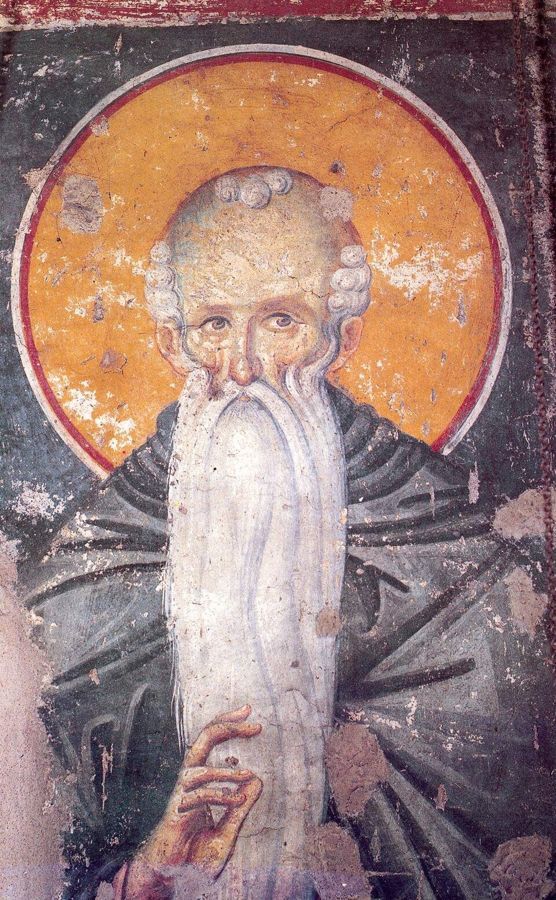
Image: Евфимий Великий.jpg · Wikivorker · CC0, via Wikimedia Commons

Image: Wikivorker, Wikimedia Commons (CC0)

Retold in plain modern English from Baring-Gould’s public-domain text, sentence by sentence, keeping the same facts and order. Short explanations in parentheses are ours.

From Sabine Baring-Gould, The Lives of the Saints, new and revised edition (Edinburgh: John Grant, 1914; first edition 1872). Public domain in the United States. Reproduced unedited, except for short bracketed notes in grey that we added to explain names and terms (“S.” is the old abbreviation for Saint). Some history and judgments reflect 19th-century scholarship.