St. Eustochium

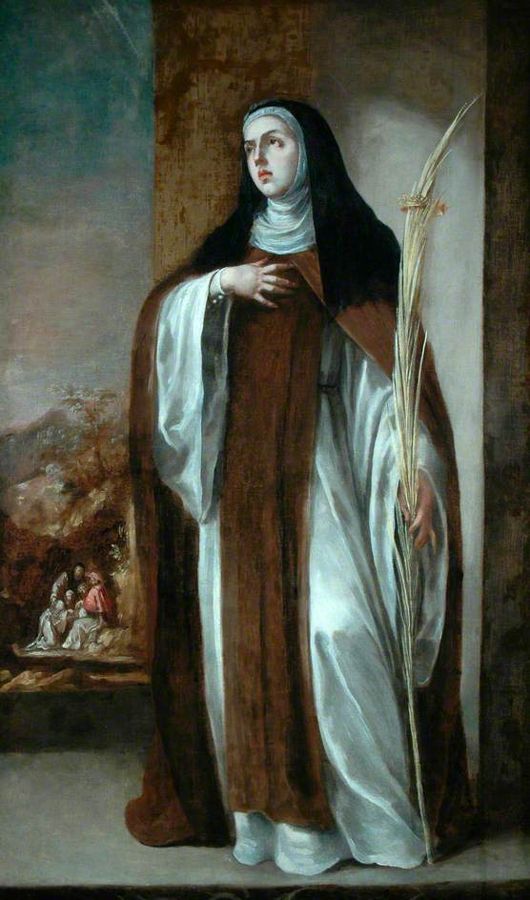
Eustochium Julia was born in Rome around 368, the third of four daughters of the senator Toxotius and St Paula.

Read the essentials →
Feast September 28 · Virgin

St. Eustochium

Current feast

September 28
Secondary source · Wikipedia infobox

Traditional feast

September 28
1914 / pre-1969 calendar, per Baring-Gould (1897)

Represents

Virgin

Feast days

Feast: September 28

This Saint’s Story

Adapted in modern English from the Catholic Encyclopedia (1913) · original text below

After her father's death around 380, she and her mother lived in Rome as strictly as the desert Fathers. When St Jerome came to Rome in 382 they put themselves under his direction. Her uncle Hymettius and his wife Praetextata tried hard to win her back to the pleasures of the world, but they failed. Around 384 she vowed perpetual virginity, and Jerome wrote her his famous letter on keeping virginity.

Jerome returned to the East, and Paula and Eustochium followed. In 386 they went with him to visit the hermits of the Nitrian desert in Egypt, and then settled for good at Bethlehem. There they built a monastery for monks under Jerome and three convents for the many women who gathered around them. Eustochium and her mother did the most menial work and spent much time studying Scripture with Jerome. She spoke Latin and Greek equally well and could read the Bible in Hebrew. Many of Jerome's commentaries owe their existence to her, and he dedicated those on Isaiah and Ezekiel to her.

After Paula died in 404, Eustochium took charge of the convents, a hard task because her mother's lavish almsgiving had left them poor. In 417 a gang of ruffians, probably set on by the Pelagians (the teaching of Pelagius that people can be good without God's grace), attacked the monasteries, burned one of them, and killed or injured some of the people living there. Pope Innocent I sternly rebuked the Patriarch of Jerusalem for allowing it. Eustochium died soon afterwards at Bethlehem, on 28 September 419 or 420, and her niece, the younger Paula, succeeded her.

Short entry · the summary here is 227 words; Baring-Gould’s fuller original text and its sources are below. We have not filled any gap with invented detail.

What she represents

How she teaches us to live

Drawn from themes in the original account

Build up the community you belong to. Community life is part of this story.

Give to people in need. The account records care for the poor.

The full story

Baring-Gould’s account retold in modern English

Read the full story · 219 words · about 1 min

The heart of Eustochium was nearly broken by the loss of her mother, whom she loved deeply. “The venerable maiden,” says Jerome, “was like a child just weaned. She could not leave her dear mother: she kissed her eyes, leaned over her face, embraced her body, and longed to be buried with her."

After the death of Paula, Eustochium took charge of the large community, but she faced the challenge of managing the debts left by her mother's excessive generosity in charity. Jerome supported her with his advice. “Do not be afraid, Eustochium," he said; “you have inherited a great treasure, and the Lord will be your portion."

During the troubles stirred up by Jerome, due to his fierce arguments against John, the Patriarch of Jerusalem, and the Pelagians and Origenists, the monasteries in Bethlehem were attacked and looted. Eustochium managed to escape, but some of her servants were killed. Both Jerome and Eustochium wrote their grievances to Innocent I., the Pope of Rome, who responded by sending a letter to John of Jerusalem, criticizing him for allowing such chaos to occur.

Eustochium did not survive this turmoil for long. She died in the year 419 AD, after spending about thirty years in Bethlehem, and was succeeded in the leadership of her convent by her niece, Paula the Younger.

Footnotes

  1. Jerome: Saint Jerome, a Christian scholar and translator.
  2. Paula: Saint Paula, a prominent early Christian figure known for her charity.
  3. Innocent I.: Pope Innocent I, who served as Pope from 401 to 417 AD.

Baring-Gould’s own footnotes, in modern English.

Read the original 1870s text

Baring-Gould’s sources: Peter de Natalibus on Nov. 2. Greven, Canisius and Ferrarius on Feb. 20, the Carmelite Kalendar on March 2. But Greven again on Sept. 28, also Molanus, and Modern Roman Martyrology. Authority: — The Letters of S. Jerome.] The life of the illustrious Paula, mother of Eustochium, has been already given (January 26). Paula, still young, and attached to Italy by the most legitimate and tender ties, left Rome for the East in a.d. 391, accompanied by her daughter Eustochium. With her daughter S. Paula visited all the places in the Holy Land consecrated by the Gospel story, then descended into Egypt, and, penetrating into the desert of Nitria — 1 The four books of Moses, Joshua, Judges, the four books of Kings, the Prophets, five books of Solomon, the Psalms, Tobit, Job, Esther, Judith, two books of the Maccabees, Esdras, Chronicles (two books), the four Gospels, fourteen Epistles of S. Paul, S. John, S. Peter, S. James, S. Jude, the Acts, the Apocalypse. into the cells of the holy hermits — she presented herself at their feet, consulted them, admired them, and withdrew with reluctance from these blessed regions to return into Palestine. She established herself in Bethlehem, and founded there two monasteries — one for men, which was placed under the direction of S. Jerome; and the other for women, where she secluded herself with her daughter, and a multitude of virgins of various degrees and countries. S. Paula and her daughter Eustochium held there the office of sweeper and cook and the care of the lamps, which did not hinder them from taking up with perseverance the study of Greek and Hebrew. The Vulgate was undertaken by S. Jerome, to satisfy the ardour of these two women, to enlighten their doubts, and guide their researches. It was to them that he dedicated his work, and he took them for judges of the exactness of his labours. In this convent study was imposed on the nuns, and each had to learn every day a portion of the Holy Scriptures. But more than study, more even than penitence, charity governed all the thoughts and actions of these generous ladies. Paula lavished her patrimony on the poor. Jerome himself felt obliged to reprove her for her prodigality, and preach to her a certain prudence. “ I have but one desire,*' she answered him; “it is to die a beggar, it is to leave not a mite to my daughter, and to be buried in a shroud which does not belong to me.*’ Accordingly, when she died, she left to her daughter not an obolus, says Jerome, but, on the contrary, a mass of debts; and, what was worse, an immense crowd of monks and nuns dependent on her fortune whom she had not the means to feed, and whom she had not the courage to send away.

The heart of Eustochium was nearly broken by the loss of her mother, whom she passionately loved. “ The venerable maiden,” says S. Jerome [translator of the Bible into Latin (d. 420)], “was like a child just S. Fans ins.

weaned. She could not quit her dear mother: she kissed her eyes, hung over her face, embraced her body, and longed to be buried with her."

After the death of S. Paula, Eustochium had the direction of the great community, under the disadvantage of being encumbered with the debts entailed by her mother's unmeasured profusion in charity. S. Jerome assisted her with his advice. “Fear not, Eustochium," he said; “you have inherited a rich possession, and the Lord will be your portion."

In the troubles excited by S. Jerome, through his violent polemics against John, Patriarch of Jerusalem, and the Pelagians [followers of Pelagius, who taught people could be good without God’s grace] and Origenists, the monasteries at Bethlehem were attacked and pillaged. S. Eustochium escaped, but some of her servants were killed. S. J erome and S. Eustochium both wrote their complaints to Innocent I., Pope of Rome, who in reply sent a letter to John of Jerusalem, reproaching him for having suffered such disorders to break out.

S. Eustochium did not long survive this trouble. She died in the year a.d. 419, after having spent about thirty years at Bethlehem, and was succeeded in the government of her convent by her niece, Paula the Younger.
From the Catholic Encyclopedia

1913 · 598 words

Eustochium Julia, Saint, virgin, b. at Rome c. 368; d. at Bethlehem, September 28, 419 or 420. She was the third of four daughters of the Roman Senator Toxotius and his wife Saint Paula (q.v.), the former belonging to the noble Julian race, the latter tracing her ancestry through the Scipios and the Gracchi (Jerome, Ep. cxviii). After the death of her husband (c. 380) Paula and her daughter Eustochium lived in Rome as austere a life as the Fathers of the desert. When St. Jerome came to Rome from Palestine in 382, they put themselves under his spiritual guidance. Hymettius, an uncle of Eustochium, and his wife Praetextata tried to persuade the youthful Eustochium to give up her austere life and enjoy the pleasures of the world, but all their attempts were futile. About the year 384 she made the vow of perpetual virginity, on which occasion St. Jerome addressed to her his celebrated letter "De custodiae virginitatis" (Ep. xxii in P.L., XXII, 394-425). A year later St. Jerome returned to Palestine and soon after was followed to the Orient by Paula and Eustochium. In 386 they accompanied St. Jerome on his journey to Egypt, where they visited the hermits of the Nitrian Desert in order to study and afterwards imitate their mode of life. In the fall of the same year they returned to Palestine and settled permanently at Bethlehem. Paula and Eustochium at once began to erect four monasteries and a hospice near the spot where Christ was born. While the erection of the monasteries was in process (386-9) they lived in a small building in the neighborhood. One of the monasteries was occupied by monks and put under the direction of St. Jerome. The three other monasteries were taken by Paula and Eustochium and the numerous virgins that flocked around them. The three nunneries, which were under the supervision of Paula, had only one oratory, where all the nuns met several times daily for prayer and the chanting of psalms. St. Jerome testifies (Ep. 308) that Eustochium and Paula performed the most menial services. Much of their time they spent in the study of Holy Scripture under the direction of St. Jerome.

Eustochium spoke Latin and Greek with equal ease and was able to read the Holy Scriptures in the Hebrew text. Many of St. Jerome's Biblical commentaries owe their existence to her influence and to her he dedicated his commentaries on the prophets Isaias and Ezechiel. The letters which St. Jerome wrote for her instruction and spiritual advancement are, according to his own testimony (De viris illustribus, cap. cxxxv), very numerous. After the death of Paula in 404, Eustochium assumed the direction of the nunneries. Her task was a difficult one on account of the impoverished condition of the temporal affairs which was brought about by the lavish almsgiving of Paula. St. Jerome was of great assistance to her by his encouragement and prudent advice. In 417 a great misfortune overtook the monasteries at Bethlehem. A crowd of ruffians attacked and pillaged them, destroyed one of them by fire, besides killing and maltreating some of the inmates. The wicked deed was probably instigated by John, the Patriarch of Jerusalem, and the Pelagians [followers of Pelagius, who taught people could be good without God’s grace] against whom St. Jerome had written some sharp polemics. Both St. Jerome and St. Eustochium informed Pope Innocent I by letter of the occurrence, who severely reproved the patriarch [the title of the bishops of the great ancient sees: Rome, Constantinople, Alexandria, Antioch, Jerusalem] for having permitted the outrage. Eustochium died shortly after and was succeeded in the supervision of the nunneries by her niece, the younger Paula. The Church celebrates her feast on September 28.

Help us add to this saint's story

Everything is read by a person before anything appears. Facts are checked against trusted sources first.

Facts are welcome; a source link helps (optional).With your permission we may share it on this page.

Nine days · Free

Pray the novena
with us.

One short email a day for nine days. The day's prayer, a line from St. Eustochium's story, and a nudge to keep going.

Also on September 28
E

St. Exuperius of Toulouse

September 28 · Bishop
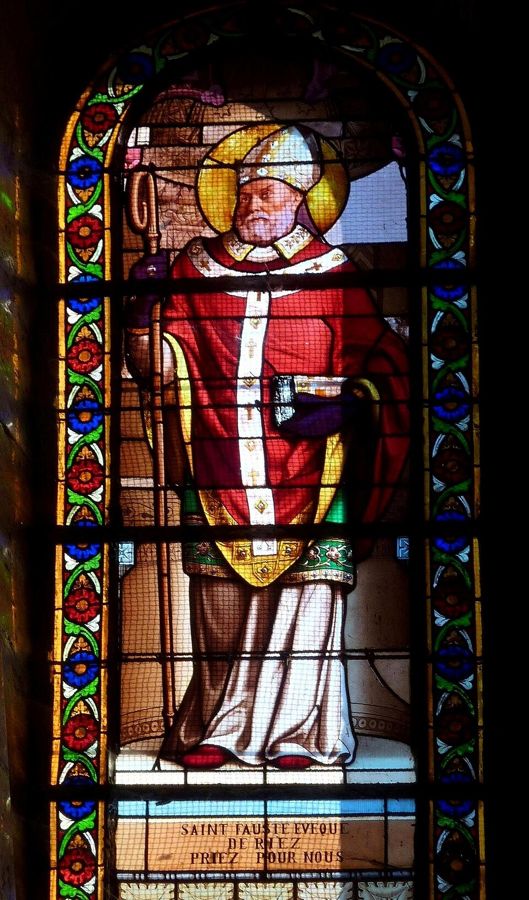
St. Faustus of Riez

St. Faustus of Riez

September 28 · Bishop
L

St. L I O B A

September 28 · Abbess
← All 1970 saints in the library
Sources & notes

Feast-day sources

Story sources

Sources

Credits

Image: Valdes leal-santa eustoquio.jpg · Juan de Valdés Leal · Public domain, via Wikimedia Commons

Image: Juan de Valdés Leal, Wikimedia Commons (Public domain)

From “Catholic Encyclopedia (1913)/St. Eustochium Julia,” The Catholic Encyclopedia (New York: Robert Appleton Company, 1907–1914), via Wikisource. Public domain. Matched by name and feast date; text unedited except for our bracketed notes in grey.

Retold in plain modern English from Baring-Gould’s public-domain text, sentence by sentence, keeping the same facts and order. Short explanations in parentheses are ours.

From Sabine Baring-Gould, The Lives of the Saints, new edition in 16 vols. (London: John C. Nimmo, 1897–98); text from the Internet Archive scan (OCR, lightly cleaned; errors possible). Public domain in the United States. Reproduced unedited, except for short bracketed notes in grey that we added to explain names and terms (“S.” is the old abbreviation for Saint). Some history and judgments reflect 19th-century scholarship.