The Danes arrived in 866, when Edmund was king of East Anglia, Burhred was king of Mercia, and Osbert had been deposed in Northumbria, with Ella, who was not from the royal family, being set up instead. The first winter, the Danes spent in East Anglia. In 867, they crossed the Humber River and took York. In 868, they entered Mercia and extended their destruction as far as Nottingham. In 870, they invaded East Anglia, a region with which they had previously maintained peace, likely having been paid off by Edmund. A battle was fought, and in it, Edmund was killed. This is all that can be considered historical regarding what we know of Edmund. However, legend has greatly embellished the story.
Roger of Wendover tells a tale, likely based on old ballads, to explain the invasion by the Northerners. “Not long ago, in the kingdom of the Danes, there was a man named Lodbrog (Hairy-breeches), who came from the royal lineage of that nation, and he had two sons, Hingvar and Hubba, with his wife. One day, he took his hawk and went alone in a small boat to catch small birds and wildfowl along the coast and on the islands. While he was engaged in this activity, he was caught by a sudden storm and swept out to sea. After being tossed about for several days and nights, he was finally brought in great distress to the English coast and landed at Redham, in the province of Norfolk.
The people of that area found him with his hawk and presented him as a sort of marvel to Edmund, king of the East Angles, who, appreciating his handsome appearance, gave him a warm welcome. Lodbrog stayed for some time at the king's court, and since the Danish language is quite similar to English, he began to tell the king how he had ended up on the coast of England. King Edmund's refined manners impressed Lodbrog, as did his military discipline and the courteous behavior of his attendants. Eager to acquire similar skills, Lodbrog asked the king for permission to stay at his court. After receiving the king's approval, he attached himself to the king’s huntsman, whose name was Bjorn, so he could learn the art of hunting from him.
However, Lodbrog was so skilled that he was always successful in hunting or hawking. Because he became a favorite of the king, Bjorn grew jealous of him. One day, while they were hunting together, Bjorn, consumed by deadly hatred, attacked Lodbrog and killed him, leaving his body in a thicket. Afterward, the wicked huntsman called off his dogs with his horn and returned home. Lodbrog had raised a certain greyhound in King Edmund’s court, which was very fond of him. Naturally, when the huntsman returned with his own dogs, the greyhound stayed watchful by its master’s body.
The next day, as King Edmund sat at the table, he noticed that Lodbrog was missing from the group. He anxiously asked his attendants what had happened to him. Bjorn, the huntsman, replied that Lodbrog had stayed behind in a wood and that he had not seen him since. While he was speaking, Lodbrog’s dog entered the hall, wagging its tail and fawning on everyone, especially on the king. Upon seeing the dog, the king said to his attendants, "Here comes Lodbrog’s dog; his master is not far behind." He then began to feed the dog, hoping to soon see Lodbrog. However, he was disappointed because, after the greyhound had eaten, it returned to keep its usual watch over its master’s body.
After three days, the dog was forced by hunger to return to the king’s table. Edmund, greatly puzzled, ordered his servants to follow the dog when it left the hall and to see where it went. The king’s servants obeyed and followed the dog until it led them to Lodbrog’s lifeless body. When the king was informed of this, he was greatly disturbed and ordered that the body be given a more honorable burial. King Edmund then made a thorough investigation into Lodbrog’s death. Bjorn the huntsman was found guilty of the crime, and by the king's order, the captains and wise men of his court passed judgment on him. The judges unanimously agreed that the huntsman should be placed in the boat in which Lodbrog had arrived in England and set adrift at sea without sail or oar, to see if God would save him.
Roger of Wendover further recounts that Bjorn was carried across to Denmark, where he was tortured by Hubba and Hingvar, the sons of Lodbrog, who recognized their father’s boat. Under torture, Bjorn confessed that Lodbrog had been killed by Edmund, king of the East Angles. Consequently, the Danes gathered an army and invaded East Anglia to avenge their father's murder on Edmund.
The Norse story does not agree with this at all. According to the Sagas, Ragnar Lodbrog was captured by iElla, the king of the Northumbrians, and was thrown into a dungeon full of snakes, where he sang his dying song, the famous Krakumal. His sons, they say, were named Eirekr, Agnarr, Ivar, Bjorn Ironside, Hvitserkr, and Sigurd Worm-in-the-eye.
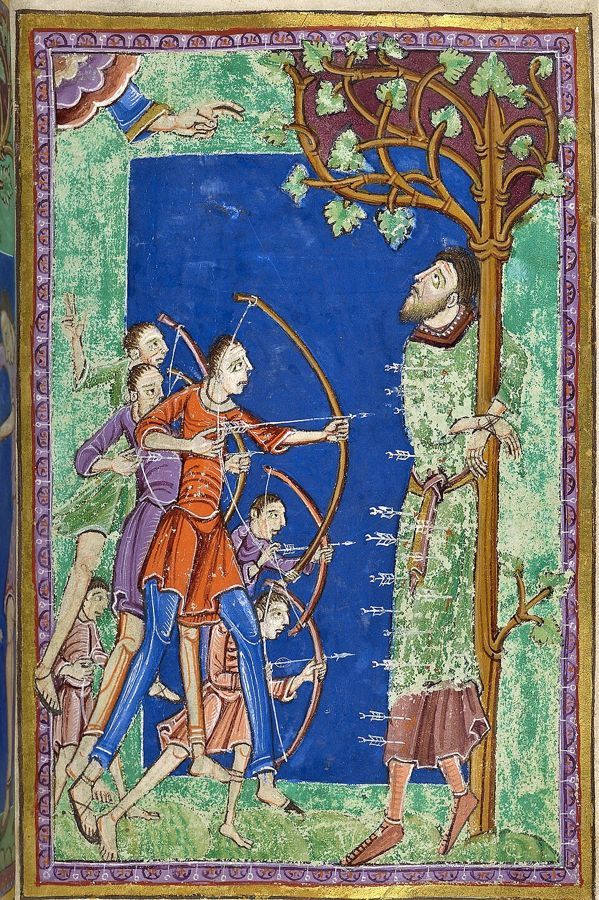
Matthew of Westminster tells the tale, as does Roger of Wendover; both drew from the same source. Edmund camped at the royal village of Haelesdune when Hingvar and Hubba landed at Berwick-on-Tweed and ravaged the country on their march through Northumbria. In 870, Hingvar entered East Anglia and was attacked by Edmund while his forces were separated from those of Hubba. Both sides suffered greatly. Hubba joined Hingvar at Thetford, and the united army attacked Edmund again. His forces were far outnumbered. He was defeated, and he and Humbert, the bishop of Elmham, were captured in a church; Humbert was killed with the sword. Edmund was tied to a tree, and the Danes shot arrows at him until they grew tired of the sport, at which point he was beheaded, and his head was thrown into a thicket in the forest of Haelesdune (Hoxne).
The following year, says the legend, when the Danes left, the king’s body was recovered, and his head was sought in the woods. As those searching called out to one another, asking where the head was, they heard a voice calling, “Here! Here! Here!” They found that the voice came from the head, which lay among the brambles, guarded by a great grey wolf. It was buried at Beodricsworth, which was later called Bury S. Edmunds. Sweyn, in 1014, was about to burn and pillage the abbey of Bury when he suddenly fell ill and died, and this was attributed to the intervention of the saint.
Footnotes
- Roger of Wendover was a 13th-century English chronicler.
- The Thattr af Ragnars Sonum says that Ingvar, who invaded Northumbria and fought iElla, “had two brothers, sons of a concubine, one called Yngvar, the other Husti; and these two put King Edmund to death by order of Ingvar.”
- Roger of Wendover and Matthew of Westminster took their narrative of the martyrdom of S. Edmund from the Passion by Abbo of Fleury. He, however, does not tell the story of Lodbrog and Bjorn.
Baring-Gould’s own footnotes, in modern English.
Read the original 1870s text
Baring-Gould’s sources: Roman Martyrology. Notker, Wandelbert, Sarum, York, Hereford, and Anglican Reformed Kalendars. Authority: — A Life by Abbo of Fleury, written by command of S. Dunstan. Abbo died in 1004, he wrote in 980. The Life is in Surius.] The Anglo-Saxon Chronicle says, under date 870, “This year the army (of Danes) rode across Mercia, into East Anglia, and took up their winter quarters at Thetford. And the same winter King Edmund fought against them, and the Danes got the victory, and slew the king, and subdued all the land, and destroyed all the minsters which they came to. The names of their chiefs who slew the king were Hingwar and Hubba.”
The Danes [Viking raiders from Scandinavia] arrived in 866, when Edmund was king of East Anglia, Burhred of Mercia [the Anglo-Saxon kingdom of the English Midlands], and when Osbert had been deposed in Northumbria [the Anglo-Saxon kingdom of northern England and south-east Scotland], and ^Ella, who was not of the kingly house, had been set up instead. The first winter the Danes spent in East Anglia. In 867 they crossed the Humber and took York. In 868 they entered Mercia and extended their ravages as far as Nottingham. In 870 they invaded East Anglia, with which hitherto they had maintained peace, having probably been bought off by Edmund. A battle was fought, and in it Edmund fell. This is all that can be counted historical in what we are told of Edmund. But legend has greatly improved the story. Roger of Wendover tells a story, founded probably on old ballads, to account for the invasion by the Northerners. “ There was, not long ago, in the kingdom of the Danes, a certain man named Lodbrog (Hairy-breeches), who was sprung from the royal race of that nation, and had by his s. EDMUND. After Cah:er.
wife two sons, Hingvar and Hubba. One day he took his hawk and went unattended in a little boat to catch small birds and wild-fowl on the sea coast and in the islands. While thus engaged he was surprised by a sudden storm, and carried out to sea, and after having been tossed about for several days and nights, was at last carried in sore distress to the English coast, and landed at Redham, in the province of Norfolk. The people of that country by chance found him with his hawk, and presented him as a sort of prodigy to Edmund, king of the East Angles, who, for the sake of his comely person, gave him an honourable reception. Lodbrog abode some time in the court of the monarch, and as the Danish tongue is very like English, he began to relate to the king by what chance he had been driven to the coast of England. The accomplished manners of King Edmund pleased Lodbrog, as well as his military discipline and the courtly manners of his attendants. Emulous of the like attainments, Lodbrog asked permission of the king to remain in his court, and having obtained his request, he attached himself to the king’s huntsman, whose name was Bjorn, that he might with him exercise the hunter’s art. But such was the skill of Lodbrog, that he was always successful in hunting or hawking, and being deservedly a favourite with the king, Bjorn became jealous of him, and giving way to deadly hatred, he one day, when they were hunting together, attacked him and slew him, and left his body in a thicket. This done, the wicked huntsman called off his dogs with his horn, and returned home. Now Lodbrog had reared a certain greyhound in King Edmund’s court, which was very fond of him, and, as is natural, when the huntsman returned with his own dogs, remained watchful by his master’s body.
“ Next day, as King Edmund sat at table, he missed Lodbrog from the company, and anxiously asked his attendants what had befallen him; on which Bjorn, the huntsman, answered that he had tarried behind in a wood, and he had seen no more of him. But as he was speaking, Lodbrog’s dog came into the hall and began to wag his tail and fawn on all, and especially on the king; who, on seeing him, said to his attendants, 1 Here comes Lodbrog’s dog; his master is not far behind.’ He then began to feed the dog, hoping soon to see his master. But he was disappointed, for when the greyhound had satisfied his appetite, he returned to keep his accustomed watch over his master’s body. After three days he was compelled by hunger to return to the king’s table, and Edmund, greatly wondering, gave orders to follow the dog when he left the hall, and watch whither he went. The king’s servants fulfilled his commands, and followed the dog till it led them to Lodbrog’s lifeless body. On being informed of this the king was greatly disturbed, and directed that the body should be committed to a more honourable sepulchre. King Edmund then caused diligent inquisition to be made touching the death of Lodbrog; and Bjorn the huntsman was convicted of the crime, and by order of the king, the captains and wise men of his court passed sentence on him. The judges unanimously agreed that the huntsman should be put into the boat in which Lodbrog had come to England, and should be exposed on the sea without sail or oar, that it might be proved whether God would deliver him.”
Roger of Wendover goes on to tell how Bjorn was wafted across to Denmark, and there was examined by torture by Hubba and Hingvar, sons of Lodbrog, who recognized their father’s boat. Bjorn, under torture, declared that Lodbrog had been put to death by Edmund, king of the East Angles. The Danes accordingly assembled an army and invaded East Anglia, to avenge on Edmund the murder of their father.
The Norse story does not agree with this at all. According to the Sagas, Ragnar Lodbrog was seized by iElla, king of the Northumbrians, and was thrown into a dungeon full of serpents, in which he sang his dying song, the famous Krakumal. His sons, they say, were called Eirekr, Agnarr, Ivar, Bjorn Ironside, Hvitserkr and Sigurd Worm-in-the-eye.1 Matthew of Westminster tells the tale, as does Roger of Wendover; both drew from the same source. Edmund encamped at the royal vill of Haelesdune, when Hingvar and Hubba landed at Berwick-on-Tweed, and ravaged the country on their march through Northumbria. In 870 Hingvar entered East Anglia, and was attacked by Edmund whilst his force was divided from that of Hubba. Both sides suffered severely. Hubba joined Hingvar at Thetford, and the united army attacked Edmund again. His force was far outnumbered. He was routed, and he and Humbert, bishop of Elmham, were taken in a church; Humbert was despatched with the sword. Edmund was tied to a tree, and the Danes shot at him with their arrows, till they were tired of the sport, when he was decapitated, and his head flung into a thicket of the forest of Haelesdune (Hoxne). Next year, says the legend, when the Danes retired, the king’s body was recovered and his head was sought in the wood. As those searching called in the wood to one another, asking where was the head, they heard a voice calling, “ Here ! here ! here ! ” and found it proceeded from the head, which lay among the brambles, guarded by a great grey wolf. It was buried at Beodricsworth, afterwards called Bury S. Edmunds.2 Sweyn, in 1014, was about to burn and 1 The Thattr af Ragnars Sonum says that Ingvar, vrho invaded Northumbria and fought iElla, “had two brothers, sons of a concubine, one called Yngvar, the other Husti; and these two put King Edmund to death by order of Ingvar/'—Fornm. 2 Roger of Wendover and Matthew of Westminster took their narrative of the martyrdom of S. Edmund from the Passion by Abbo of Fleury. He, however, does not tell the story of Lodbrog and Bjorn. pillage the abbey of Bury, when he was suddenly struck ill and died, and this was attributed to the interposition of the saint.